Image d’illustration © TopTenPlay EN
The Surprising Science Behind Banana Peels And Hummingbird Attraction
Most backyard birders assume hummingbirds live exclusively on sugar-rich nectar, but this common misconception misses half the nutritional equation. These aerial acrobats actually require a dual-fuel system that combines high-energy carbohydrates with essential proteins—and that’s where a simple banana peel transforms from kitchen waste into wildlife magnet.
As banana peels ripen and decompose, they release natural sugars and organic compounds that create an irresistible beacon for fruit flies. This biological process occurs within 24-48 hours of exposure to air, generating a steady stream of tiny insects that hummingbirds consider premium protein sources. During breeding season, when females need additional nutrition for egg production and feeding their young, this protein becomes absolutely critical for reproductive success.
The genius lies in the complementary feeding strategy. While your traditional sugar-water feeder delivers the immediate energy these high-metabolism birds demand—burning calories at rates that would exhaust most creatures within hours—the banana peel’s fruit fly production provides the building blocks for muscle development, feather growth, and overall health maintenance.
This isn’t mere coincidence but evolutionary adaptation. Wild hummingbirds spend roughly 80% of their active time hunting insects, not visiting flowers. The banana peel method simply recreates this natural balance in your backyard, offering both the quick energy boost and the sustained nutrition that keeps these remarkable birds returning day after day.
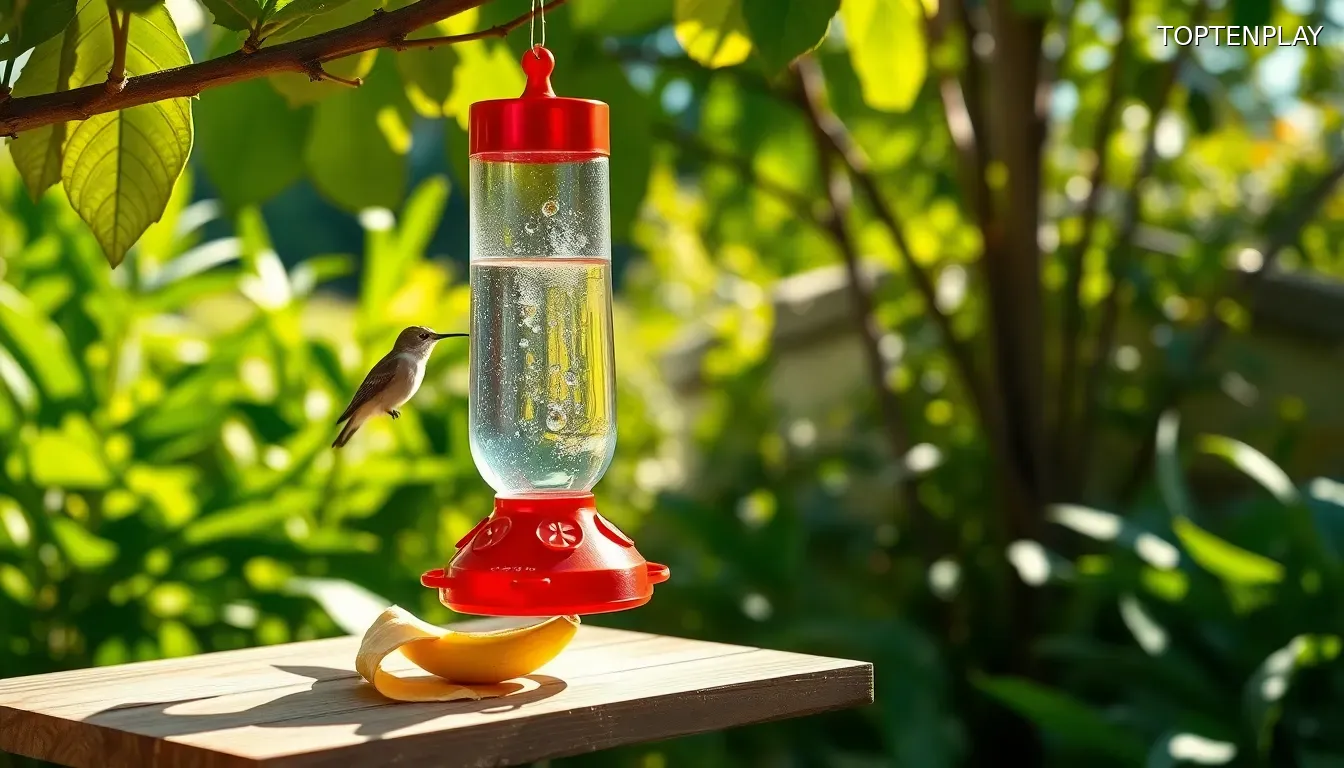
Image d’illustration © TopTenPlay EN
The Simple Setup That Transforms Your Yard Into A Hummingbird Hotspot
Implementing this dual-fuel strategy requires nothing more than materials already in your kitchen and a few minutes of setup time. The foundation remains unchanged: prepare your standard nectar using the proven one-part sugar to four-parts water ratio—the gold standard that has sustained countless hummingbird populations across North America.
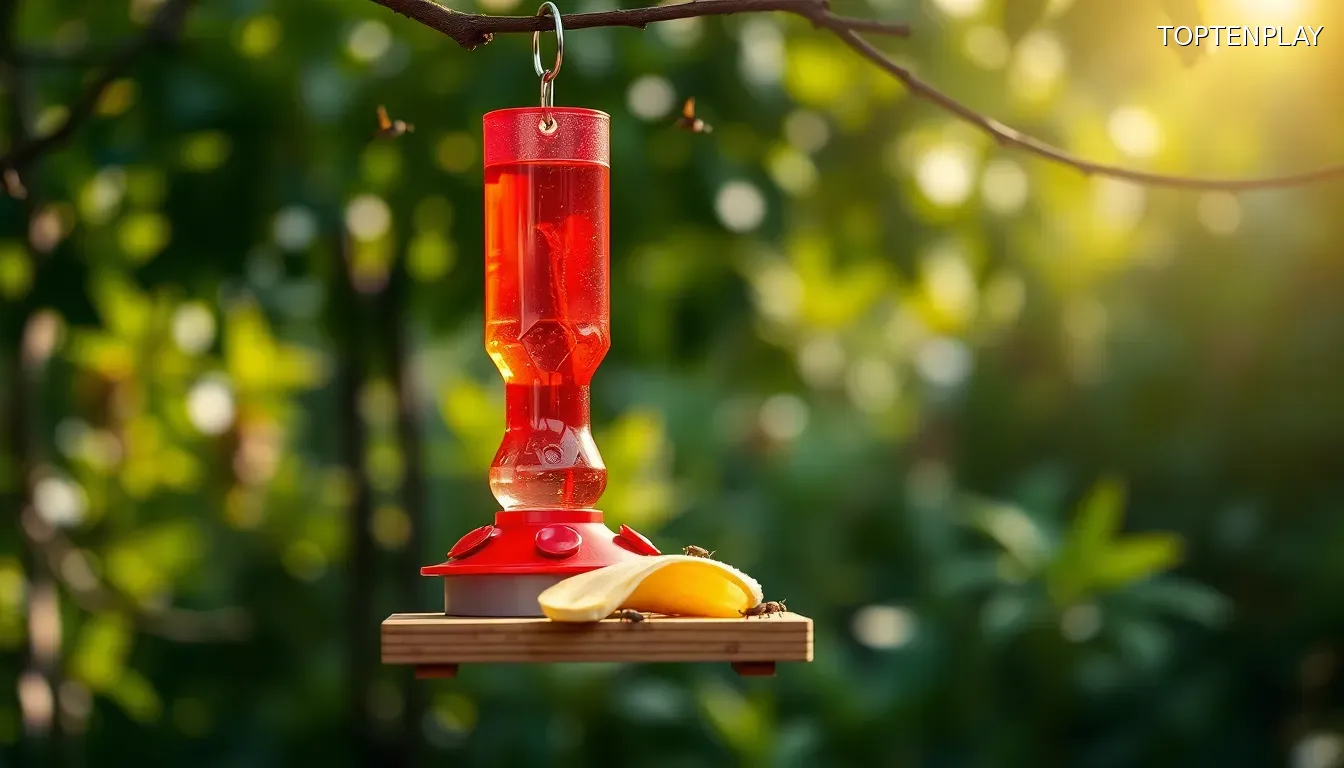
The revolutionary addition costs virtually nothing. Simply place a fresh banana peel on a nearby plate or tree branch, positioning it within sight of your feeder but never directly in the nectar mixture itself. As the peel begins its natural decomposition process, it becomes a protein-production facility, generating the fruit flies that complete your birds’ nutritional requirements.
This effortless approach represents « one of the best ways to get more hummingbirds to nest in your yard » because it addresses both immediate and long-term feeding needs. Your sugar-water delivers instant energy for their hyperactive metabolism, while the banana peel creates a renewable protein source that supports breeding pairs throughout the nesting season.
The beauty lies in the system’s self-sustaining nature. Replace the banana peel every few days as it dries out, maintain fresh nectar according to standard guidelines, and watch as your backyard transforms from occasional hummingbird stopover to essential feeding destination. Within weeks, resident birds will establish reliable visitation patterns, treating your setup as their personal energy station where both carbohydrates and protein await on demand.
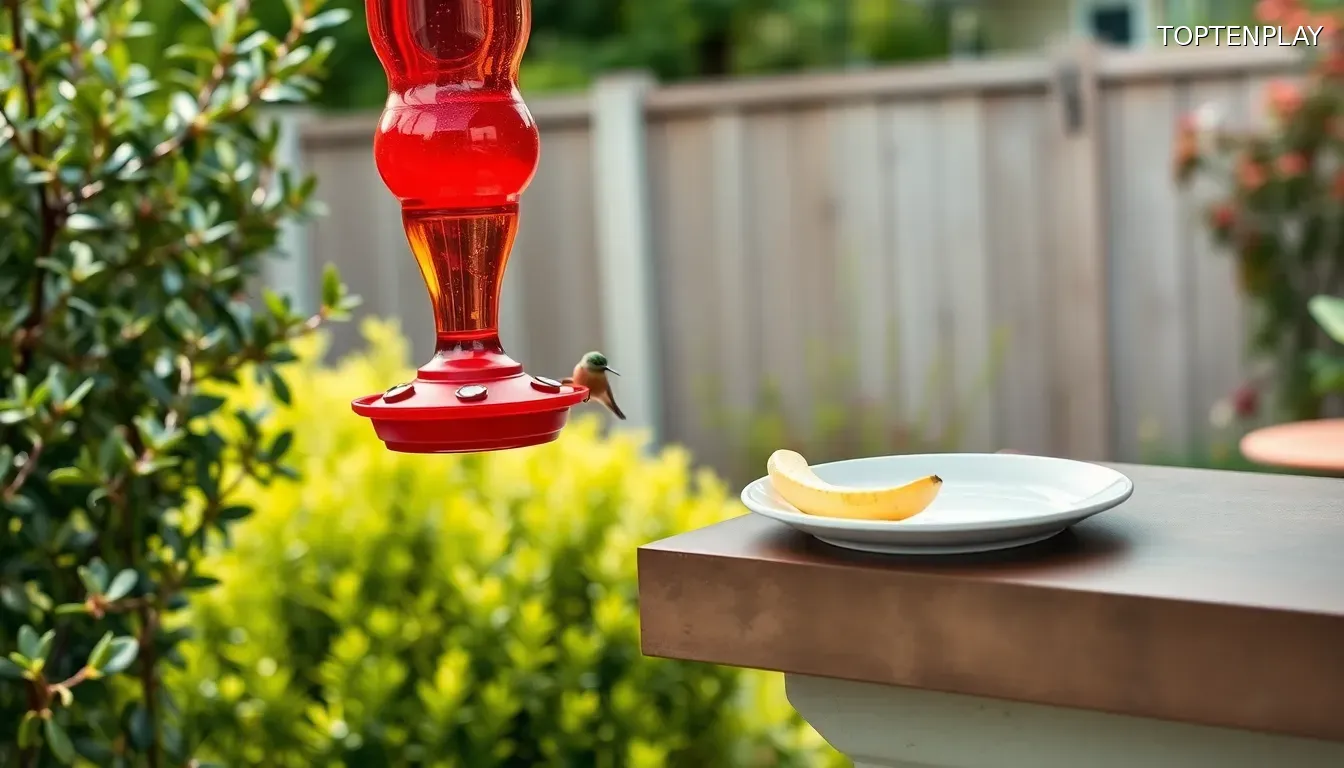
Image d’illustration © TopTenPlay EN
Strategic Placement Secrets For Maximum Hummingbird Traffic
While your dual-fuel system creates the perfect nutritional foundation, precise positioning determines whether occasional visitors become permanent residents. Professional wildlife experts reveal that placement errors sabotage even the most thoughtfully prepared feeding stations.
The cardinal rule: position your banana peel near the feeder but never directly underneath. This strategic separation prevents ant invasions that can destroy your entire operation within hours. Place the peel on a elevated surface—a nearby plate, tree branch, or garden stake—where decomposition continues undisturbed while fruit flies remain accessible to hunting hummingbirds.
Feeder height proves equally critical. Research indicates that 4-to-6 feet elevation creates the optimal hunting zone, allowing birds to survey their territory while maintaining quick escape routes from predators. Position your feeder near natural shelter—shrubs, small trees, or dense foliage—mimicking the protected feeding environments hummingbirds instinctively seek.
Temperature management amplifies success rates dramatically. In warmer weather, nectar spoils rapidly, creating dangerous fermentation that can poison visiting birds. Replace your sugar-water mixture every two to three days during summer months, ensuring the foundation of your system remains safe and attractive.
This methodical approach transforms random backyard visits into predictable feeding schedules. By combining proper height, strategic protection, and consistent maintenance, you create an environment that « mimics their natural habitat » where energy and protein sources coexist safely. Within weeks, your precisely positioned station becomes the neighborhood’s premier hummingbird destination.
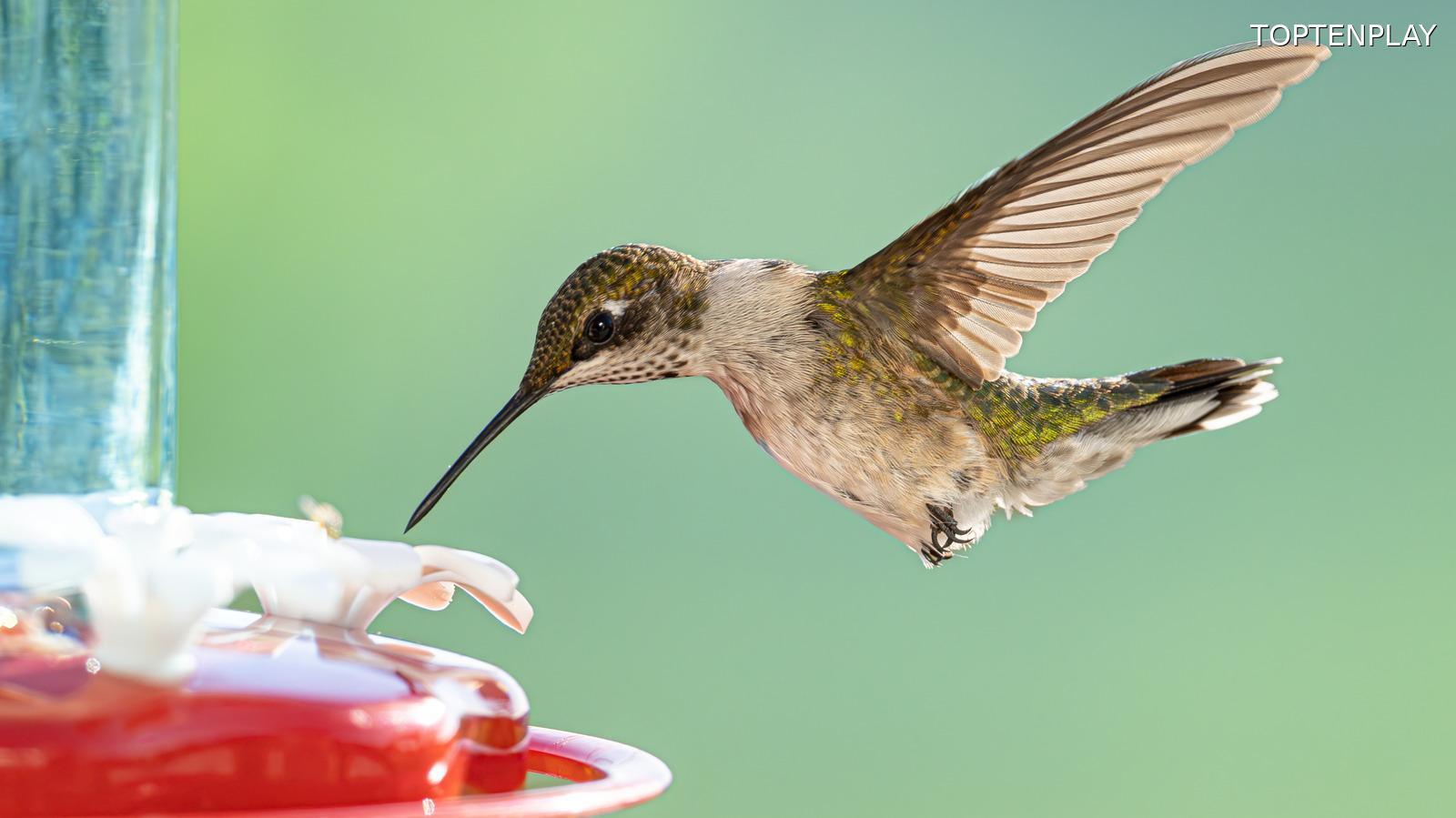
Image d’illustration © TopTenPlay EN
Choosing The Right Equipment To Complete Your Hummingbird Paradise
Even the most strategically positioned feeding station fails without proper equipment selection. Feeder quality determines whether your carefully crafted hummingbird paradise succeeds or becomes an expensive disappointment. Wildlife professionals emphasize that inferior feeders sabotage even perfect banana peel placement and ideal positioning.
The foundation starts with easy-to-clean models. Complex feeder designs with intricate parts harbor dangerous bacteria and mold that can kill visiting birds within days. Choose feeders with wide openings and removable components that allow thorough sanitization during your regular maintenance routine.
Color psychology drives immediate attraction. Bright red feeders trigger hummingbirds’ instinctive flower-seeking behavior, acting as a beacon visible from considerable distances. This visual magnetism works synergistically with your banana peel’s fruit fly production, creating dual sensory attraction that proves irresistible.
Drip-free design eliminates the sticky messes that attract ants, wasps, and other unwanted visitors. Quality feeders maintain clean feeding ports while preventing nectar waste that could compromise your entire operation. These engineering details separate professional-grade installations from amateur attempts.
The complete system creates environmental harmony: nectar for energy, insects for protein, and a feeder that’s clean and welcoming. This three-pillar approach mimics nature’s perfect balance, transforming your backyard into what experts describe as « the hottest diner on the block » for hummingbirds.
Within weeks of implementation, your equipment investment pays dividends through increased visitor frequency, longer feeding sessions, and the ultimate reward—returning hummingbirds that establish your yard as their preferred territory.