📌 “This mistake after a snake bite kills 2 Australians every year…” (experts reveal what you must do instead)
Posted 29 November 2025 by: Admin
Image d’illustration © TopTenPlay EN
Snake Bite Statistics And Demographics: The Hidden Danger On Australian Farms
Australia’s snake bite crisis remains largely invisible, masked by rural mythology. The Royal Flying Doctors Service reports approximately 3,000 snake bites annually, resulting in 550 hospitalisations and two deaths each year—statistics that demand attention in agricultural communities where risk exposure peaks during warmer seasons.
The threat profile defies conventional wisdom. Brown snakes account for 41% of identified attacks, followed by tiger snakes (17%) and red-bellied black snakes (16%). Yet the most striking pattern emerges in victim demographics: three-quarters of those bitten are males in their 30s—precisely the demographic dominating Australian farming operations.
More critically, the location where bites occur shatters the persistent “bush danger” narrative. Research reveals that 57% of snake bites happen near houses, not in remote bushland. Half of all incidents occur during casual walking, with gardening and attempted snake capture comprising the remaining high-risk scenarios. This proximity transforms snake encounters from exceptional wilderness hazards into routine occupational threats for farming families and their workers.
Snakes gravitate toward farmhouses seeking water and rodent prey—fundamental resources often abundant in agricultural settings. Understanding this behavioral pattern shifts the conversation from reactive emergency response to proactive risk management, where environmental modifications can meaningfully reduce encounter frequency before dangerous situations develop.
Image d’illustration © TopTenPlay EN
Prevention Through Farm Management: What Attracts Snakes To Your Property
Understanding snake behavior provides the foundation for effective prevention. Snakes are drawn to farmhouses not by malice but by necessity—they seek water sources and rodent populations that agricultural properties reliably provide. This simple reality offers immediate tactical advantages for risk reduction.
Yard maintenance becomes a dual-purpose strategy. Controlling water access points by consolidating outdoor sources, eliminating rodent attractions through proper waste management, and maintaining vegetation at manageable levels directly reduces snake encounters. These same practices simultaneously lower fire fuel loads during peak seasons, creating efficiency in farm safety planning. More than 90% of snake bites target the upper or lower limbs, making appropriate personal protective equipment critical. Adequate footwear, long pants, long sleeves, and gloves provide measurable protection when working outdoors.
The psychological shift proves equally important. Rather than viewing snakes as unpredictable threats materializing from wilderness, recognize them as attracted to specific environmental conditions. A disciplined approach to property maintenance removes the incentive for snakes to approach human activity zones. Staff should understand that prevention precedes emergency response—environmental control reduces the likelihood of dangerous encounters before first aid becomes necessary.
This knowledge transforms farm workers from passive victims awaiting misfortune into active participants in their own safety, armed with practical measures that genuinely diminish risk exposure across the property.
Image d’illustration © TopTenPlay EN
Recognizing The Enemy: Dry Bites vs. Venomous Strikes
The deceptive nature of snake strikes presents a critical challenge to farm safety protocols. Bites often arrive with minimal warning—many are painless and may go completely unnoticed, presenting only as light lacerations, scratches, or subtle bruising accompanied by minor bleeding or swelling. This apparent innocence masks a lethal reality that demands immediate medical evaluation regardless of initial symptoms.
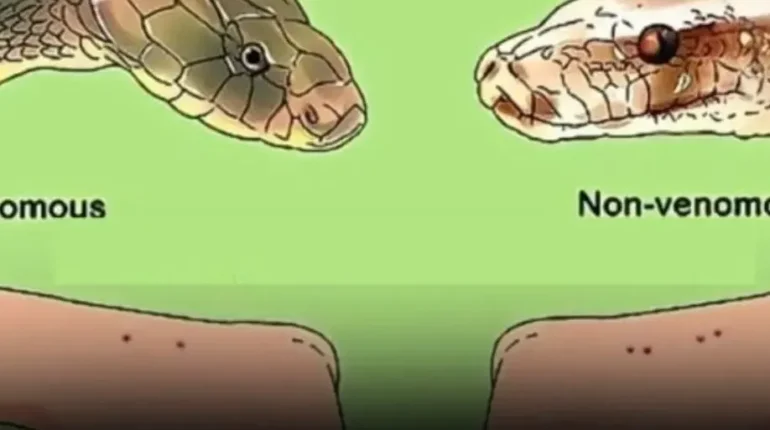
Snake bites fall into two distinct categories, each requiring identical emergency response protocols. Dry bites occur when the snake makes contact but releases no venom, causing swelling and redness without systemic poisoning. However, distinguishing a dry bite from a venomous strike in real-time proves impossible without professional assessment. Venomous bites inject toxins designed to stun, numb, or kill prey—consequences far more severe than local tissue damage. Victims may experience unexplained collapse, vomiting, abdominal pain, bleeding, paralysis, nausea, blurred vision, irregular heartbeat, and breathing difficulty.
The critical distinction lies not in bite type but in response time. Venom can inflict severe health damage or death within hours. Staff training must emphasize that painless bites carry equal urgency to obviously traumatic ones. Absence of immediate pain signals nothing about venom presence or systemic effects already underway. This medical reality reshapes emergency protocol—every suspected snake bite demands immediate transport to medical facilities equipped with diagnostic and antivenom capabilities, regardless of symptom presentation or bite appearance.
Image d’illustration © TopTenPlay EN
The Life-Saving Protocol: 6 Critical Do’s and Don’ts After a Snake Bite
When venom enters the bloodstream, minutes matter. The distinction between survival and tragedy hinges on immediate, precise action guided by evidence-based protocols that overturn dangerous myths still circulating on Australian farms.
The first imperative is absolute: seek medical help immediately. Venom can cause severe health damage or death within hours, making transport to a medical facility equipped with diagnostic capabilities and antivenom non-negotiable. Simultaneously, immobilise the victim completely—no walking, no limb movement. Use splints and slings to minimise motion, placing the patient on a stretcher rather than allowing any weight-bearing activity.
Bandaging technique separates effective treatment from fatal error. Apply a folded pad directly over the bite area, then wrap the entire limb firmly from bottom to top with a bandage that maintains circulation without constricting blood flow or congesting veins. This immobilisation slows venom spread through the lymphatic system. Critical: never remove this bandage outside a medical facility, as releasing pressure causes rapid venom redistribution through the bloodstream.
Equally important are the actions to avoid absolutely. Do not incise or cut the bite—this accelerates venom absorption. High tourniquets prove ineffective and cause permanent limb damage or death upon release. Never wash the bite area or attempt to suck out venom; preserving venom traces is essential for diagnostic identification kits. Most significantly, do not attempt to catch or kill the snake. Modern medicine has eliminated this dangerous requirement—generic polyvalent anti-venom treats all Australian snake bites regardless of species, making identification unnecessary and the pursuit itself a liability.
Training empowered agricultural employees transforms farm safety from reactive to proactive, turning knowledge into survival.