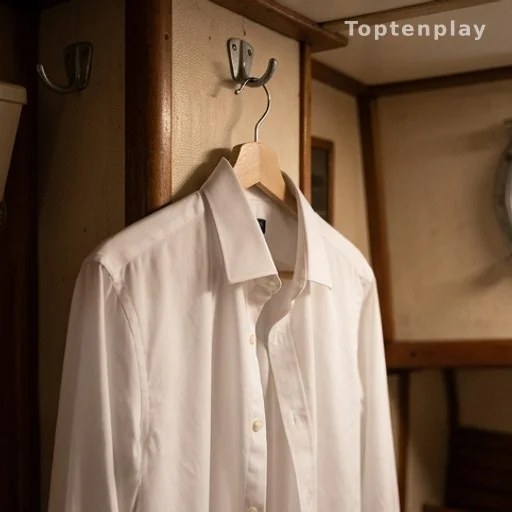
The small fabric tab, stitched just below the yoke — the shoulder panel — of a dress shirt, gave them a simple solution: hang the shirt on a hook without wrinkling the collar or pulling the shoulders out of shape.
The loop is positioned precisely at the shirt’s center of balance, making it a genuinely functional piece of design rather than a decorative afterthought. That practical origin is why it survived long after sailors left their bunks.
The Oxford shirt and its prep school roots
The button-down Oxford shirt became a cornerstone of American preppy style in the mid-20th century, popularized by Ivy League universities and East Coast prep schools. Its details — from the button-down collar to the locker loop — were originally functional features borrowed from sportswear and military dress that gradually became style markers in their own right.
How 1960s Ivy League students turned a utility tab into a status symbol
By the 1960s, the locker loop had migrated far from military barracks. Ivy League and prep school students across the United States adopted the button-down shirt with its locker loop as a signature look — and the tab itself took on new meaning.

Wearing a shirt with a locker loop signaled that you were athletic, well-traveled, or at least familiar with locker rooms. It became quietly aspirational in the codes of East Coast campus fashion, where small details carried outsized social weight.
The loop even generated its own campus rituals. At some schools, a student’s girlfriend would thread her scarf through his locker loop — a visible, public signal that he was in a relationship. The gesture required no words and was instantly readable to anyone who knew the code.
Athletes, rites of passage, and the loop as a trophy
The locker loop also carried weight in athletic culture. For student athletes, tearing the loop off a shirt after the end of a playing career became a recognized rite of passage at certain schools — a small, physical act marking a transition from one chapter of life to the next.

The gesture gave a throwaway detail a ceremonial dimension. A loop removed was a loop earned, and its absence on a shirt could itself become a quiet badge of experience.
Suggested Posts

A promise made at 17: four friends reunite 55 years later
In the summer of 1970, four teenagers made an unlikely promise on a wooden bench by a lake: they would return to the exact…