📌 The surprising reason your cat rubs against you revealed by experts
Posted 29 November 2025 by: Admin
The Secret Language Of Feline Affection: Decoding Your Cat’s Rubbing Behavior
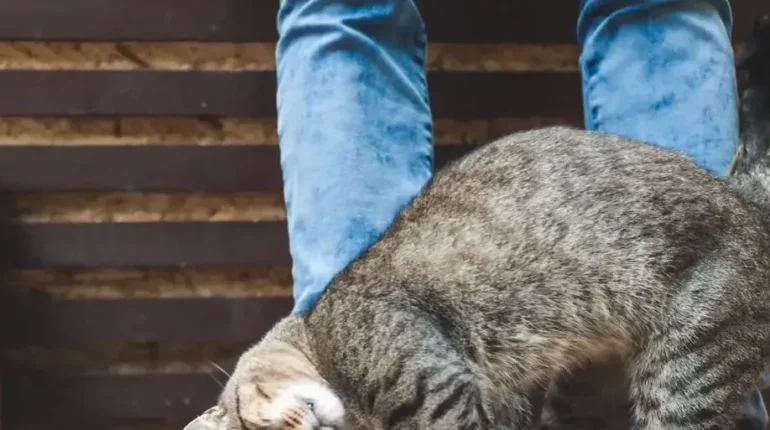
If you’ve ever had a cat head-butt your face or weave between your legs, you might have dismissed it as mere quirk or invasion of personal space. The truth is far more touching. When your cat rubs against you, they’re communicating something profound: “I like you. You’re part of my world.”
This seemingly simple gesture carries layers of emotional meaning. The rubbing behavior—whether a gentle cheek rub on your hand, a full-body weave around your legs, or an affectionate head-butt to your face—represents one of the purest expressions of feline affection. What makes it particularly revealing is what accompanies these moments: the soft purring, the slow blinks, sometimes even a little drooling when your cat is especially content.
These physical signs paint a complete picture. Purring, slow blinking, and drooling are the cat’s way of amplifying their message—they’re not just rubbing you, they’re telling you they feel safe, happy, and genuinely connected to you. The behavior blends comfort, ownership, and love into a single, repeated gesture.
This is where perception often diverges from reality. Many people interpret their cat’s rubbing as demanding or intrusive. In truth, it’s an invitation into their inner circle—a declaration that you’ve earned a place in their world. Understanding this distinction transforms how we experience these everyday moments with our cats, revealing the tender communication happening beneath the surface.
Four Core Reasons Behind The Rub: From Greetings To Territory Marking
The rubbing behavior your cat displays isn’t random—it emerges from multiple, overlapping motivations that reveal the complexity of feline communication. Understanding these drivers transforms casual observations into genuine insights about your cat’s emotional world.
When your cat rushes toward you with tail held high, rubbing along your legs or head-butting your hand, they’re often extending a friendly greeting. This behavior intensifies after your absence, as if welcoming you back into their trusted circle. Among cats themselves, this ritual serves as a bonding mechanism, signifying acceptance within their social group.
More intriguingly, cats possess specialized scent glands distributed across their cheeks, chin, forehead, and tail base. These glands release pheromones—chemical signals that communicate safety and familiarity. When your cat marks you with their scent, they’re establishing you as part of their secure world. This marking isn’t permanent; pheromones fade, requiring your cat to periodically “reapply” them through repeated rubbing. Multi-cat households leverage this same mechanism, creating a shared family scent that distinguishes group members from outsiders.
Sometimes, rubbing serves a simpler purpose: attention-seeking. Your cat may be requesting food, play, petting, or outdoor access. If you consistently reward this behavior with the desired response, your cat learns it works—reinforcing the habit. Unneutered females in heat may also rub excessively, signaling reproductive readiness through increased vocalization and restlessness.
These motivations often intertwine, creating the layered communication that defines cat behavior.
When Normal Becomes Concerning: Red Flags To Watch For
While rubbing behavior ranks among feline communication’s most benign expressions, context matters. The distinction between affectionate marking and potential distress lies in recognizing what constitutes normal frequency and intensity for your individual cat.
If your cat has suddenly begun rubbing much more frequently or aggressively than their baseline behavior, or if this represents entirely new conduct, veterinary consultation warrants priority. Excessive rubbing sometimes signals underlying medical conditions: allergies triggering skin irritation, flea or mite infestations causing discomfort, ear infections creating neurological sensitivity, or feline hypersensitivity disorder. Even neurological conditions can manifest through compulsive rubbing. A quick veterinary assessment rules out these physical causes and safeguards your cat’s wellbeing.
The rub-and-bite sequence perplexes many owners, yet it reveals straightforward overstimulation rather than aggression. Cats lack sufficient outlets for hunting instincts—interactive toys and dedicated play sessions remain essential. Watching for early warning signs proves critical: tail flicking, ears rotating backward, or skin twitching indicate your cat has reached their stimulation threshold. Gently concluding petting sessions before this point prevents defensive biting while respecting your cat’s emotional boundaries.
These preventive measures and attentive observation transform you from a passive observer into an informed caretaker, attuned to the subtle distinctions between your cat’s emotional communications and genuine distress signals.
The Trust Circle: What Your Cat’s Rubbing Really Tells You
The medical reassurance from the previous section frames an important truth: your cat’s rubbing behavior, when healthy and consistent, represents one of the deepest forms of feline trust. This isn’t mere routine—it’s a deliberate choice to include you in their most intimate social circle.
Cats living in multi-cat households demonstrate this principle clearly. They rub against each other to create a shared family scent, a collective olfactory signature that distinguishes household members from outsiders. When your cat extends this same behavior toward you, they’ve made an explicit decision: you belong in their family. The pheromones they deposit on your skin act as emotional anchors, constantly reminding them that your presence signals safety and familiarity.
This scent-marking ritual deepens over time. Each rubbing episode reinforces your position within their trust circle, which explains why cats often intensify this behavior with people they see regularly. You’re not just a food source or shelter provider—you’ve earned membership in their world through consistent, predictable presence.
Understanding this transforms everyday interactions into profound recognition of feline psychology. When your cat head-butts your hand or winds between your legs, they’re not performing tricks for reward. They’re actively claiming you as part of something sacred in cat society: belonging. That simple gesture carries weight far beyond its physical appearance, affirming a bond built through mutual trust and genuine acceptance.