Image d’illustration © TopTenPlay EN
The Hidden Danger Of Powdered Cleansers On Premium Sinks
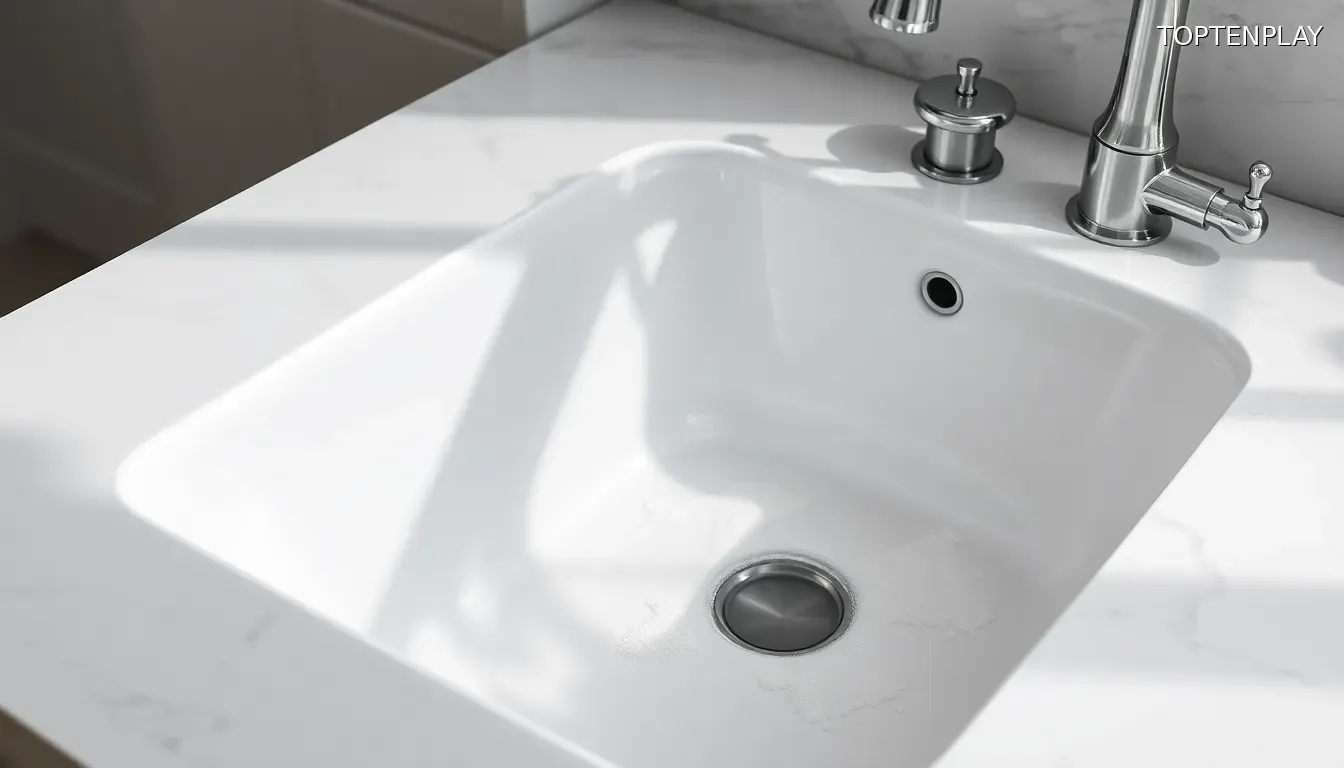
That sparkling clean finish you’re chasing with your trusted powdered cleanser might actually be destroying your expensive sink. While homeowners reach for products like Comet to tackle stubborn grime and buildup, few realize they’re potentially inflicting permanent damage on surfaces that cost thousands to replace.
The truth lies in the formulation: powdered cleansers contain mild abrasives specifically designed to scour away dirt through friction. This same gritty texture that makes them effective against tough stains becomes a liability when applied to delicate sink materials. The mild abrasive in powdered cleaners can scratch some sink materials, including porcelain, composite, and some metals, creating irreversible damage that compromises both aesthetics and resale value.
Consider the financial implications. Premium sinks represent significant investments in kitchen and bathroom design, often serving as focal points that define a space’s elegance. Yet a single cleaning session with the wrong product can leave microscopic scratches that accumulate over time, dulling the surface and creating areas where bacteria and stains can penetrate more easily.
The cleaning industry’s dirty secret? Material composition matters more than cleaning power. What works safely on one surface can spell disaster for another, leaving homeowners unknowingly sabotaging their own investments with every scrub.
This revelation forces a critical question: which sink materials can actually withstand powdered cleansers, and which require entirely different approaches to maintain their pristine condition?
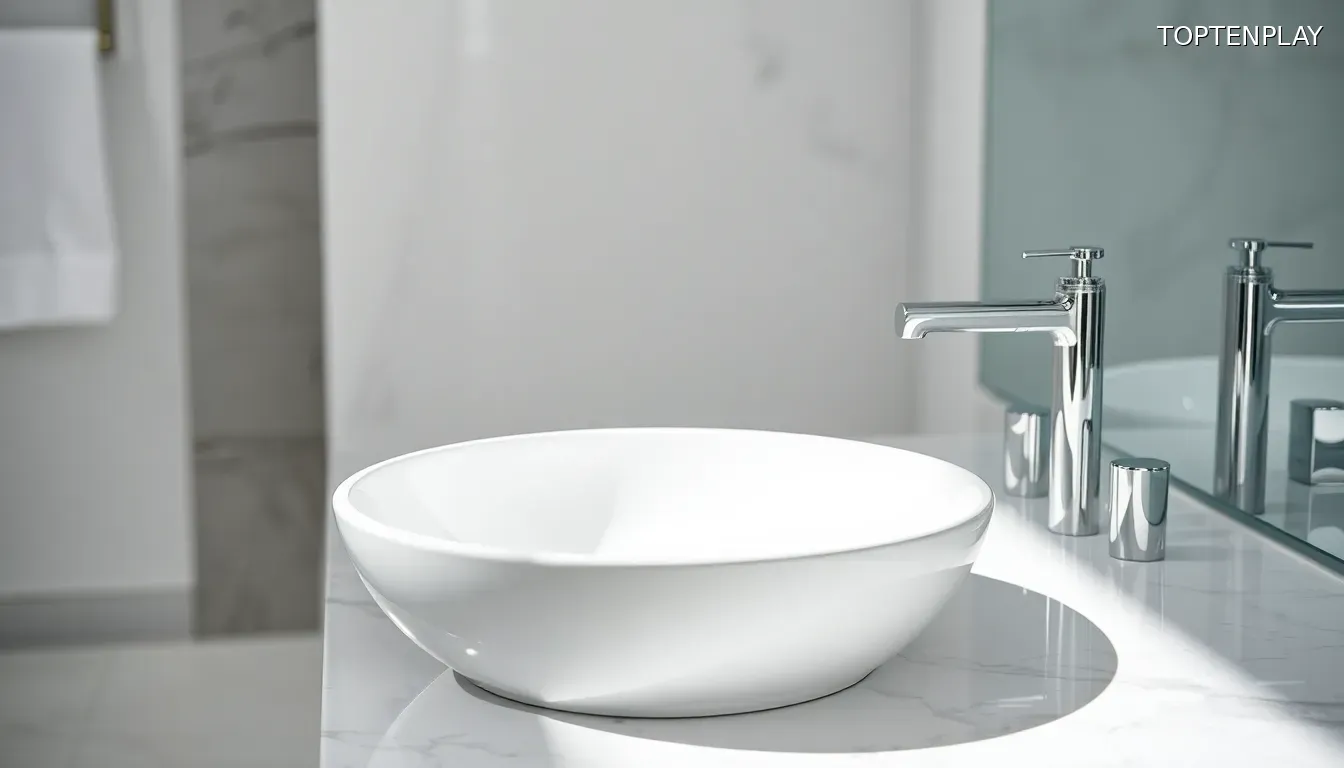
Image d’illustration © TopTenPlay EN
Porcelain Sinks: When Elegance Meets Fragility
Porcelain sinks represent the perfect storm of beauty and vulnerability in modern home design. These expensive and elegant fixtures command premium prices precisely because of their lustrous finish and timeless appeal, yet their stunning appearance masks a fundamental weakness that makes them particularly susceptible to powdered cleanser damage.
The culprit lies in porcelain’s very construction. These sinks feature a porcelain coating, which is a brittle material with a tendency to scratch when exposed to abrasive substances. Unlike the solid material construction of other sink types, this coating creates a protective barrier that, once compromised, cannot be easily restored without professional refinishing or complete replacement.
The economics become stark when considering maintenance costs. A single aggressive cleaning session with powdered cleanser can create microscopic fractures in the porcelain surface. These tiny imperfections may seem insignificant initially, but they act as entry points for stains and bacteria, gradually compromising the sink’s hygienic properties and aesthetic appeal.
Harsh scrubbing can permanently damage the finish, transforming a showcase feature into a constant reminder of a costly cleaning mistake. The irony is unmistakable: the very act intended to maintain cleanliness can destroy the surface’s ability to stay clean effectively.
For porcelain sink owners, every cleaning decision requires weighing cleaning effectiveness against potential damage. The risk-reward calculation rarely favors the powdered approach, leaving homeowners searching for alternatives that can maintain their investment’s pristine condition without compromising its structural integrity.
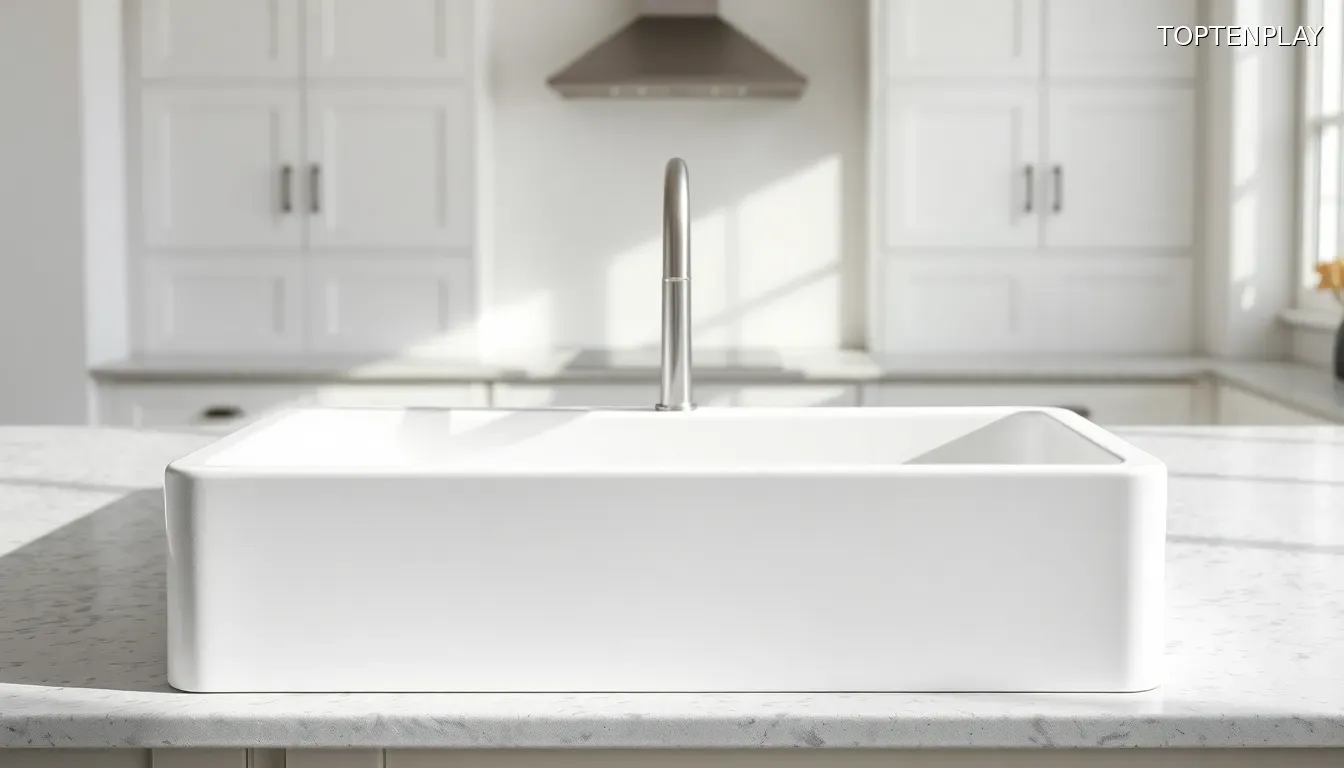
Image d’illustration © TopTenPlay EN
The Fireclay Exception: The Only Safe Haven For Powdered Cleansers
While porcelain sink owners navigate the treacherous landscape of gentle alternatives, there exists one remarkable exception that defies conventional wisdom about powdered cleansers: fireclay sinks stand as the sole material genuinely safe for abrasive cleaning products.
This singular distinction stems from fireclay’s extraordinary manufacturing process. Due to the high temperatures used in crafting fireclay, these sinks develop heat, stain, scratch, and chip resistance that surpasses virtually every other sink material on the market. The extreme heat exposure during production fundamentally transforms the clay’s molecular structure, creating an impenetrable barrier that laughs in the face of household cleaning challenges.
The revelation becomes even more significant when considering the cleaning freedom this provides. In the event of gunk buildup, it is safe to use a mildly abrasive cleaner, such as a powdered cleanser, on fireclay without fear of permanent damage. This represents a complete reversal of the cautious approach required for other premium materials.
For homeowners who swear by the gritty effectiveness of powdered cleansers, fireclay sinks offer an almost liberating solution. The irony is unmistakable: while expensive porcelain demands kid-glove treatment, these equally sophisticated fixtures welcome the very cleaning methods that would destroy their delicate counterparts.
This unique resilience positions fireclay as the ultimate choice for those unwilling to compromise their preferred cleaning methods for the sake of sink preservation.
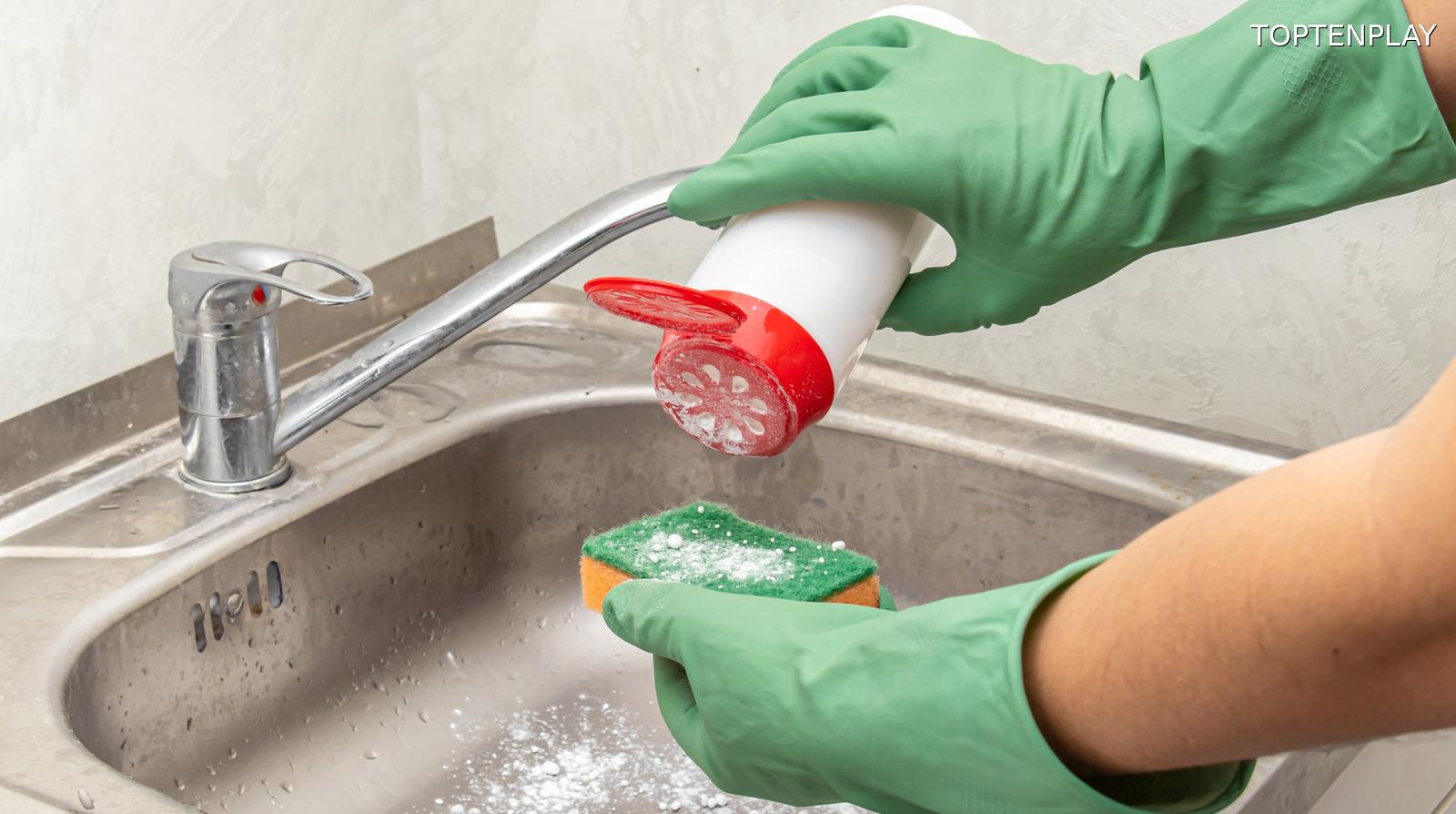
Image d’illustration © TopTenPlay EN
Material-Specific Cleaning Strategies And Safe Alternatives
For the majority of homeowners without fireclay’s legendary resilience, the reality demands a more nuanced approach to sink maintenance. The best methods for cleaning other sink materials will vary dramatically, but when in doubt, the golden rule remains: avoid using any powdered cleansers entirely.
The safest universal strategy centers on gentler cleaning substitutes that deliver results without risking expensive damage. For regular cleaning, use a microfiber cloth or soft sponge, warm water, and liquid dish soap. This trinity of gentle tools effectively wipes down the sink and rinses away buildup from the surface, allowing deeper impurities to become visible for targeted treatment.
However, even within the realm of supposedly durable materials, critical distinctions emerge. Stainless steel presents a perfect example of this complexity: with a satin stainless finish, an occasional powdered cleanser may be perfectly acceptable, but with a high-gloss mirror finish, any abrasive could damage the seal permanently.
The vulnerability extends far beyond stainless steel variations. Cast iron, copper, natural stone, and glass sinks all share this susceptibility to scratching, requiring the same soft-touch approach that porcelain demands. Copper and brass-plated sinks represent perhaps the most demanding category, combining luxe aesthetics with elaborate maintenance needs that make them particularly unsuitable for aggressive cleaning methods.
The pattern becomes unmistakable: premium sink materials universally reward patience and gentleness while punishing shortcuts with irreversible damage.