Image d’illustration © TopTenPlay EN
The Open Shelf Kitchen Organization Challenge
Kitchens remain among the most consistently difficult spaces to keep organized in any home. From overflowing storage containers to food items that seem to multiply overnight, maintaining order becomes a daily battle. When you use an area multiple times throughout the day, it’s remarkably easy to lose the organization system you initially put in place for convenience.
Open shelf kitchens amplify this challenge exponentially. Unlike traditional cabinets that hide clutter behind closed doors, these exposed storage systems put everything on display. People will see all your dishes, glasses, and ingredients at a glance. This visibility creates a new pressure: balancing functionality with visual appeal becomes essential rather than optional.
The psychological impact of this exposure cannot be underestimated. Every misplaced item, every cluttered corner, every disorganized stack becomes immediately apparent to both family members and guests. Traditional plastic containers that work perfectly in hidden pantries suddenly feel inadequate when displayed prominently.
However, this apparent disadvantage contains its own solution. The open shelving trend, when paired with strategic storage containers, transforms organization from a hidden necessity into a visible design element. « While a visually appealing organization is a priority for this kind of storage system, it can be solved with the storage container fix. »
The key lies in selecting containers that serve dual purposes: maintaining practical organization while contributing to your kitchen’s overall aesthetic. This approach turns the challenge of exposed storage into an opportunity for functional design.
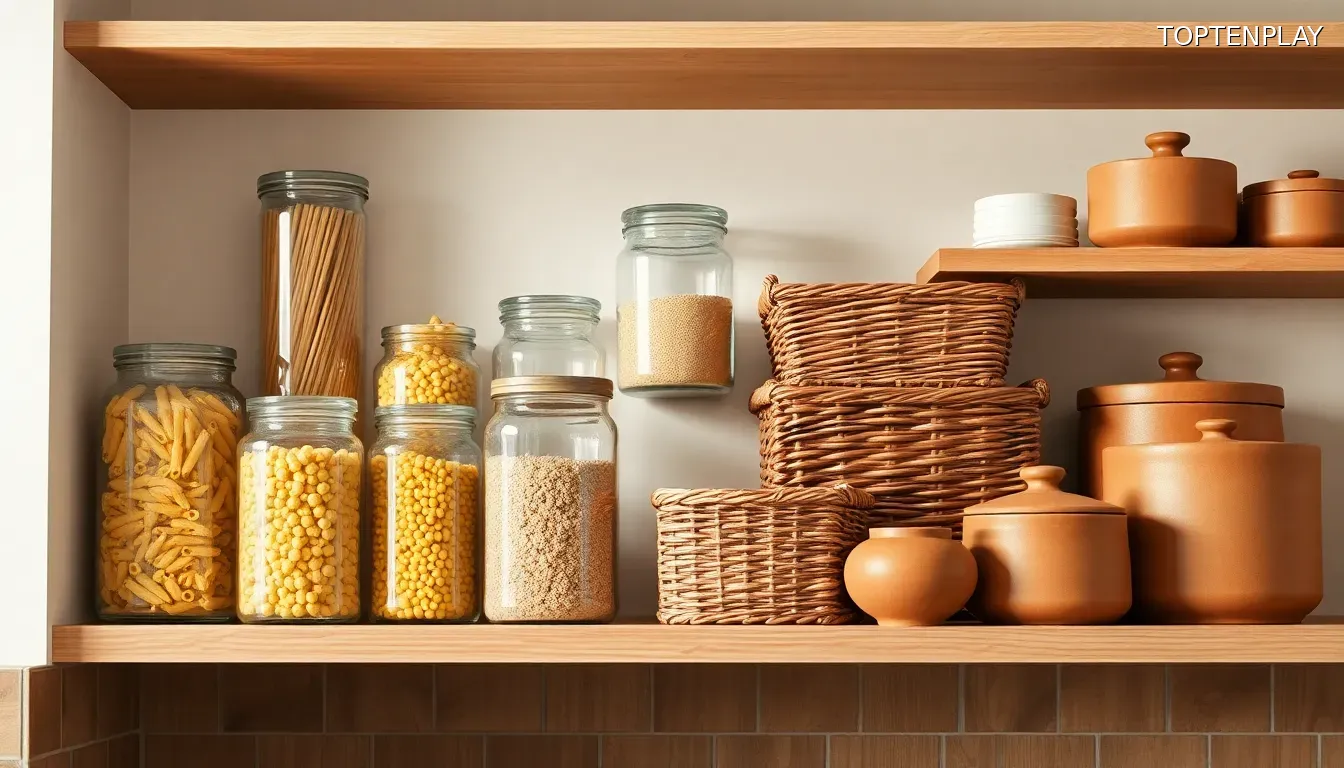
Image d’illustration © TopTenPlay EN
The Four Fundamental Design Elements For Storage Containers
Transforming storage containers into functional design elements might seem overwhelming at first glance. The abundance of available options—from glass jars to wicker baskets, ceramic pots to plastic containers—can create decision paralysis. However, successful open shelf organization relies on mastering just four fundamental design principles.
Color forms the foundation of any cohesive storage system. The first crucial decision involves choosing between clear or opaque containers, then establishing a consistent color palette that complements your existing kitchen aesthetic. This choice will guide every subsequent container selection.
Height variation creates visual rhythm across your shelves. Monotonous rows of identical containers appear static and uninspiring, while strategic height differences generate dynamic visual flow. Mixing tall glass jars with shorter ceramic vessels prevents the eye from becoming bored.
Contrast adds essential visual interest without requiring complex design knowledge. Pairing smooth glass surfaces with textured wicker baskets, or combining matte ceramic finishes with glossy containers, creates depth and sophistication.
Texture completes the visual equation by engaging multiple senses. The rough weave of natural baskets contrasts beautifully with the smooth surface of glass jars, while ceramic pots add substantial weight to lighter materials.
« There are really only four basic ones that are important to keeping things visually appealing and interesting: color, height, contrast, and texture. » Once you understand these principles, selecting the perfect storage containers becomes an intuitive process rather than a daunting challenge.
The key lies in applying these elements systematically to create cohesive storage solutions that enhance rather than compete with your kitchen’s existing design.
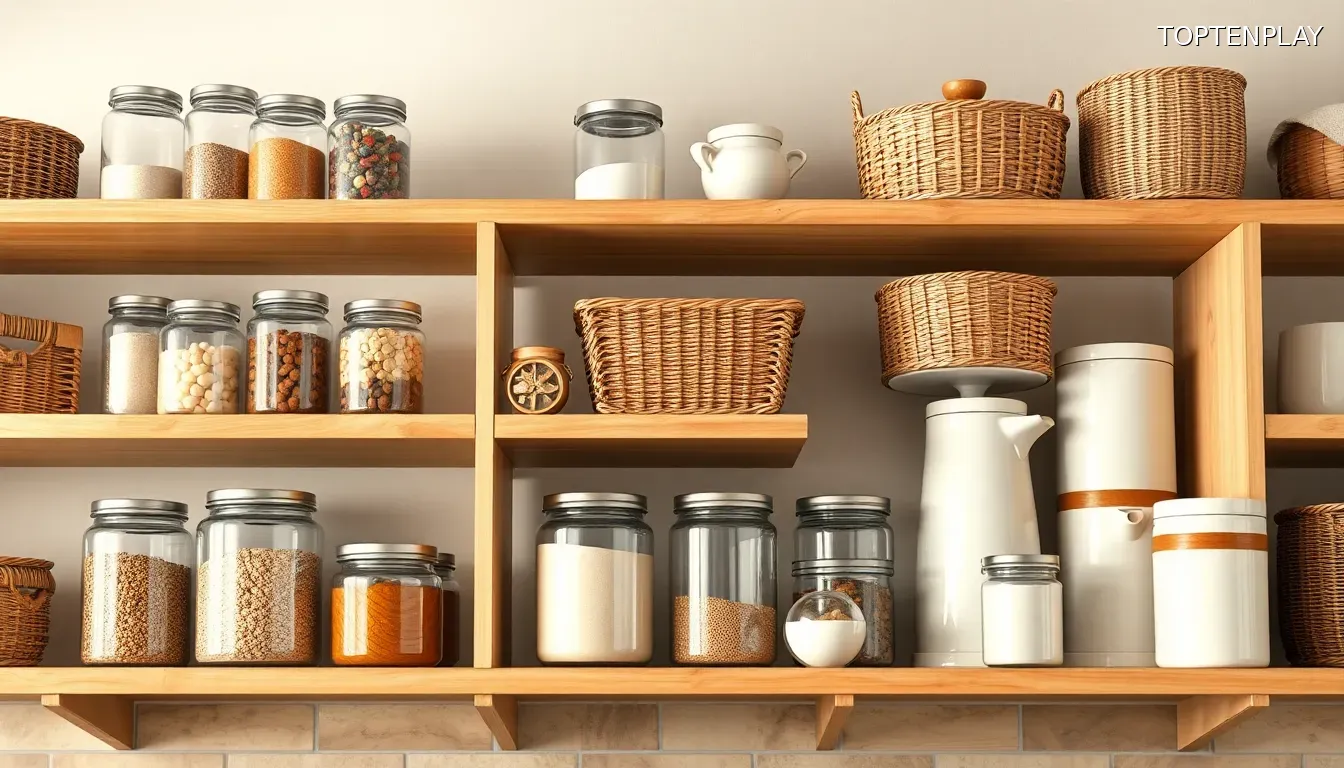
Image d’illustration © TopTenPlay EN
Choosing Between Clear And Opaque Storage Options
Applying these design elements systematically begins with a critical first decision: the transparency level of your storage containers. This fundamental choice shapes your entire organizational strategy and determines how your kitchen will function on a daily basis.
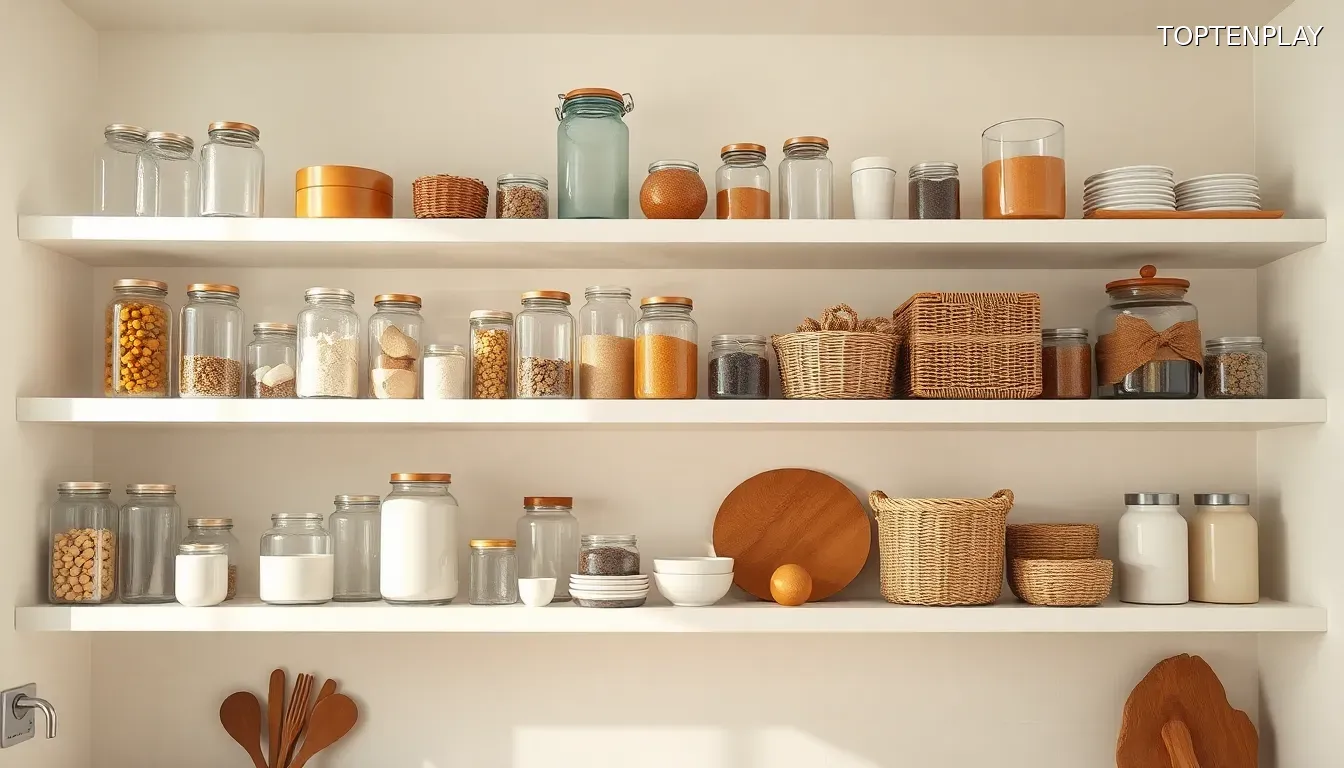
Clear containers offer unparalleled practicality for ingredient storage. Glass jars transform ordinary pantry staples into visual displays while eliminating guesswork during cooking. You’ll instantly identify contents without opening lids, reducing preparation time and preventing duplicate purchases. This transparency particularly benefits baking enthusiasts who need quick access to various flours, sugars, and specialty ingredients.
However, opaque storage solutions provide superior aesthetic control. Baskets and lidded ceramic jars conceal visual clutter while maintaining design cohesion. « If you’d rather go with opaque-colored options, baskets or lidded ceramic jars would work well. » These containers excel at hiding less photogenic items like cleaning supplies or miscellaneous utensils that could disrupt your carefully curated visual scheme.
The most successful approach combines both strategies thoughtfully. Earth-toned clay pots work beautifully for storing cooking utensils, while tan wicker baskets accommodate dishes or fresh fruit. This coordinated opaque system maintains visual harmony without sacrificing functionality.
Remember to vary heights and textures within your chosen transparency level. Tall ceramic vessels paired with shorter wicker baskets create the dynamic visual rhythm essential for engaging open shelf displays.
The key lies in matching your selection to your kitchen’s primary function. Heavy cooking requires maximum ingredient visibility, while entertaining-focused spaces benefit from aesthetically driven opaque solutions that prioritize visual appeal over immediate accessibility.
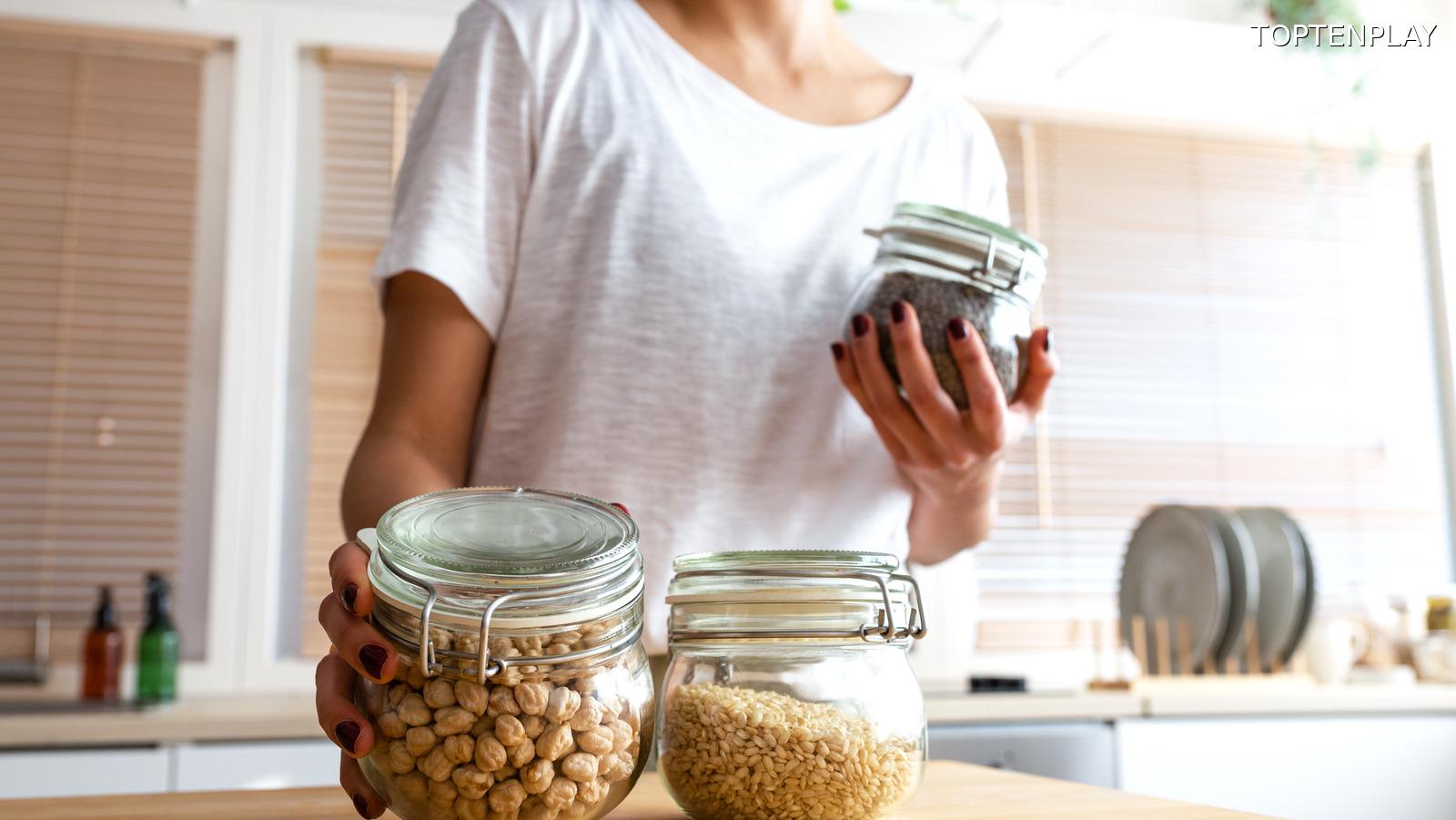
Image d’illustration © TopTenPlay EN
Strategic Grouping And Sectioning For Maximum Efficiency
Once you’ve selected transparent containers for ingredient visibility, the real organizational challenge begins: creating logical sections that maximize both functionality and visual coherence. Random placement transforms even the most beautiful glass jars into visual chaos that defeats the purpose of open shelving.
Systematic categorization becomes your most powerful tool. Group dried pastas together in one section, dedicate another area exclusively to spices, and establish a separate zone for snacks and cereals. This sectioning approach eliminates the frantic searching that typically accompanies meal preparation while creating distinct visual blocks that are pleasing to the eye.
The strategic advantage extends beyond mere convenience. « Glass jars are great because you can see what’s in each container without opening them up, » but sectioning amplifies this benefit exponentially. When similar items occupy the same shelf area, your brain processes the organization pattern faster, reducing decision fatigue during cooking.
Color coordination within each section maintains visual harmony across your open shelves. Grouping creates natural color stories – golden pasta varieties cluster together, vibrant spices form their own rainbow display, and neutral grains establish calming visual anchors. This systematic approach « helps not only with efficiency, but also with keeping the color scheme of your kitchen and shelves cohesive, instead of being spread out and jumbled. »
Smart sectioning also facilitates inventory management. Similar items grouped together reveal when supplies run low and prevent accidental over-purchasing. This organizational clarity transforms your open shelves from mere storage into an efficient kitchen management system that works as hard as it looks good.