A Thursday evening, last steak in the fridge, not much else around, and no desire to complicate things. This marinade exists precisely for such evenings. Five minutes of prep, an hour of patience, and the most ordinary cut transforms into something truly plate-worthy.
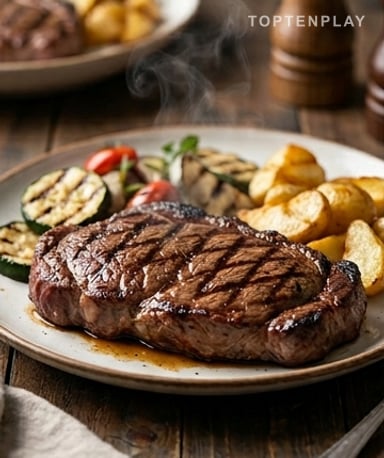
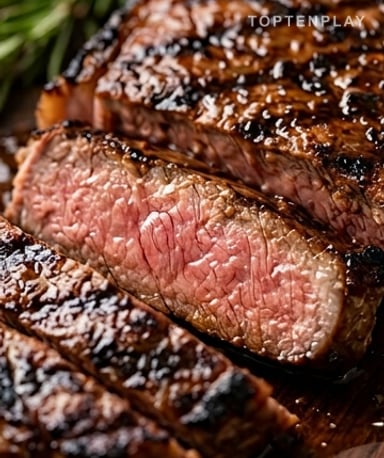
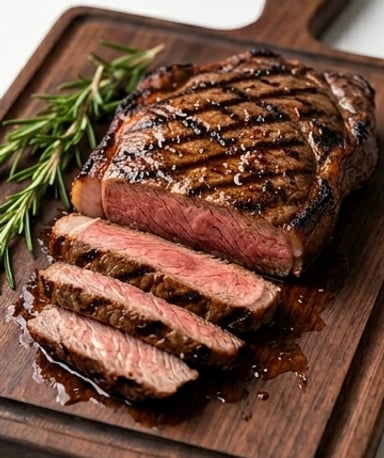
The steak’s surface is a lacquered brown, somewhere between caramel and dark chocolate — what the grill does when balsamic vinegar and soy sauce meet high heat. Under the crust, the meat is pink, tender, still very juicy. The smell of grilled garlic and rosemary rises before the plate even hits the table. You don’t need much else.
Why you’ll love this recipe
Ingredient Notes
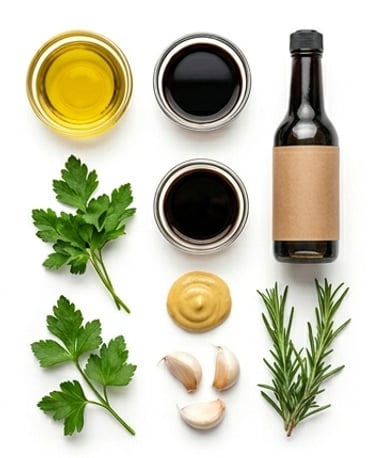
Olive oil, soy sauce, balsamic vinegar, mustard, garlic — pantry staples that do the job.
- Balsamic vinegar : It’s the main acid in the marinade, and it plays a double role: tenderize meat fibers and bring a sweet-caramelized note during cooking. A basic supermarket balsamic works perfectly — no need to pull out the IGP bottle from Modena for this.
- Worcestershire sauce : One of the most underestimated sauces in the pantry. It brings a slightly sweet umami depth with an undertone of spices that is hard to replicate otherwise. Lea & Perrins is the reference, but any brand works.
- Soy sauce : It takes care of the salt — no need to season separately. It also helps form that dark, shiny crust during cooking thanks to the Maillard reaction. Go for low-sodium if you’re watching your salt intake.
- Dijon mustard : It emulsifies the marinade so it adheres better to the meat surface, and adds a spicy note that completely melts during cooking. A real strong Dijon, not mild mustard — the difference is really noticeable.
- Fresh garlic : Garlic powder is fine if you have nothing else, but fresh minced garlic gives an aromatic intensity that powder cannot replicate. Two well-grated cloves are enough — we don’t want garlic to take over.
Prepare the marinade the day before (or an hour ahead, that’s already good)
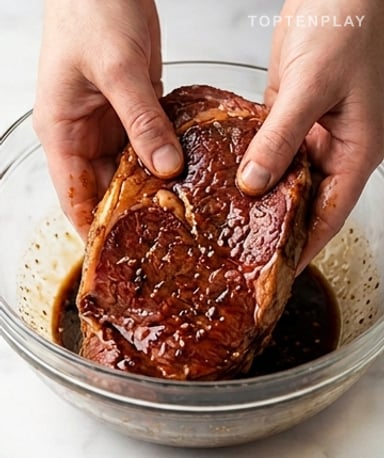
Everything starts in a glass bowl or a freezer bag — avoid metal, as acidity reacts with it and alters the taste. You pour olive oil, Worcestershire, soy sauce, balsamic vinegar, mustard, minced garlic, and herbs, and mix. The color is a deep brown, almost black, with amber traces from the balsamic. Place the steak in it, coat each side well, and put in the fridge. Minimum one hour for ribeye or rump steak. But flank steak or flat iron steak can marinate up to 24 hours — fibers really relax deeply over time. Do not exceed this threshold: beyond that, the texture starts to become mushy.
Dry the steak well before putting it on the fire
When you take the steak out of the fridge, pat it dry with paper towels. Really — this step changes everything. Residual surface moisture prevents crust formation: the meat steams instead of searing, and you lose all the benefit of the marinade. Also let the cut come to room temperature for 15 to 20 minutes. A cold steak placed in a very hot pan cooks unevenly — burnt crust outside, still cold center inside. The surface should be dry and slightly sticky to the touch before going on the fire. That’s the good sign.
Don’t touch anything for 3 to 4 minutes
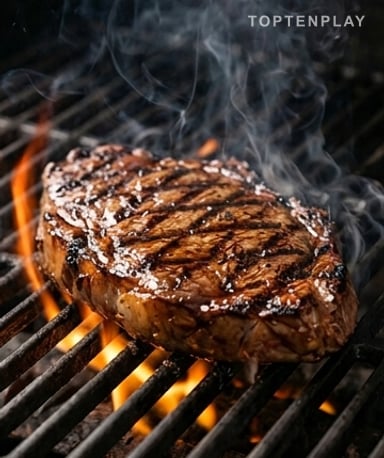
The pan or grill must be very hot — a thin wisp of smoke rising, and it’s ready. Place the steak and resist the urge to move it. The first contact produces a dry, intense sizzle; the sugars in the marinade start to caramelize against the hot surface. If you move the meat too early, you break that crust before it has time to form. Flip once. Just once. The second side needs exactly the same treatment.
Let it rest — really, not just 30 seconds
Three minutes on a board, loosely covered with aluminum foil. During this time, the juices that concentrated in the center during cooking redistribute throughout the cut. If you cut immediately, you literally see them flow onto the plate — and the steak becomes dry. Three small minutes of patience, and you get meat that stays juicy until the last bite. It’s the kind of detail that makes the difference between a good steak and a just-okay steak.
Tips & Tricks
- Never reuse the marinade directly as a sauce — it has been in contact with raw meat. Either throw it away, or bring it to a full boil for a few minutes before serving.
- If using dried rosemary instead of fresh, crush it between your fingers before adding to the marinade. This awakens the essential oils and releases significantly more aroma.
- Freeze excess marinade in ice cube trays. One cube thaws in 20 minutes at room temperature — handy for evenings when culinary inspiration is zero.
How long should the steak marinate?
At least 1 hour for ribeye or rump steak. Tougher cuts like flank steak or flat iron can stay up to 24 hours — the fibers really relax deeply. Beyond 24 hours, the texture becomes mushy: do not exceed this limit.
Can the marinade be reused as a sauce?
Not directly — it has been in contact with raw meat. If you want to use it as a sauce, bring it to a full boil for at least 2 minutes before serving. Otherwise, discard it without hesitation.
Which beef cuts are best for this marinade?
Flank steak, flat iron, rump steak, and sirloin all respond very well to this kind of marinade — these are flavorful cuts that need tenderizing. For prime cuts like filet or thick ribeye, simple salt and pepper seasoning is often sufficient.
Can the marinade be prepared in advance?
Yes, and it’s even recommended. The marinade without meat keeps for 3 days in the refrigerator in an airtight container. You can also freeze it in small portions in ice cube trays — handy for evenings when you haven’t had time to prepare anything.
Can the steak be cooked in the oven instead of a pan?
Yes, using the broil setting at 220°C (430°F), about 8 to 10 minutes, flipping halfway. Remember to dry the steak’s surface before placing in the oven — that’s as important as on the stovetop for a nice crust.
How to replace Worcestershire sauce if I don’t have any?
A mix of soy sauce + a few drops of lemon juice + a pinch of brown sugar yields a similar result. The umami depth won’t be exactly the same, but the marinade remains very good.
Tender and Flavorful Steak Marinade
American
Main course
An express marinade made with olive oil, soy sauce, balsamic vinegar, and Dijon mustard that tenderizes and enhances any beef cut in just one hour.
Ingredients
- 4 (about 700g) beef steaks (flank, rump or sirloin)
- 60ml (¼ cup) olive oil
- 30ml (2 tbsp) Worcestershire sauce
- 30ml (2 tbsp) soy sauce
- 30ml (2 tbsp) balsamic vinegar
- 15ml (1 tbsp) strong Dijon mustard
- 2 garlic cloves, finely minced
- 1 tbsp fresh chopped parsley
- 1 tsp fresh chopped rosemary (or ½ tsp dried)
Instructions
- 1In a glass bowl or freezer bag, mix olive oil, Worcestershire sauce, soy sauce, balsamic vinegar, Dijon mustard, garlic, parsley, and rosemary.
- 2Add the steaks and coat each side well with the marinade. Seal tightly and refrigerate for at least 1 hour, up to 24 hours for tougher cuts.
- 3Remove steaks from the refrigerator 15 to 20 minutes before cooking. Pat each side thoroughly dry with paper towels.
- 4Heat a pan or grill over very high heat until just smoking. Sear steaks for 3 to 4 minutes per side without moving them to form a golden crust.
- 5Remove from heat, cover with aluminum foil, and let rest on a board for 3 minutes before serving.
Notes
• Storage: unused marinade (without meat) keeps for 3 days in the refrigerator or can be frozen in cubes for future use.
• Oven cooking: on broil at 220°C (430°F), about 8 to 10 minutes, flipping halfway — always dry the steak’s surface before placing in the oven.
• Do not reuse raw marinade as sauce: bring to a full boil for 2 minutes if you wish to serve, or discard.
Nutrition Facts (per serving, estimated)
| 290 kcalCalories | 28gProtein | 4gCarbs | 18gFat |