One Saturday in November, when you feel like spending the whole morning in the kitchen. That’s exactly where this tarte Tatin finds its place. Not rushed, not complicated — just the right kind of dessert to finish a meal worth having.
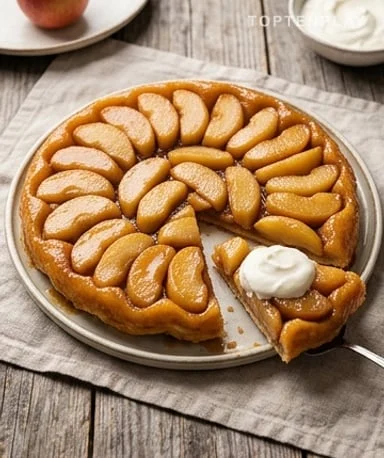
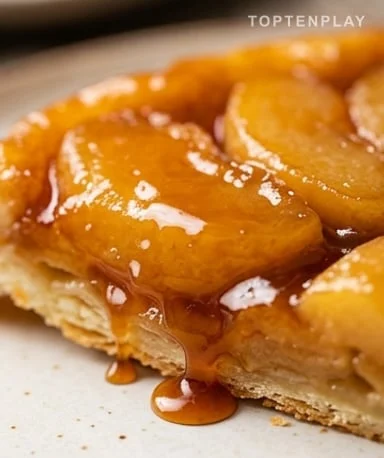
It arrives upside down on the plate, apples facing up, coated in a dark amber caramel that smells of brown butter and burnt sugar just right. The slices are translucent in places, almost candied. The pastry underneath cracks slightly under the spoon. It’s warm, heavy with sweetness, with that little edge of salt that lifts everything without you quite knowing why.
Why you’ll love this recipe
Ingredient Notes
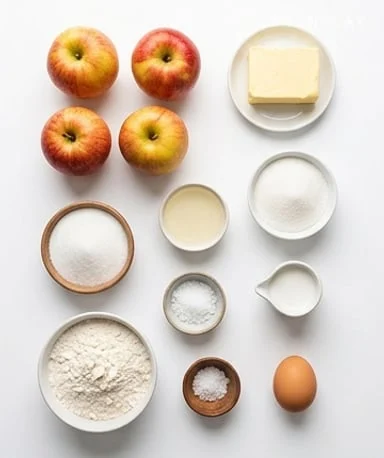
The ingredients of a true Tatin: firm apples, quality salted butter, and little else.
- Apples : Choose varieties that hold up during cooking: Golden, Reine des Reinettes, Boskoop, or Fuji. Avoid Granny Smith alone — too acidic, it gives a sharp Tatin. A mix of Golden and Boskoop is the ideal balance: tender and with some structure. Count two nice apples per person, they reduce a lot.
- Semi-salted butter : Not salted, not light. Semi-salted, preferably from Brittany, with at least 82% fat. That’s what makes the caramel — it must be quality. Take it out of the fridge thirty minutes before starting. Cold butter in a hot caramel makes lumps and is tricky to fix.
- Sugar : White, plain. No brown sugar here — it colors too fast and can mask the butter taste. White sugar lets you control the color, which is precious when you’re watching a caramel that can tip in ten seconds.
- Shortcrust pastry : Shortcrust, not puff. Puff pastry softens too quickly under the apples and gives a soggy base. A good store-bought shortcrust works perfectly. Homemade if you have time — flour, cold butter, ice water, a pinch of salt, ten minutes of work and an hour in the fridge.
Start with the caramel — and don’t take your eyes off it
Put the sugar directly in your pan or Tatin mold over medium heat. No water, no stirring. Watch it melt from the edges first, then slowly reach the center. When it takes the color of a light caramel — orange, transparent, like warm acacia honey — add the butter in pieces all at once. It sizzles loudly, a second of panic, it’s normal. Stir quickly with a spatula until smooth and shiny. The smell at this stage is exactly what you’re after: melted butter, caramelized sugar, a slightly smoky note but not bitter. If it smells burnt, start over — overcooked caramel can’t be saved.
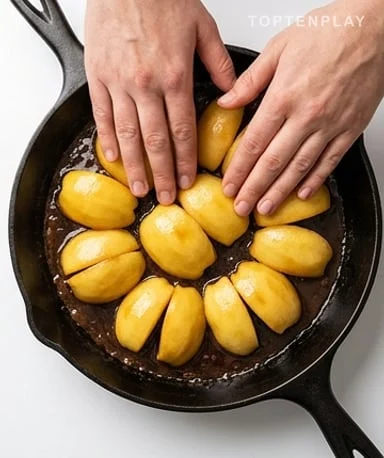
Arrange the apples tightly — very tightly
Peel the apples, cut them into thick wedges. Not too thin — they will melt during cooking and you won’t have much left. Arrange them standing up in the hot caramel, pressed tightly against each other in concentric circles. They should stick out at least two centimeters above the edge — they will sink. If you don’t put enough, you end up with a hollow Tatin and caramel taking all the space. Press with your palm if needed. Ideally, you can barely see the caramel between the wedges.
Cover, bake, and don’t open the oven again
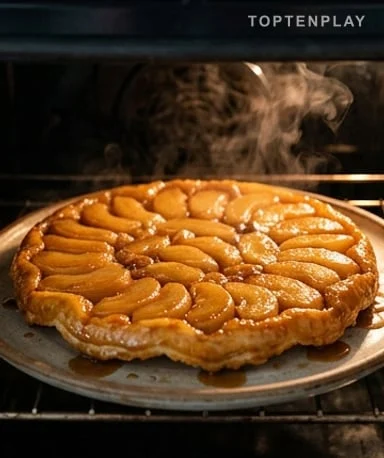
Roll out the shortcrust pastry into a disk slightly larger than your mold. Place it over the apples and tuck the edges inward like you’re tucking in. Prick two or three times with a fork to let steam escape. Bake at 200°C, fan-forced. The pastry will brown, the caramel will bubble at the sides, and the smell in the kitchen will become hard to ignore. Let the thirty minutes pass. Do not reopen.
Wait 5 minutes before flipping — no more, no less
Take the mold out of the oven. Wait exactly five minutes. Not ten — the caramel sets and the Tatin sticks. Not two — everything collapses. At five minutes, the caramel is still pliable but starting to thicken, the apples hold. Place a large flat plate over the mold, press firmly with your palm, and flip with a decisive motion. Hold both sides firmly. It should come out cleanly, with caramel slowly flowing over the apples coating them. If a few wedges stick in the mold, place them back by hand — nobody will see it.
Tips & Tricks
- Use a mold with high sides of at least 4 cm. A too shallow mold lets caramel overflow into the oven, causing a smell and a cleanup you’d rather avoid.
- If your caramel hardens before you finish arranging the apples, put the mold back over very low heat for thirty seconds. It will reliquefy without issue.
- Tatin keeps at room temperature for two hours without losing anything. In the fridge, the caramel sets — reheat it for ten minutes at 150°C before serving to restore the original texture.
What mold to use for a tarte Tatin?
An enameled cast iron or stainless steel Tatin mold with high sides (at least 4 cm) is ideal — it goes directly from stovetop to oven. An oven-safe pan works very well too. Avoid glass and silicone: not suited for direct caramel heat.
How to keep the caramel from burning?
Stay on medium heat and don’t stir the sugar while it melts — let it work alone. As soon as the color turns to light amber, remove from heat and add the butter immediately: caramel continues cooking for a few seconds off the flame, and that’s enough to turn it bitter if you wait too long.
Which apple variety to choose?
Golden, Reine des Reinettes, or Boskoop are the best: they hold up during cooking without turning into applesauce. Avoid overly juicy apples like Gala or Pink Lady — they release too much water, which dilutes the caramel and gives a soggy base.
Can I prepare the tarte Tatin in advance?
Yes, up to the day before. Let it cool completely, wrap and refrigerate without flipping. On the day, reheat for 10 to 15 minutes at 150°C before flipping. The caramel reliquefies and the texture returns almost like straight out of the oven.
The pastry tore during flipping, what should I do?
Reposition the pieces by hand — the caramel acts as natural glue. Let it rest for five minutes and the pieces stick well. An imperfect-looking Tatin tastes exactly the same.
Can I replace shortcrust pastry with puff pastry?
Not recommended. Puff pastry absorbs moisture from the apples and becomes soggy as it cools, especially if you reheat the Tatin. Shortcrust stays nicely crisp and handles hot caramel better.
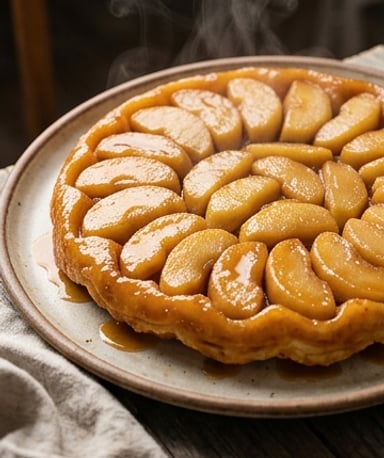
Tarte Tatin with Apples and Salted Butter
French
Dessert
The great French classic upside down: tender caramelized apples with semi-salted butter under a golden shortcrust pastry. Simple, effective, foolproof.
Ingredients
- 1.2 kg apples (Golden, Reine des Reinettes, or Boskoop)
- 150 g white sugar
- 80 g semi-salted butter (taken out 30 min before)
- 250 g shortcrust pastry (1 store-bought roll or homemade)
- 1 pinch fleur de sel (for finishing, optional)
Instructions
- 1Preheat the oven to 200°C fan-forced.
- 2Peel the apples and cut into thick wedges.
- 3In the Tatin mold over medium heat, melt the sugar without stirring until you get a light amber caramel.
- 4Remove from heat, add the butter in pieces and mix quickly with a spatula until smooth and shiny.
- 5Arrange the apple wedges tightly standing up in the caramel in concentric circles. They should stick out at least 2 cm.
- 6Roll out the shortcrust pastry into a disk slightly larger than the mold, place over the apples and tuck the edges inward. Prick 2 to 3 times.
- 7Bake for 30 minutes until the pastry is golden brown and the caramel is bubbling at the sides.
- 8Remove from the oven, wait 5 minutes, then flip decisively onto a large plate. Sprinkle with fleur de sel if desired.
Notes
• Storage: 2 hours at room temperature, up to 2 days in the fridge. Reheat for 10 minutes at 150°C before serving.
• Make ahead: prepare and refrigerate the Tatin unflipped the day before. Flip after reheating.
• Serve with a spoonful of thick crème fraîche or a scoop of vanilla ice cream to contrast with the hot caramel.
Nutrition Facts (per serving, estimated)
| 370 kcalCalories | 3 gProtein | 55 gCarbs | 16 gFat |