📌 Sweet Potato and Tuna Belly Millefeuille: The 30-Minute Recipe That Transforms Classic Stacking Technique
Posted 13 December 2025 by: Admin
The Sweet Potato Revolution In Classic French Pastry
French haute cuisine has long relied on puff pastry to create the delicate, layered elegance of millefeuille. Yet this recipe shatters that convention entirely, reimagining the iconic technique through root vegetables and accessible ingredients that deliver surprising sophistication. Instead of butter-laminated dough, alternating slices of sweet potato and regular potato become the foundation—a bold departure that transforms what could seem humble into something genuinely refined.
The genius lies in the method itself. Preheated to 200°C, a greased muffin tin becomes an architectural mold, each alvéole a vessel for precision engineering. Melted butter, drizzled generously between layers as they build, creates the signature flaky texture traditionally achieved through pastry lamination. Salt and pepper interspersed throughout the construction build flavor depth that develops during the 30-minute bake, while aluminum foil maintains moisture control—ensuring potatoes emerge tender rather than dried out.
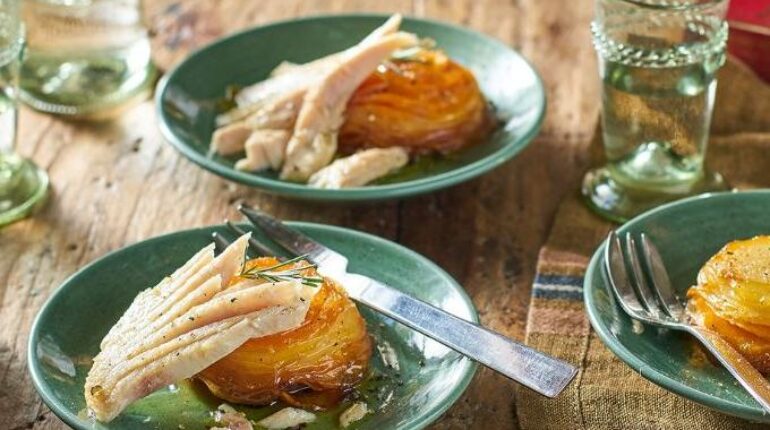
What emerges is visual and textural drama: golden-edged vegetable towers with distinct striped patterns from alternating potato varieties. The cooling period isn’t merely practical—it’s essential, allowing the structure to set before demolding onto wooden boards in that rustic-elegant presentation that defines contemporary plating. Here lies the bridge between classical technique and modern accessibility, between humble ingredients and restaurant-quality execution. The stage is now set for what transforms these vegetable stacks from compelling side into a complete dish worthy of fine dining.
Precision Slicing: The Foundation Of Perfect Layers
The visual drama emerging from the oven depends entirely on what happens before the heat ever touches the mold. Ultra-thin slicing of potatoes and sweet potatoes isn’t merely technique—it’s the irreplaceable foundation that separates professional millefeuille from amateur attempts. Begin with careful peeling, then proceed to the critical step: slicing both varieties thin enough that light passes through each disc, yet thick enough to maintain structural integrity during the 30-minute bake.
Melting butter over low heat requires equal attention. This gentle approach prevents the richness from scorching while ensuring even distribution between layers. The precision matters: precisely one teaspoon of melted butter per layer creates the signature moisture that binds vegetable slices into cohesive towers without saturating them into mush. This ratio—seemingly modest—orchestrates the entire texture profile.
Seasoning strategy amplifies complexity. Salt and pepper distributed between each layer, rather than applied afterward, penetrate the potato tissue as they soften, building flavor depth throughout the structure rather than concentrating it on the surface. This layered approach to seasoning mirrors the construction itself: incremental additions that compound into something greater than their individual parts.
When the aluminum foil finally lifts away and cooling begins, these preparation decisions manifest visually in perfect striped patterns and structurally in towers that hold their form through demolding. The technical mastery is complete. Now enters the element that elevates this from refined vegetable architecture into genuine fine dining.
The Ventresca Pairing: Premium Tuna Meets Root Vegetables
The vegetable architecture now complete, the dish demands an ingredient worthy of its refined construction. Ventresca—the buttery belly of premium tuna—transforms what could remain a sophisticated vegetable side into a legitimate fine dining centerpiece. This isn’t mere protein addition; it’s deliberate counterpoint. Where potatoes offer earthiness and sweet potatoes provide subtle sweetness, ventresca introduces umami depth and luxurious fat that mirrors the melted butter binding the layers below.
The preparation philosophy here embraces restraint. After draining, the ventresca requires nothing more than distribution across each warm stack. Over-manipulation dilutes the ingredient’s inherent quality. The textural contrast between warm, buttery vegetable towers and room-temperature tuna belly—maintained through proper cooling before unmolding—creates complexity on the palate that single-temperature plating cannot achieve. This temperature differential isn’t accidental; it’s architectural precision applied to sensory experience.
The wooden board or large platter serves dual purpose: functionally protecting the delicate stacks during transfer, aesthetically reinforcing the rustic-elegant duality that defines modern haute cuisine. Ventresca’s subtle marbling catches light against the geometric precision of alternating potato stripes, visual storytelling that speaks to both technique and ingredient quality. Each element now stands ready for its final composition.
Plating Perfection: Assembly And Final Presentation
The architectural precision achieved through layering and temperature control now demands equally exacting presentation. Each millefeuille unmolds from its muffin-tin mold with geometric clarity—alternating potato stripes visible as proof of methodical construction. This clean demolding, made possible only by proper greasing and careful cooling, preserves the signature striped appearance that distinguishes this dish from less disciplined approaches.
Individual placement on the plate represents the final technical decision. Rather than casual arrangement, each stack commands its own space, allowing diners to appreciate both the vegetable architecture and the protein it supports. The ventresca distribution follows: generous but controlled placement across the warm stack, ensuring every subsequent bite captures the harmony between fish and vegetable. This isn’t garnish application; it’s calculated composition.
The pepper pinch—a final gesture—serves dual function. Visually, it punctuates the pale buttery tones with dark accent. Sensorially, it introduces subtle heat that awakens the umami partnership between tuna belly and layered roots. Immediate service matters profoundly. The temperature contrast that defined sensory complexity during development demands preservation; delay diminishes the textural dialogue between warm interior and cool ventresca that elevates this dish beyond simple assembly into genuine culinary expression.