The Sablé Breton is the best strawberry tart you can make. Not the most spectacular, not the most complex — the best. That thick, buttery, slightly salty crust acting as the base: that’s the real hero of the dish.
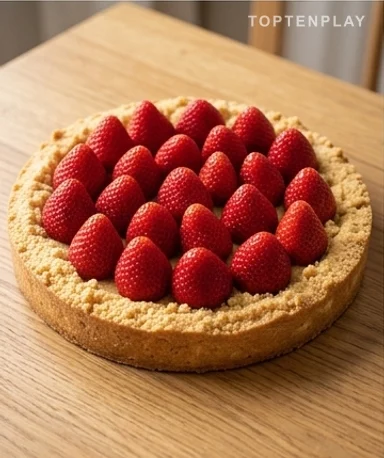
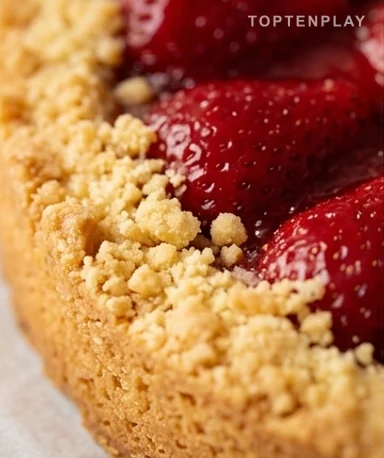
A light caramel-colored base, a good centimeter and a half thick, that sounds hollow when tapped. The strawberries are there, standing upright, tips in the air, their bright red contrasting with the golden base. When sliced, the dough crumbles slightly under the blade — that sandy texture that resists for a fraction of a second before giving way. The smell of warm butter and sugar coming out of the oven is hard to ignore.
Why you’ll love this recipe
Ingredient Notes
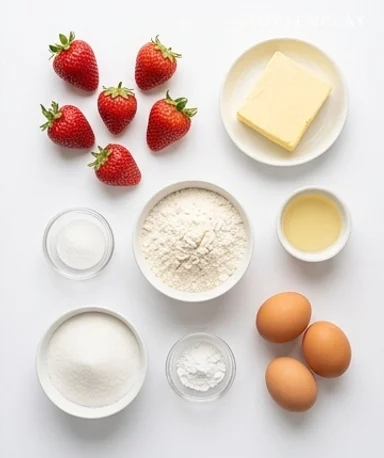
The sablé ingredients: semi-salted butter, fresh strawberries, flour, sugar, eggs, and baking powder — simple and effective.
- Semi-salted butter : This is the backbone of this recipe. Don’t use unsalted butter with a pinch of salt added by hand — it won’t give the same result. A classic Breton semi-salted butter (Président, Paysan Breton) does the job perfectly. The essential: it must be soft, not melted. We’re talking about a cream-like consistency, not a puddle.
- Strawberries : Gariguette if you can find them — they have that tangy fragrance that holds up during cooking. Charlotte are also good. Avoid those XXL Spanish strawberries that have no flavor; they will release water and soak the base. Choose medium-sized strawberries, roughly uniform, so the cooking is even.
- Egg yolks : The recipe uses only the yolks. They provide fat, color, and binding without making the dough elastic as a whole egg would. The 5th yolk is used as an egg wash for the edge — zero waste.
- T55 Flour : Standard all-purpose flour. No need to look for T45 or special pastry flour — T55 gives exactly the sandy texture we’re looking for here.
Take the butter out at least 30 minutes before starting
Soft butter is non-negotiable. If you forgot to take it out, don’t microwave it — you’d end up with partially melted butter, and the dough would become greasy and sticky rather than sandy. Leave it at room temperature. When you can easily press a finger into it and it leaves an indent, it’s ready. Preheat your oven to 180°C in the meantime and prepare your 22 cm ring on a baking sheet lined with parchment paper.
Work with your fingertips, never with your palms
Put the flour, baking powder, sugar, and butter in a mixing bowl. Crumble the butter into the dry ingredients with your fingertips — the same motion as when you rub bills. You’re looking for a coarse sand texture, like a crumble before it’s packed down. This takes 2 to 3 minutes. You’ll feel the dough becoming slightly oily and the small butter bits disappearing one by one. Then add the 4 egg yolks one by one while kneading. The dough will become compact, pull away from the bowl sides, and form a homogeneous ball without being sticky. It’s ready.
Roll out without forcing, this dough is fragile
Place the ball between two sheets of parchment paper. It’s soft but crumbles if you press too hard. Roll out gently from the center towards the edges, turning the paper regularly. Aim for a disk slightly larger than your ring — 24 to 25 cm. Place it in the ring on the tray, adjusting the edges with your fingers. If it cracks, don’t panic: press the pieces together, it’s easily repaired.
Press the strawberries halfway down, no more
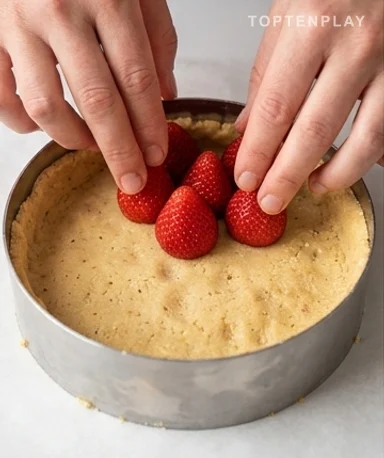
Wash, dry thoroughly, and hull the strawberries. A wet strawberry will release too much water in the oven and soak the dough around it — dry well. Arrange them on top by pressing slightly, tips up, leaving a 2 cm border all around. This border will puff up during baking and brown appetizingly, a deep gold turning to amber. Brush it with the 5th egg yolk. Bake for 45 minutes.
Do not slice before it’s completely cooled
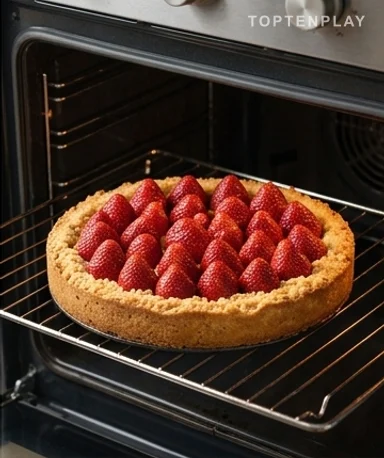
This is the hard part. Coming out of the oven, the sablé is still soft in the center — it will firm up while cooling on a wire rack. Cut it warm, and it will collapse. Leaver it for at least 25 minutes. The base will solidify, and the strawberries will set slightly in the dough. When slicing, you’ll hear that characteristic little crunch of sandy pastry. Serve at room temperature, possibly with a spoonful of thick crème fraîche on the side.
Tips & Tricks
- If your strawberries are very large, cut them in half lengthwise before placing them — they cook better and the sablé slices more cleanly.
- The dough can be prepared the day before and kept in the refrigerator wrapped in plastic wrap. Take it out 15 minutes before rolling so it’s flexible under the fingers again.
- To know if the sablé is cooked, check the edge: it should be a uniform caramel brown all around, not pale on one side. The bottom should sound hollow when you gently tap the baking sheet.
Can I replace the pastry ring with a classic tart pan?
Yes, a 22-24 cm tart pan with a removable bottom works very well. Avoid ceramic or glass pans as they conduct heat poorly — the bottom might stay soft. A metal pan with low sides is ideal for the edges to brown correctly.
How to store the strawberry Sablé Breton?
At room temperature, covered with a clean cloth, it stays good for 24 hours. In the refrigerator, count 2 days maximum in an airtight container — the crust will slightly soften but will still be very good. Do not freeze it with the strawberries: they would release too much water when thawing.
My dough crumbles and cracks when I roll it out, is that normal?
Perfectly normal — that’s exactly the nature of a sandy dough. If it cracks, simply press the pieces together with your fingers; the dough fuses back easily. If it crumbles excessively, your butter might have still been too cold: let the ball rest for 10 minutes at room temperature before trying again.
Can I use other fruits besides strawberries?
Yes, raspberries and apricots (cut in half, cut side up) work particularly well. Peaches and nectarines are great in summer. Avoid fruits that are too watery like watermelon or oranges which will soak the crust during baking.
Is semi-salted butter absolutely necessary, or can I use unsalted butter?
Semi-salted butter is what gives the Sablé Breton its distinctive character — that slight saltiness that balances the sweetness. If you don’t have any, use unsalted butter and add a good pinch of fleur de sel (about 3g) to the dough. The result will be very close.
Can I prepare the dough in advance?
Yes, and it’s even recommended. The dough ball keeps for 24 hours in the refrigerator, wrapped in plastic film. Take it out 15 minutes before rolling so it regains a flexible texture. The baked sablé can also be prepared the day before and kept at room temperature.
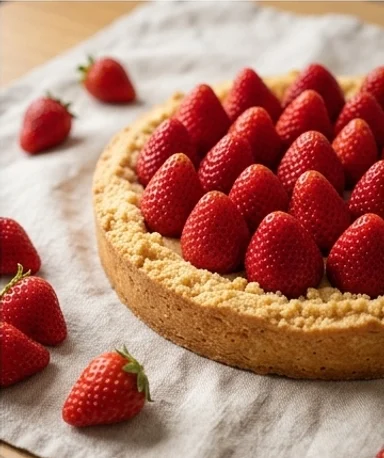
Strawberry Sablé Breton
French
Dessert
A buttery and crunchy pastry base, slightly salty, topped with fresh oven-baked strawberries. The simplest and most comforting summer tart there is.
Ingredients
- 350g fresh strawberries
- 200g soft semi-salted butter (taken out 30 min before)
- 300g T55 flour
- 150g caster sugar
- 5 egg yolks (4 for the dough + 1 for the wash)
- ½ sachet baking powder (about 5g)
Instructions
- 1Preheat the oven to 180°C. Prepare a 22 cm pastry ring on a baking sheet lined with parchment paper.
- 2In a bowl, mix the flour, baking powder, sugar, and butter with your fingertips until you get a coarse sandy texture.
- 3Add 4 egg yolks one by one, kneading by hand until a homogeneous ball forms.
- 4Roll out the dough between two sheets of parchment paper into a 24-25 cm disk, then place it in the ring.
- 5Wash, dry thoroughly, and hull the strawberries. Arrange them tip-up by pressing slightly into the dough, leaving a 2 cm border.
- 6Brush the border with the 5th egg yolk using a pastry brush. Bake for 45 minutes until the edge is golden brown.
- 7Let cool completely on a wire rack (minimum 25 minutes) before removing the ring and slicing.
Notes
• Storage: 24h at room temperature under a cloth. Up to 2 days in the refrigerator in an airtight box.
• Make-ahead: the dough can be prepared the day before and stored in the refrigerator wrapped in plastic film. Take out 15 min before rolling.
• Variation: replace strawberries with raspberries or apricots cut in half (cut side up) for an equally successful result.
Nutrition Facts (per serving, estimated)
| 570 kcalCalories | 7gProtein | 63gCarbs | 31gFat |