📌 Steak Fried Rice: the day-old cold rice technique for a result worthy of an Asian restaurant in 25 minutes
Posted 13 March 2026 by: Admin
The Secrets of Authentic Restaurant-Style Fried Rice
The difference between mediocre fried rice and a version worthy of an Asian establishment lies in a golden rule rarely followed: exclusively use cold day-old rice. This professional technique is non-negotiable. If the rice has just been cooked, it must be spread on a tray and cooled for 30 minutes in the freezer, otherwise the texture will be mushy rather than crispy.
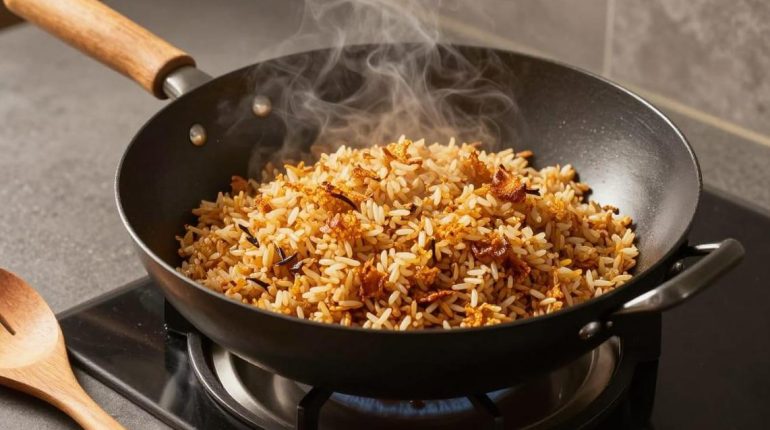
The cooking method reveals the chef’s expertise. The rice must cook in two distinct stages: first incorporated vigorously, then left entirely without stirring for several minutes to develop those golden, crispy edges characteristic of the best restaurants. This patience radically transforms the final texture.
Toasted sesame oil is the other secret jealously guarded by professional cooks. Never added at the start of cooking, it should only be poured in at the very end to preserve its intense and distinctive aroma. One teaspoon is enough to generously scent the entire dish.
Last crucial technical detail: the beef must be cooked in two separate batches. Overcrowding the pan causes steaming which makes the meat gray and rubbery instead of creating that savory caramelization that marks great dining. This culinary discipline guarantees a perfect sear on every piece.
Transforming Leftovers Into Culinary Treasure: 25 Minutes Flat
This recipe excels in the art of anti-waste valorization: leftover steak becomes the star ingredient of an express dinner without any taste compromise. The professional tip is to never re-cook meat that is already prepared. The remaining beef is simply sliced thinly and added at the very end of cooking, just long enough to warm through without losing its tenderness.
For raw steak, the technique requires 340g of sirloin cut into thin strips against the grain, seasoned with half a teaspoon of steak spice. Cooking must be done in two distinct batches: each portion sears for 1 to 2 minutes without being stirred, then 1 additional minute after mixing. This discipline guarantees the sought-after caramelization rather than grayish, steamed meat.
Strategic assembly reveals a culinary mastery often overlooked. Beaten eggs are cooked first with a pinch of salt until just set and still shiny, then removed from the pan. They only rejoin the dish at the final stage, thus preserving their soft texture. This meticulous sequence avoids overcooking that would turn the eggs into rubbery grains.
Frozen vegetables radically simplify execution: 2 cups of peas and carrots are added directly without thawing, cooking for 3 to 4 minutes until perfectly tender. This pragmatic approach drastically reduces prep time while guaranteeing optimal texture and preserved flavors.
The Ingredient Arsenal For A Professional Result
The technical base relies on 4 cups of cold white rice, worked with 3 tablespoons of vegetable oil distributed strategically throughout the cooking process. This precise amount creates the necessary coating without saturating the dish with unnecessary fat. Crumble the rice between slightly damp fingers before entering the pan if lumps persist, guaranteeing well-separated grains.
The aromatic trio of ginger-garlic-green onion constitutes the soul of the dish. Two minced garlic cloves, 2 teaspoons of freshly grated ginger, and the white parts of 4 thinly sliced green onions sauté for exactly 1 minute in hot oil. This timing releases the intense fragrances without burning the aromatics, creating the characteristic flavor foundation.
The 2 cups of frozen peas and carrots cook for 3 to 4 minutes until just perfectly tender. This moderate cooking preserves the light crunch that contrasts with the soft rice and melting beef.
The final incorporation reveals a little-known chef’s trick: the 2 tablespoons of soy sauce are poured onto the scorching edge of the pan rather than directly onto the rice. This gesture creates an instant sizzle that partially caramelizes the sauce before mixing, intensifying the umami. The toasted sesame oil, only 1 teaspoon, is added at the very last step to preserve its powerful and delicate aroma that prolonged heat would irremediably destroy.
Personalization And Storage To Extend The Experience
Beyond the classic recipe, this fried rice accepts bold creative variations that renew the experience without betraying its identity. Adding diced fresh pineapple transforms the dish into a tropical sweet-and-savory version, while a generous spoonful of sriracha or chili crunch injects a spicy heat that wakes up every bite. Toasted sesame seeds, a few extra green onions, or a squeeze of lime juice provide a personalized final touch.
Vegetables can be replaced without constraint: sliced mushrooms, diced zucchini, crunchy snow peas, or colorful bell peppers fit perfectly into the formula. Fresh finely chopped carrots replace the frozen version with 2 to 3 minutes of additional cooking time.
Optimal storage guarantees 4 days in the refrigerator in an airtight container, or 2 months in the freezer for strategic planners. Reheating requires overnight thawing in the fridge, then a pass over low heat in a covered pan with a few drops of water to soften. Once reheated, removing the lid and adding a drizzle of oil allows you to recreate that characteristic crispiness in a few minutes of additional cooking.
With 526 calories per serving and 30g of protein, this complete dish is ideally accompanied by a refreshing cucumber salad or steamed edamame for perfect nutritional balance.