📌 Sriracha Tuna and Gomasio Onigiri
Posted 7 April 2026 by: Admin
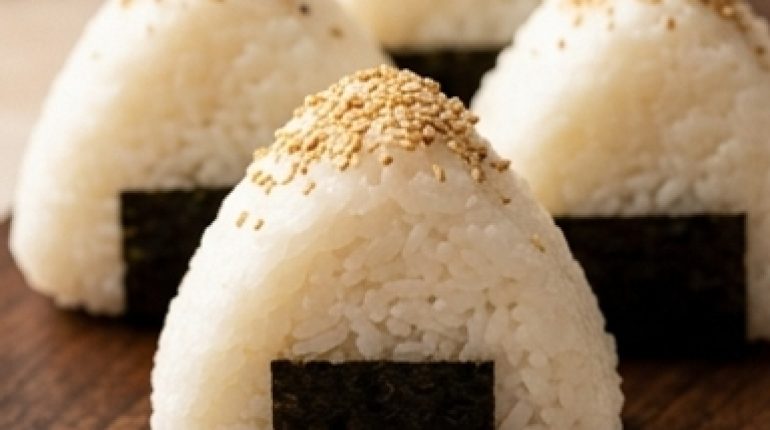
The gomasio crackling between your teeth against the still-warm rice — that’s what you’ll remember from this recipe. Homemade onigiri, stuffed with sriracha tuna, ready in less than 40 minutes. Japanese street food without the fuss.
Hold one in your palm. The rice is compact but not hard; it yields slightly under your fingers with that characteristic sticky texture of well-cooked rice. The almost black nori strip at the base crunches softly at the first bite. Inside, the filling is creamy — the mayonnaise binds everything together, while the sriracha arrives in a second wave with a frank, direct heat. And the gomasio on the surface, those small grains of toasted sesame mixed with salt, brings a roasted note that changes everything.
Why you’ll love this recipe
Ingredient Notes
Everything needed for eight onigiri: jasmine rice, canned tuna, mayonnaise, sriracha, and organic gomasio.
- Jasmine rice : This isn’t traditional sushi rice, which is round and even stickier, but it works very well here. Its slight floral fragrance disappears during cooking, and its hold is sufficient to form a triangle that doesn’t collapse. If you have sushi rice in stock, use that instead — the result will be even more compact.
- Organic gomasio : A blend of toasted sesame and salt, originating from Japan. it’s a great alternative to plain salt on the surface and brings a much more interesting roasted note. You can easily find it in organic or Asian grocery stores. The organic version often has more fragrant sesame — it’s worth the detour.
- Sriracha : One tablespoon in the filling is the right balance with the mayo: it adds a kick without dominating. Offer a small bowl on the side so everyone can dose it to their liking — not everyone likes the same level of spice.
- Nori : Get sushi nori sheets, not the small snack sizes. Cut them into strips 3 to 4 cm wide. They soften quickly upon contact with damp rice — if you want to keep that characteristic crunch, wrap them truly at the last moment before serving.
Cook the rice without opening the lid, that’s the rule
450 g of jasmine rice in the pot, 600 ml of cold water, one teaspoon of salt. Bring to a boil, cover, lower the heat to minimum, and cook for ten minutes without lifting the lid. This trapped steam is what makes the rice fluffy and sticky — releasing it too early dries it out. Turn off the heat and let it rest for another five minutes covered. The rice should be pearly white, slightly translucent on the edges, and stick slightly to the wooden spoon when you stir it.
Prepare the filling while the rice rests
Drain the tuna seriously — press the lid against the can to extract as much liquid as possible, otherwise the filling will be too wet and the rice will get soggy from underneath. Mix with the mayonnaise and sriracha. The result should be creamy and homogeneous, with a soft orange tint. Taste it. If you feel the heat rising gradually but without burning, you’re exactly where you need to be.
Wet your hands between each onigiri — not just once
This is the step many forget. Dry hands make the rice stick everywhere except where it should. Dip your palms in a bowl of cold water, sprinkle a pinch of salt on them, then take about 75 to 80 grams of rice. Hot. Not lukewarm, not cold — hot. Create a hollow in the center with your thumb, place a generous spoonful of tuna filling, fold the rice over it, and press into a triangle. Three or four firm presses are enough. The triangle should hold itself up without cracking at the edges.
Only wrap the nori when ready to serve
Cut your nori sheets into strips 4 cm wide. Wrap a strip around the base of each onigiri, overlapping the ends — they stick naturally thanks to the rice’s moisture. The nori is still dry at this stage, almost crisp like thick paper, with that slightly marine briny smell. In less than ten minutes of contact with the rice, it will soften and become silky. If you want the crunchy effect in your mouth, serve right after wrapping. Sprinkle with gomasio last.
Tips & Tricks
- Always work with hot rice — not boiling, but hot. When cold, the starch retracts and the rice loses its sticking power. Your triangles will fall apart at the first bite.
- If making for a large crowd, keep the rice covered with a damp cloth while shaping the onigiri one by one. This prevents the surface from drying out and losing its texture.
- Gomasio is always sprinkled last, after the nori. If applied too early, it becomes damp and loses that grainy, crunchy texture that makes it so interesting.
Can onigiri be prepared in advance?
Yes, up to 2 to 3 hours in advance. Wrap them individually in cling film or cover them with a damp cloth to prevent the rice from drying. Only wrap the nori at the last moment if you want to keep it crispy.
My rice isn’t sticky enough and the triangle collapses — what’s wrong?
In 90% of cases, the rice was too cold. Jasmine rice starch loses its stickiness as it cools — you must work with hot rice, removed from the heat less than 10 minutes ago. Also, make sure to press the triangle firmly between both palms.
Can I use another type of rice?
Japanese sushi rice (short-grain) is the ideal option — even stickier than jasmine. Basmati rice is not suitable at all; it’s too dry and won’t hold a triangle shape. As a last resort, short-grain risotto rice can work.
Can I change the filling?
Absolutely. Flaked smoked salmon with cream cheese, lemon avocado mash, or tuna with Japanese cucumber (kyuri) work very well. Rule of thumb: the filling must not be too wet to avoid soaking the rice from the inside.
Can they be frozen?
Yes, without the nori. Wrap each onigiri in cling film and freeze for up to one month. Reheat in the microwave for 1 to 2 minutes with the film still on to maintain moisture, then wrap the nori when ready to eat.
Is a rice cooker absolutely necessary?
No, a pot with a tight-fitting lid works perfectly. The technique is the same: boil, cover, minimum heat for 10 minutes, rest for 5 minutes without opening. What matters is not lifting the lid during cooking.
Sriracha Tuna and Gomasio Onigiri
Japanese
Appetizer
Japanese rice triangles filled with a creamy tuna-mayonnaise-sriracha mix, wrapped in nori and sprinkled with gomasio. Homemade street food ready in 40 minutes.
Ingredients
- 450 g jasmine rice
- 600 ml water
- 1 tsp salt (+ a pinch for hands)
- 140 g (1 can) canned tuna in brine
- 2 tbsp mayonnaise
- 1 tbsp sriracha sauce
- 2 sheets sushi nori
- 2 tbsp organic gomasio
Instructions
- 1Pour the jasmine rice and cold water into a pot with 1 tsp of salt. Bring to a boil, cover, and cook on minimum heat for 10 minutes without lifting the lid.
- 2Turn off the heat and let rest for 5 minutes covered. The rice should be pearly white and slightly sticky.
- 3Drain the tuna thoroughly by pressing the lid against the can. Mix in a bowl with mayonnaise and sriracha until the preparation is homogeneous.
- 4Fill a bowl with cold water. Wet your palms, sprinkle them with a pinch of salt, and take about 75 to 80 g of hot rice.
- 5Form a hollow in the center of the rice with your thumb, place a generous spoonful of tuna filling, and cover with a little extra rice.
- 6Press the rice firmly between both palms while rotating to form a triangle. Repeat until all rice and filling are used (about 8 onigiri).
- 7Cut the nori sheets into 4 cm wide strips. Wrap a strip around the base of each onigiri just before serving.
- 8Sprinkle with gomasio and serve as is or with extra sriracha.
Notes
• Storage: wrap onigiri individually without the nori. They keep for 2 to 3 hours at room temperature or 24 hours in the refrigerator (reheat in the microwave for 45 seconds before eating).
• Freezing possible for up to 1 month, without nori. Reheat in the microwave for 1 to 2 minutes covered, then wrap the nori when tasting.
• Filling variation: replace the tuna with flaked smoked salmon and cream cheese, or mashed avocado with lemon juice and a pinch of salt.
Nutrition Facts (per serving, estimated)
| 490 kcalCalories | 16 gProtein | 90 gCarbs | 7 gFat |