📌 Spicy tomato risotto: the homemade broth technique that transforms this Italian dish in 35 minutes flat
Posted 1 January 2026 by: Admin
The Subtle Alliance Between Italian Tradition And Calabrian Spices
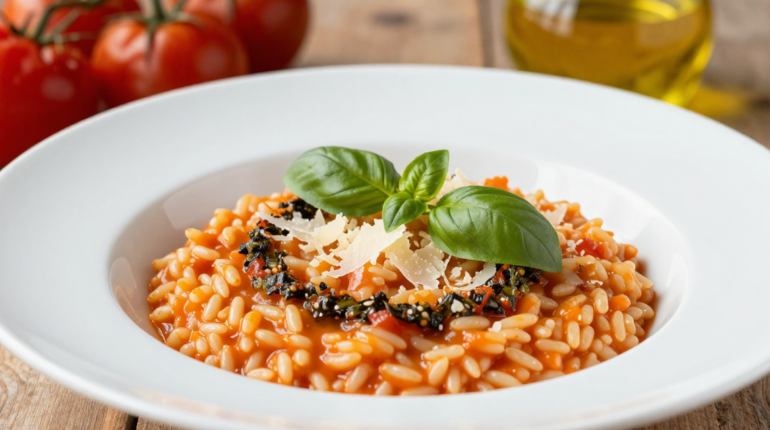
This version of risotto revisits a monument of Italian gastronomy by breathing into it the aromatic power of the south. The base remains undeniably classic: 500g of Arborio rice, that round-grain variety that releases the starch necessary for the signature creamy texture. But it is the introduction of 4 tablespoons of organic Calabrese pesto and 8 sun-dried tomatoes that radically transforms the flavor profile, adding a spicy dimension absent from traditional recipes.
The balance relies on precise dosing. The 100g of grated Parmesan bring the expected creaminess and umami flavor, while the Calabrese pesto injects those spicy notes characteristic of Calabria. This region of southern Italy, renowned for its spicy preparations, imposes its personality here without overwhelming the fundamentals of the dish.
The cooking technique scrupulously respects established codes: coating the rice in butter, deglazing with white wine, progressive absorption of the liquid. It is the ingredients that speak Calabrian, not the method. The tomato-flavored broth, enriched with 400g of crushed tomatoes browned with garlic, constitutes the aromatic vector that unifies Piedmontese tradition and southern audacity. This fusion creates an unprecedented depth of taste, where the sweetness of the North meets the assertive character of the South.
Homemade Tomato Broth: The Aromatic Base That Changes Everything
This flavored liquid constitutes the true foundation of the dish, far from tasteless industrial cubes. The preparation begins with two garlic cloves browned in olive oil, creating an immediately identifiable aromatic base. The addition of 400g of crushed tomatoes brought to a boil marks the turning point: the natural acids and sugars concentrate during the 10 minutes of simmering, developing an intensity that commercial broths cannot match.
The incorporation of a liter of chicken broth dilutes this tomato concentration while preserving its assertive personality. This step transforms a simple stock into a complex flavor vector, capable of infusing every grain of rice during cooking. Salt and pepper adjust the balance, but it is the garlic-tomato-poultry symbiosis that structures the aromatic backbone of the final risotto.
Keeping this broth hot throughout the preparation is not a negligible technical detail. A cold liquid would slow down absorption and compromise the desired creamy texture. This constant temperature ensures that each 250ml addition integrates harmoniously with the rice, allowing the starch to be released progressively. The result far exceeds the sum of the ingredients: this enriched liquid base literally carries the dish, transforming dry grains into a smooth preparation bursting with Mediterranean flavors.
The Progressive Absorption Technique: 20 Minutes To Perfection
This authentic Italian method transforms rice into a creamy preparation without a drop of cream. The process begins with toasting (nacrage): 500g of Arborio rice are sautéed for one minute in 30g of melted butter with finely chopped shallots. This step coats each grain with a lipid film that will seal the starch while preserving the firmness of the core.
Deglazing with white wine (125ml) follows immediately, the alcohol evaporating almost to dryness while the acidity prepares the rice to absorb the broth. Then begins the ballet of the ladles: 250ml of hot broth poured, stirred frequently, until complete absorption before the next addition. This precise rhythm progressively releases the starch from the Arborio rice, creating that velvety texture characteristic of Lombard risottos.
The cooking window of 18 to 22 minutes requires constant vigilance. Too short, the rice remains chalky; too long, it turns to mush. The goal: that slight resistance under the tooth, the al dente that distinguishes a successful risotto from a simple thick soup. Regular stirring is not optional: it facilitates the release of starch and guarantees uniform cooking. Each grain must have absorbed enough of this tomato-flavored broth to carry within it the very essence of the dish.
The Creamy Finish: The Final Step That Enhances The Dish
Once the 22 minutes have elapsed, immediately remove the pan from the heat. It is away from any heat source that the mantecatura takes place, that Piedmontese technique that transforms a decent risotto into a creation worthy of Italian trattorias. The final emulsion tolerates no further cooking: the residual heat of the rice will be enough to melt the ingredients without compromising their aromatic freshness.
First incorporate the 100g of grated Parmesan, then the 4 spoons of Calabrese pesto and the sun-dried tomatoes cut into irregular fragments. The latter inject acidic and concentrated points that counterbalance the roundness of the cheese. Then add the 10 chopped basil leaves and the remaining 30g of butter. The mixing movement must be vigorous but fluid, almost circular, to create that “all’onda” texture that ripples on the plate.
The emulsion forms before your eyes: the fats from the butter and Parmesan bind with the starch released during cooking, producing this silky creaminess without a single gram of heavy cream. The risotto should flow slowly from the spoon, neither too compact nor too liquid. Adjust the seasoning one last time: the Calabrese pesto already brings salt and spice, dose sparingly. This final alchemy transforms 500g of rice into a refined dish for four guests.