Spanish-style eggs are one of those dishes you hesitate to show people because they seem too simple to be taken seriously. That’s precisely why I love them. One pan, a can of tomatoes, two bell peppers, and some eggs — and you get something that people will literally ask you to make again.
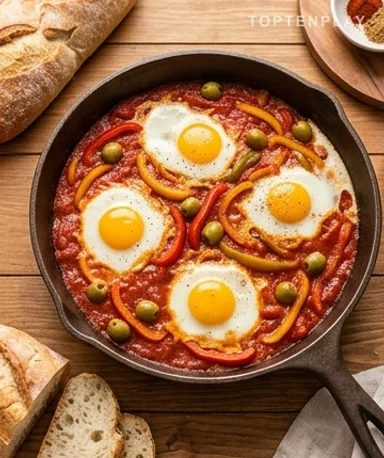
Imagine a large skillet sitting on the table, still steaming. The tomato sauce is a deep red, almost burgundy in spots where it has reduced beautifully, dotted with bright orange shards of melting peppers and small rings of green olives. The eggs have cooked right in the heart of it: the whites are set, opaque and silky, but the yolks remain domed, trembling like a crème brûlée before the first spoon strike. A scent of warm cumin and barely golden garlic floats in the room.
Why you’ll love this recipe
Ingredient Notes
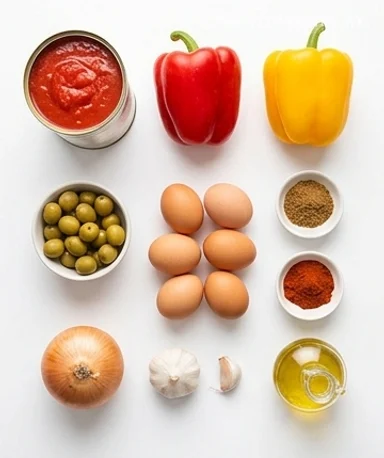
Peppers, tomatoes, olives, eggs, and spices: everything you need for this sunny dish.
- Canned crushed tomatoes : Don’t overthink it: canned tomatoes are perfectly suited here. They already have that concentrated flavor that fresh tomatoes take an hour to develop in the pot. Choose an Italian brand if you can — there’s a real difference in density and flavor compared to discount brands.
- Red and yellow bell peppers : Red brings sweetness and a warm color that defines the dish’s aesthetic. Yellow lightens it visually and is slightly sweeter. A single red pepper works fine if that’s all you have. Avoid using only green — it’s too bitter and will dominate the entire sauce.
- Eggs : Small or medium are preferred. They cook more evenly than large ones and fit better into the sauce’s wells. Fresh is a must — that’s what gives you that beautiful domed yolk that resists heat without hardening in seconds.
- Green olives : They provide a salty and slightly bitter note that cuts through the sweetness of the tomato sauce. If you don’t like olives, replace them with rinsed capers — same role, same effect, with a slightly more acidic flavor.
- Spices (paprika, cumin, mild chili) : This is where you choose the identity of the dish. Just paprika is sweet and smoky. With cumin, it becomes warmer and more complex. A pinch of hot pepper takes the dish to another level. Always start with a little — you can add more, but you can’t take it out.
Peppers: the only step that requires a bit of patience
It all starts with the peppers, and this is where many people rush. In the hot pan with olive oil, the sliced onion starts by releasing a little water — you hear it crackling softly, almost whistling. After two minutes, it becomes translucent, almost pearly. That’s when you add the pepper strips (not too thin). Ten minutes over medium heat, stirring occasionally. They should soften until they bend without resistance under the spatula, with a few slightly caramelized edges that smell like burnt sugar. The minced garlic comes last, for just one minute — enough to fragrance, not enough to burn and turn bitter.
Why I never rush this sauce anymore
The crushed tomatoes go into the pan and immediately change the color of everything — the bright red coats the peppers, the olives disappear into the sauce. Season with salt, pepper, and your chosen spices. Low heat, lid half-on, fifteen minutes minimum. It’s not long, but it’s non-negotiable. The sauce reduces slightly, binds together, and the natural acidity of the tomatoes mellows out. Before this step, it’s just a sauce. After, it’s a base with real character. The color shifts from bright red to something deeper, almost orange at the edges where it catches slightly.
The part everyone gets wrong: cooking the eggs
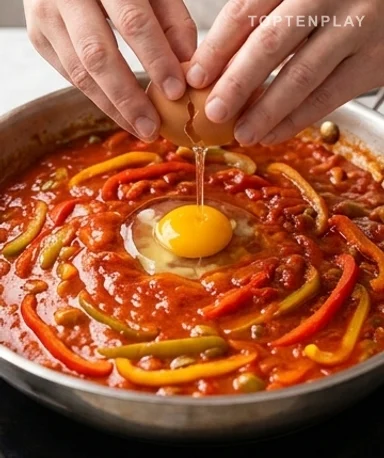
With a spoon, form four to six clear wells in the sauce. The eggs cracked into them shouldn’t touch — otherwise, they merge into a giant omelet. Cover the pan. This step is everything: the trapped steam cooks the top of the whites without needing to baste them. Low heat, don’t even think about turning it up. In five to seven minutes depending on the egg size, the whites are set — opaque, slightly firm to the touch — and the yolks remain runny, golden, and shiny like a late morning sun. Remove the pan from the heat one minute before it looks perfect. Residual heat finished the job.
How to serve for the best experience
Bring the skillet straight to the center of the table. No transferring to individual plates that cool everything down in thirty seconds. Everyone takes one or two eggs with a good helping of sauce, and most importantly, bread — yesterday’s baguette that absorbs the sauce without disintegrating, or a dense-crumb bread. Fresh herbs on top if you have them: coarsely chopped parsley or cilantro. Cilantro adds a slightly citrusy green note that lifts the whole dish and makes it feel lighter at the end.

Tips & Tricks
- Don’t cover the pan airtight while cooking the eggs — leave a little gap for steam to escape, otherwise the whites become rubbery and the yolks cook too fast from condensation.
- If your sauce is too liquid before adding the eggs, let it reduce uncovered for a few minutes. A base that is too fluid makes the eggs float and cook unevenly.
- For a heartier version without changing the spirit of the dish, add a few slices of beef or lamb merguez sausage to the sauce — they provide exactly the spicy, savory fatty note we sometimes crave without unbalancing the flavors.
How do I prevent the egg yolks from overcooking?
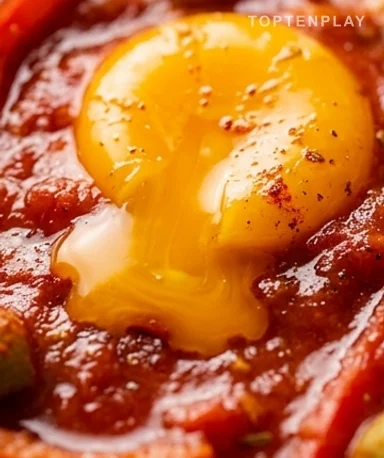
The secret is to remove the pan from the heat one or two minutes before the whites look fully set — residual heat will finish the cooking. To be precise, the whites should be opaque but the yolks still shiny and slightly wobbly when you gently shake the pan.
Can I prepare the sauce in advance?
Yes, and it’s actually a great idea. The tomato and pepper sauce keeps for 3 days in the refrigerator and develops more flavor over time. On the day, reheat it over low heat, make the wells, and crack the eggs — everything is ready in 10 minutes.
I don’t have bell peppers. What can I use instead?
Diced zucchini works very well and cooks in the same amount of time. Small cubes of eggplant are also a good option, but they absorb more oil — add an extra tablespoon. The result is visually different but just as delicious.
What kind of pan should I use for this recipe?
A large pan with high sides (28-30 cm) or a deep skillet, ideally with a lid. Cast iron is perfect — it distributes heat evenly and keeps the sauce warm at the table. Avoid pans that are too small, as the eggs will crowd and not cook properly.
Does this dish freeze well?
The sauce alone freezes very well for up to 3 months. However, eggs do not freeze well — the texture of the whites becomes spongy and unpleasant when reheated. Prepare and freeze only the tomato-pepper base, then add fresh eggs when serving.
Can I make this recipe without a lid?
It’s possible but less efficient. Without a lid, steam escapes and the whites take much longer to set from the top — often 3 to 4 minutes more. If you really don’t have a lid, place a plate or a baking sheet over the pan; it works.

Spanish-Style Eggs
Mediterranean
Main Course
Poached eggs directly in a slow-simmered tomato sauce with peppers and olives. Simple, colorful, ready in 30 minutes.
Ingredients
- 1 can (400g) crushed tomatoes
- 1 large (about 200g) red bell pepper
- 1/2 (about 80g) yellow bell pepper
- 8 small eggs
- 3 tbsp (40g) sliced green olives
- 1 (100g) yellow onion
- 1 clove garlic
- 2 tbsp (30ml) olive oil
- 1 tsp sweet paprika
- 1/2 tsp ground cumin
- to taste salt and black pepper
Instructions
- 1Slice the onion, cut the peppers into strips, and finely mince the garlic.
- 2Heat the olive oil over medium heat in a large skillet. Sauté the onion for 2-3 minutes until translucent.
- 3Add the bell peppers and cook for 10 minutes, stirring regularly, until tender. Add the garlic and cook for 1 more minute.
- 4Pour in the crushed tomatoes, add the olives, paprika, cumin, salt, and pepper. Mix well.
- 5Simmer over low heat, lid half-on, for 12-15 minutes until the sauce reduces and thickens.
- 6Form 8 small wells in the sauce with a spoon. Carefully crack one egg into each well.
- 7Cover the pan and cook over low heat for 5-7 minutes, until the whites are set and the yolks are still runny.
- 8Adjust seasoning, add fresh herbs if desired, and serve directly in the skillet.
Notes
• The sauce can be prepared up to 3 days in advance and kept in the refrigerator. Reheat over low heat before adding the eggs.
• For a heartier version, add 2-3 slices of beef or lamb merguez to the sauce at the same time as the tomatoes.
• Leftovers (sauce only, without eggs) keep for 2 days in the fridge. Refreeze the sauce without eggs for up to 3 months.
Nutrition Facts (per serving, estimated)
| 285 kcalCalories | 16gProtein | 13gCarbs | 18gFat |