📌 Spanish Magdalenas: the perfect dome technique that differentiates them from French madeleines
Posted 13 March 2026 by: Admin
Magdalenas: The Emblem of Spanish-Style Breakfast
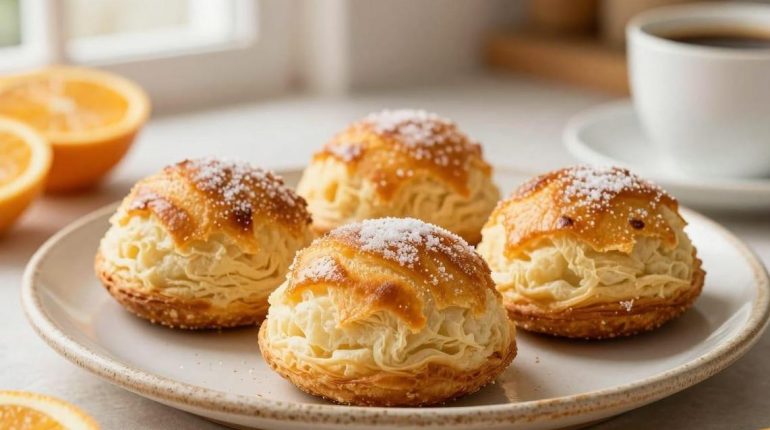
In Spain, a traditional breakfast is inconceivable without these small golden cakes that take pride of place in all bakeries and on family tables. Magdalenas, Mediterranean cousins of French madeleines, are distinguished by a singularly moist and airy texture, obtained through the use of oil rather than butter. Their slightly crunchy top, sprinkled with sugar before baking, contrasts deliciously with their melting heart.
In the land of Cervantes, these small cakes set the pace for mornings and snacks. They are traditionally enjoyed with a cup of strong coffee, a smooth hot chocolate, or a large glass of milk. Their subtle lemon scent brings that fresh and fragrant note that makes them absolutely irresistible from the first bite.
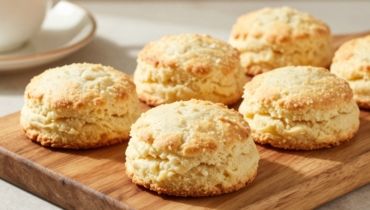
The true Spanish magdalena is recognized by its characteristic small dome that forms in the center during baking. This golden protrusion is not just an aesthetic detail: it testifies to a perfectly prepared batter and controlled baking. This legendary dome has become the hallmark of a pastry success that transforms ordinary ingredients into a daily delight anchored in the Spanish art of living.
An Accessible Recipe with Everyday Ingredients
This simplicity that characterizes magdalenas is first found in their composition. Unlike some pastries that require rare or expensive ingredients, these small cakes settle for the essentials: eggs, sugar, flour, oil, milk, and baking powder. Products found in any kitchen, without requiring specific shopping or a significant budget.
The choice of oil rather than butter is the secret to their incomparably tender texture. This substitution, typically Mediterranean, offers a particular moistness that keeps for several days. Whether mild olive oil or sunflower oil, the importance lies in the quality of this ingredient which permeates every bite with its characteristic lightness.
The speed of execution wins over even the busiest: fifteen minutes of preparation are enough to assemble the batter, followed by fifteen to twenty minutes of baking. Thirty-five minutes flat separate the moment you open the cupboard from the intoxicating scent that fills the kitchen. For twelve to fifteen freshly prepared magdalenas, golden and ready to be savored.
No advanced pastry skills are required. The difficulty level, rated “very easy,” makes this recipe accessible even to beginners. A mixing bowl, a whisk, a fine grater, and a muffin tin are the only equipment needed to transform these basic ingredients into a true homemade Spanish tradition.
The Secrets of a Perfectly Mastered Preparation
The success of these cakes relies on a few precise technical gestures, which are far from trivial. The vigorous whisking of eggs and sugar is the first decisive step: several minutes of energetic beating allow for the incorporation of the air necessary for the final lightness. This mixture must become pale and slightly frothy, a sign that the airy structure of the batter is beginning to form.
The incorporation of ingredients follows a methodical logic: first the liquids (milk, then oil gradually), then the dry ingredients (flour, baking powder, salt) added gradually. This progression avoids lumps and guarantees a homogeneous texture without overworking the batter, which would unnecessarily toughen the final result.
The famous rounded dome, the visual signature of authentic magdalenas, is not due to chance. The professional trick consists of letting the batter rest for twenty to thirty minutes in the refrigerator before baking. This rest creates a decisive thermal shock: the cold batter, suddenly plunged into a 180°C oven, causes a spectacular rise that forms this characteristic small peak.
Last detail before baking: filling the liners three-quarters full allows for the necessary expansion, while the sugar sprinkled on top forms that fine, slightly crunchy crust that contrasts with the soft interior. The tip of a knife, inserted and coming out clean, confirms the perfect baking of these small cakes now ready to reveal all their lemony aromas.
Personalization and Optimal Storage
The traditional recipe lends itself remarkably well to personal adaptations. Lemon zest can give way to orange zest for a sweeter, sunnier note. Chocolate lovers can incorporate chips into the batter, while a teaspoon of vanilla extract will subtly transform the aromatic profile without altering the fundamental texture.
These small cakes are ideally enjoyed at breakfast or snack time, accompanied by coffee, tea, or hot chocolate. Their versatility makes them perfect companions for all gourmet breaks of the day.
Storage is a major asset of this domestic pastry. Stored in an airtight box, magdalenas preserve their moistness for three to four days without any notable alteration. Exposure to open air quickly dries out their delicate texture, hence the importance of suitable packaging. Freezing is also a viable option to extend their shelf life.
Nutritionally, each magdalena provides about 150 kilocalories, with 18 grams of carbohydrates, 7 grams of lipids, and 3 grams of protein. These values fluctuate slightly depending on the quality of the ingredients used, notably the type of oil chosen.
The persistent craze for these cakes is explained by their disconcerting simplicity combined with a gourmet result. A few basic ingredients, quick preparation, and an irresistible texture: this perfect equation makes magdalenas a safe bet for home baking, accessible to all and infinitely comforting from the first bite.