📌 Soursop-Guava-Tomato Juice
Posted 5 April 2026 by: Admin
Have you ever wondered why some mornings start better than others, without being able to explain why? This juice is often the answer. Three fruits, one blender, ten minutes — and the day starts differently.
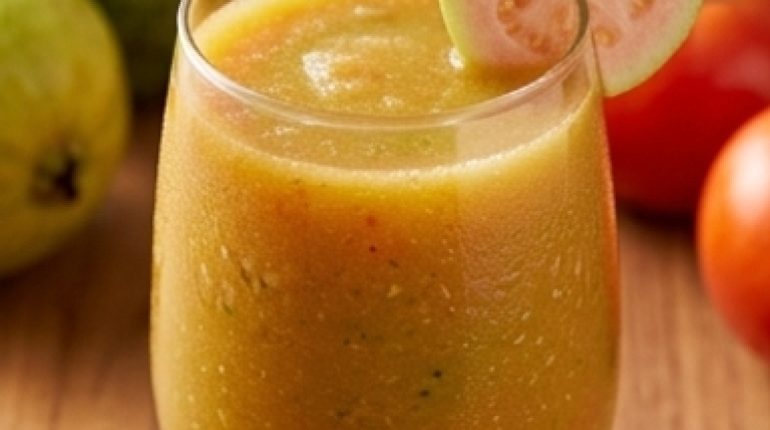
In the glass, it’s the color that catches you first: a slightly cloudy, almost pearlescent creamy orange, with that warm glow instinctively associated with the morning sun. The smell rising from the blender is sweet and vegetal, with that tangy guava base that slightly tingles the nostrils. On the palate, the texture is thick but not heavy — the soursop brings a natural creamy smoothness you really wouldn’t expect from a juice. It’s rustic, refreshing, and frankly much more interesting than the usual orange juice.
Why you’ll love this recipe
Ingredient Notes
Soursop, guava, and tomato: three simple fruits for a nutritious homemade blend.
- Soursop (Corossol) : The star of the blend. Its white pulp is fibrous, slightly creamy, with a taste somewhere between pear and pineapple — hard to truly compare. To choose it fresh: the skin should give slightly under the thumb without being soft everywhere. Make sure to remove all the black seeds; they are numerous, long, and quite bitter. If you only find frozen pouches (African, West Indian, or Asian grocery stores), it’s a fair alternative — let it thaw for 20 minutes before blending.
- Guava : Pick it very ripe: pale yellow or pinkish skin, not green. It should give off that characteristic sweet, floral scent as soon as you get close — if you can’t smell anything, it’s not ready yet. Pink guava gives a warmer color to the juice. You can keep the skin; it blends well.
- Tomato : A very ripe tomato, almost melting under your fingers. Not the one that’s been sitting in the fridge for ten days with wrinkly skin. A Roma or an ordinary round tomato works perfectly. It’s what brings the deep red to the final color and breaks the guava’s acidity.
- Lime and Honey (Optional but not really) : A squeeze of lime wakes up all three flavors at once — the kind of detail that turns an okay juice into a juice you remember. Honey should only be used if your guava was too acidic. A teaspoon is enough.
Why I ignored this combination for a long time — and why I was wrong
Tomato in a fruit juice doesn’t exactly scream ‘drink me’ on paper. It took me a while. Then I tried it, and something unexpected happened: the creamy texture of the soursop with the sharp acidity of the guava works. The tomato doesn’t stand out directly — it’s there as a discreet background that rounds everything out, exactly like a sauce base that doesn’t overpower the rest. You don’t look for it. You just notice that without it, something is missing.
Soursop: the part most people mess up
Preparing fresh soursop for the first time is a surprise. The skin is firm, covered in small soft spines — you pull it off by hand, piece by piece. The pulp inside is white, almost pearly, and stringy like damp cotton wool. What takes time is removing the black, smooth, elongated seeds scattered throughout the flesh. Allow a good twenty minutes if you’re doing this carefully for the first time. With pre-cleaned frozen pulp, you go straight to the blender — and honestly, for a juice, the taste difference is minimal.
In the blender, thirty seconds flat
Once your fruits are ready, put everything in the blender with a large glass of cold water. The color before mixing is already beautiful: the creamy white of the soursop, the pink of the guava, the red of the tomato. Start at full power — the noise is loud but brief. Thirty seconds, no more. The result is thick, slightly grainy if your guava had many hard seeds. If that bothers you, pass it through a fine sieve. It takes thirty seconds and changes everything.
Cold, fresh, drink it now
This juice doesn’t really keep. Technically it lasts a few hours in the fridge, but the texture changes — the soursop oxidizes, the color turns to a dull cream, and the flavors flatten out. Make it, drink it. If you want a more summery version, add two or three ice cubes directly into the blender: the cold firms up the soursop texture slightly for a nearly creamy result, somewhere between a juice and a slushie.
Tips & Tricks
- Frozen soursop: let it thaw at room temperature for 20 minutes before blending. The blender will have an easier time and the final texture will be smoother than with hard pieces.
- The lime at the end isn’t really optional in my opinion — it wakes up the three flavors simultaneously and prevents the juice from feeling flat.
- If you can’t find soursop in any form (even frozen), a very ripe mango gives comparable smoothness, even if the flavor profile is different — sweeter, less tropical-acidic.
- Guava with many small hard seeds: systematically pass it through a sieve after mixing. Without this, the mouthfeel is unpleasant and masks everything else.
Can I prepare this juice in advance?
Not ideally. Soursop oxidizes quickly and the texture changes within a few hours — the juice becomes duller and the flavors flatten. Prepare it right when you’re about to drink it, or maximum 1 hour before, keeping it in an airtight container in the refrigerator.
I can’t find fresh soursop — does frozen work?
Yes, very well. Frozen soursop in pouches (found in African, West Indian, or Asian grocery stores) is already cleaned and deseeded — it saves you 20 minutes of prep. Let it thaw for 15 to 20 minutes at room temperature before blending for a smoother texture.
The texture is too thick, how do I adjust it?
Add water little by little, one tablespoon at a time, blending between each addition. If the issue is the small guava seeds, pass the juice through a fine sieve after blending — that’s enough to get a much smoother result.
What can I replace soursop with if I really can’t find any?
A very ripe mango provides comparable creaminess and works in the same tropical range. The taste will be sweeter and less tangy, but the creamy texture will be there. Papaya is another decent option, with a more neutral result.
Is a powerful blender absolutely necessary?
A standard blender is fine for soursop and tomato. Guava with its hard little seeds might resist a low-powered blender — if you have an entry-level model, simply sieve the juice after blending rather than forcing the machine.
Can I add other fruits for variety?
Yes. Half a banana enhances the creaminess and softens the whole blend. A piece of pineapple amplifies the tropical note and adds acidity. Avoid large quantities of citrus fruits — they might overpower the delicate soursop aromas.
Soursop-Guava-Tomato Juice
Tropical Cuisine
Drink & Breakfast
A creamy and refreshing tropical blend ready in ten minutes. The smooth texture of soursop, the acidity of guava, and the sweetness of tomato — a surprising and convincing combination.
Ingredients
- 350g soursop (corossol) — fresh pulp or thawed frozen, seedless
- 150g guava (1 to 2 fruits depending on size), peeled and quartered
- 2 medium ripe tomatoes (approx. 300g), chopped
- 250ml cold water (1 large glass)
- 1 lime — juice (optional, recommended)
- 1 tsp honey (optional, if the guava is acidic)
Instructions
- 1Carefully deseed the fresh soursop and collect the pulp. If using frozen soursop, let it thaw for 20 minutes at room temperature.
- 2Quarter the guava (keep the skin). Roughly chop the tomatoes.
- 3Place the soursop pulp, guava, tomatoes, and water in the blender.
- 4Blend at full power for 30 to 45 seconds until smooth.
- 5Taste and adjust: add lime juice to brighten the flavors, or honey if the juice is too tart.
- 6Pass through a fine sieve if the texture is too grainy (especially with seedy guavas). Serve immediately while cold.
Notes
• Storage: best consumed immediately. Keeps for a maximum of 1 hour in the refrigerator in an airtight container before the texture degrades.
• Iced version: add 4 to 5 ice cubes directly into the blender before mixing for a thicker, creamy slushy result.
• Thicker variation: add half a ripe banana for an even creamier texture and increased natural sweetness.
Nutrition Facts (per serving, estimated)
| 165 kcalCalories | 3gProtein | 39gCarbs | 1gFat |