📌 Soursop-Guava-Tomato Juice
Posted 9 April 2026 by: Admin
On weekday mornings, I don’t want to think. I want something simple, fast, and that makes me feel like I’m taking care of myself without the hassle. This soursop-guava-tomato juice is exactly that.
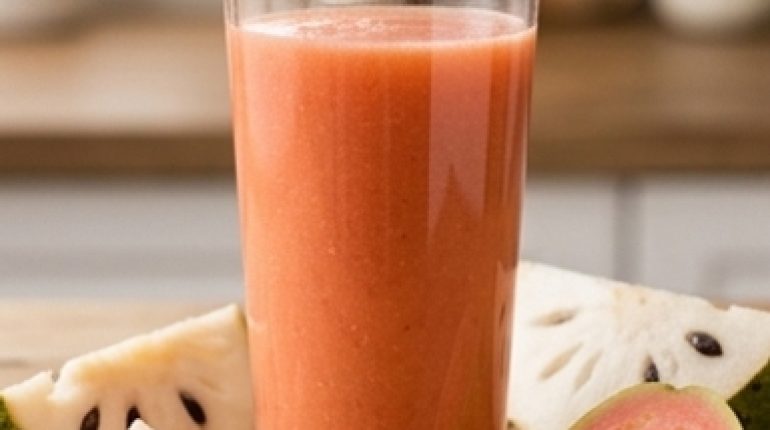
In the glass, it’s a deep orange-pink, almost coral, with a slightly thick texture that clings a bit to the sides when you tilt it. It smells tropical immediately — the soursop brings a milky sweetness, the guava a floral tart note, and the tomato anchors it all in something rounder and earthier. The first sip is a surprise. By the third, you’ll wonder why you didn’t make it sooner.
Why you’ll love this recipe
Ingredient Notes
Soursop, guava, tomatoes, and a dash of lemon: simple fruits that do wonders when combined.
- Soursop : This is the heart of the recipe. You recognize it by its thick green skin covered in small soft spines. The flesh is white, fibrous, and water-rich — with a scent reminiscent of both pineapple and vanilla. Choose one that is soft to the touch, like an overripe pear. If it’s still firm, leave it for two or three days at room temperature. In Caribbean or Asian grocery stores, you can often find it as frozen chunks — it works perfectly for this juice.
- Guava : Pick it very ripe — yellow leaning towards pink, yielding slightly under your fingers. The red flesh inside colors the juice a deeper pink. If you can’t find fresh ones, pure guava juice with no added sugar is an honest substitute — two splashes are enough.
- Tomatoes : No need for fancy tomatoes here. Well-ripened round tomatoes from the market are perfect. The important thing is that they are truly red to the core and have a scent. A scentless tomato won’t bring anything good to this juice. In winter, canned peeled tomatoes without added salt are a perfectly acceptable alternative.
- Lemon or Honey (optional) : Lemon is my default choice — just a few drops wakes everything up and balances the sweetness of the soursop. Honey is for those mornings when you want something more comforting. Wildflower, acacia, whatever — a small spoonful is enough, no more.
Why I no longer start my day without this glass
There are mornings when everything moves too fast. The coffee is still hot, the kids are already late, and eating something decent feels impossible. That’s where this juice changed my habits. No complicated dishes, no technique to master. The texture is thicker than industrial juice — almost velvety — and that density really fills you up. The soursop, especially, has a creamy quality once blended, giving the juice a consistency close to a light smoothie. You won’t feel hungry for two hours.
The part everyone messes up: preparing the soursop
Soursop is the most intimidating of the three. The skin is thick and covered in bumps, and the flesh is very fibrous — full of large black seeds that you absolutely must remove before blending. If you leave even one, it releases a bitter taste you’ll notice immediately. Take the time to run your fingers through the white flesh, tearing the fibers by hand rather than cutting everything with a knife — you spot the seeds better that way. The flesh has a moist, somewhat cottony texture that sticks slightly to your fingers. Once in the blender, it all becomes smooth in fifteen seconds.
The order in the blender — it really makes a difference
Start with the tomatoes. They are the most watery and act as a liquid base that helps the blender start effortlessly. Then add the guava — if it’s very ripe, it almost breaks down on its own. The soursop goes in last, with the glass of water. Blend at maximum speed for a good ten seconds. The sound changes from a noise of crushed stones to a smooth, steady purr — that’s the signal it’s ready. If the texture seems too thick, add a splash of water. If it’s too liquid, your guava was particularly juicy. It’s no big deal.
Variations I’ve tested (and what doesn’t work)
In summer, a few ice cubes before blending make for a chilled, almost frozen drink, very pleasant when it’s hot. A hint of grated ginger — just a hint — brings a slightly spicy side that wakes up the palate. What doesn’t work, however: milk or plant-based milks. The tomato curdles and the texture becomes strange, grainy, and unappealing. Stick to water or, if you want something more festive, a bit of freshly squeezed orange juice instead of water — it’s sweeter, but it works.
Tips & Tricks
- Drink it within twenty minutes of blending — after that, the color oxidizes and turns brownish-rust, which doesn’t really change the taste but looks less appetizing.
- If frozen soursop is all you can find, let it thaw the night before in a bowl in the fridge — it will release a little water, the flavor remains intact, and blending is even easier.
- Strain the juice through a fine sieve if you want something smoother — the soursop fibers sometimes leave small bits that bother some people.
Where can I find soursop?
Fresh soursop is mainly found in Caribbean, African, or Asian grocery stores in major cities. Outside of these shops, look in the frozen section under the name ‘guanábana’ or ‘soursop’ — the frozen version works very well for this juice and is often easier to work with.
How long does this juice keep in the refrigerator?
Four to five hours maximum in a tightly sealed airtight jar. Beyond that, it oxidizes and the color turns brown. If you prepare it the day before, it’s pushing it — stir well before drinking and don’t expect to see exactly the same color as when blended.
Can I remove the fibers for a smoother result?
Yes, simply strain the juice through a fine sieve or a clean cloth, pressing well. You’ll get something much more fluid, like a nectar. Note: some of the fibers — and thus the filling effect — are lost with straining.
The juice is too bitter or too acidic, what did I miss?
Bitterness almost always comes from the soursop seeds — just one is enough to throw everything off. Check that you removed them all before blending. If it’s too acidic, your guava wasn’t ripe enough or your tomato was still green: add a small teaspoon of honey to save it.
Can I add other fruits for variety?
Pineapple pairs very well and strengthens the soursop’s tropical note. Ripe mango also works. However, avoid red fruits (strawberries, raspberries) — the acidity combined with the tomato creates something weird. Stick to tropical fruits or, failing that, orange.
Can this juice replace a meal?
No, and that’s not its role. Even if it is filling thanks to the soursop fibers, it lacks the protein and fat to constitute a complete meal. Drink it as a supplement to breakfast, not instead of it.
Soursop-Guava-Tomato Juice
Tropical
Beverage
A thick, satisfying tropical juice made with soursop, guava, and tomato, ready in ten minutes. Perfect for a quick breakfast that really keeps you full.
Ingredients
- 400g fresh soursop flesh (about 1 medium soursop), peeled and cleared of all black seeds
- 150g very ripe guava (1 to 2 guavas depending on size), cut into pieces
- 300g very ripe tomatoes (2 medium tomatoes), cut into pieces
- 250ml water
- 1 tbsp fresh lemon juice (optional)
- 1 tsp wildflower honey (optional)
Instructions
- 1Peel the soursop, then remove all black seeds by hand by running your fingers through the fibrous flesh. Collect only the white flesh.
- 2Cut the guava into large pieces without peeling if the skin is thin. Cut the tomatoes into quarters.
- 3Place the tomatoes in the blender first — their water content helps the blending process start. Add the guava, then the soursop, then the water.
- 4Blend at maximum speed for 15 to 20 seconds until you reach a smooth and consistent texture.
- 5Taste and adjust with lemon juice to balance the sweetness, or honey if the juice is too acidic.
- 6Serve immediately in two large glasses. Add ice cubes in summer.
Notes
• Storage: this juice oxidizes quickly. Drink it within 20 minutes of blending for the best color. If preparing in advance, keep in an airtight jar in the fridge for 4 to 5 hours maximum, and stir before serving.
• Frozen soursop: if using frozen soursop, thaw it the night before in a bowl in the refrigerator. It will release some water — slightly reduce the amount of water in the recipe.
• Texture: for a smoother result, strain the juice through a fine sieve, pressing well. For a thicker smoothie effect, blend directly with 2-3 ice cubes.
Nutrition Facts (per serving, estimated)
| 185 kcalCalories | 5gProtein | 43gCarbs | 2gFat |