📌 Soursop, Guava & Tomato Juice
Posted 5 April 2026 by: Admin
We often imagine these health juices involving mysterious green powders, a 300-euro juicer, and an instruction manual in English. The reality: three fruits, a blender, five minutes. This soursop-guava-tomato juice is one of the most straightforward preparations there is — and that’s exactly why we love it.
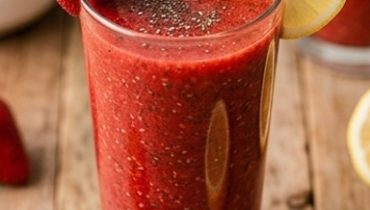
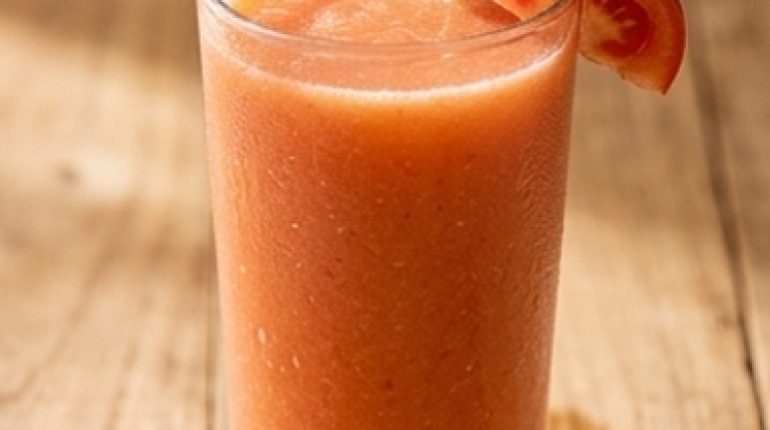
In the glass, the color is somewhere between pale salmon and rosy orange — not the neon green usually associated with detox juices. The scent that rises is first soursop, sweet with something slightly acidic in the background, then the guava arrives as a dense and slightly musky fruity note. The texture is thick, with that slight resistance under the straw that indicates there’s real pulp in there. Not a watery juice. A real one.
Why you’ll love this recipe
Ingredient Notes
All the ingredients for this tropical juice: ripe soursop, juicy guavas, and fresh tomatoes, ready to be blended.
- Soursop : This is the central fruit, the one that provides the character. Choose one that yields slightly to pressure — if it’s too hard, it will be stringy and not very sweet. The white flesh can be removed by hand, but remember to carefully remove the black seeds one by one: they are bitter and numerous. If you can’t find fresh, frozen pre-pulped soursop works very well.
- Guava : Get it very ripe — the skin should lean towards yellow-green, not dark green. The pink-fleshed variety is more fragrant and richer than the white one. Keep the skin: that’s where most of the fiber is, and the blender will take care of it.
- Tomato : No need for a special variety. A ripe, meaty, very red tomato. Avoid cherry tomatoes (too acidic) and mealy out-of-season tomatoes that give an unpleasant pasty texture.
- Honey and lemon (optional) : These are the modulators. Lemon wakes everything up if the fruit lacks vigor. Honey compensates for a soursop that is a bit too acidic. Taste without it first — truly ripe fruits generally don’t need them.
Preparing the soursop — the only real effort
This is the only step that requires a bit of attention. The soursop can be pulled apart into two with your hands — the skin gives way easily when the fruit is ripe, with a dull sound of fibrous breaking. The white flesh is dotted with large, shiny black seeds that must be removed one by one. Yes, it’s a bit tedious. But it takes two minutes, not ten. Once the seeds are removed, the flesh goes directly into the blender without any special cutting — it disintegrates within seconds of blending.
Everything in the blender, in the right order
Liquid first. The glass of water at the bottom of the blender before the fruit — this prevents the blades from spinning in the air and the motor from straining unnecessarily. Then the guava, roughly cut into quarters. The tomato, with the stem removed and cut in half. The soursop last. No need for a high-end blender: a standard model does the job, provided you blend for at least a minute at full power to homogenize the guava pulp, which is a bit more resistant than the other fruits.
Taste, adjust, final touch
After a minute at full power, stop and taste. The color should be uniform — an orange salmon pink with no white streaks from the soursop or bright red ones from the tomato. The taste: fruity, slightly tangy, with that characteristic earthy soursop note in the background. Too thick? Add a splash of water. Too flat because the fruit was a bit green? Squeeze in half a lemon — it changes everything in three seconds, the acidity immediately wakes up the whole blend.
Drink it now, not in two hours
This juice oxidizes quickly. The color turns a dull brown and the aromas fade after 30 minutes. Drink it fresh, right after blending. For busy mornings, prepare it the night before with the lemon juice inside, seal it hermetically, and refrigerate: it lasts 10 to 12 hours. After that, it’s technically still drinkable, but the pleasure isn’t really there anymore.
Tips & Tricks
- If your soursop is frozen and still cold when blending, reduce the water slightly — this results in a thicker, fresher result, halfway between a juice and a smoothie.
- For a truly smooth texture, pass the juice through a fine sieve after blending. The guava fibers stay behind, and the liquid comes out perfectly smooth.
- Put the glass in the freezer for 5 minutes before serving. A lukewarm juice is the number one enemy of this kind of preparation.
Where can I find soursop in Europe/abroad?
African, Caribbean, or Asian grocery stores are your best bet — fresh fruit is often available there depending on the season. In supermarkets, look in the exotic fruit section. Frozen soursop (in pieces or pulp) is easily found in specialty stores and works perfectly in this juice.
Can I prepare this juice the night before?
Yes, but not without precautions. Squeeze half a lemon into the juice before storing it — the acidity slows down oxidation. Seal hermetically and keep chilled. It lasts about 12 hours; beyond that, the color changes and the aromas fade.
Is it mandatory to strain the juice after blending?
No, it’s a matter of preference. With the pulp, the juice is thicker and more filling. Strained through a fine sieve, it’s smoother and easier to drink. Both versions are good — try both and choose.
Can I replace guava with another fruit?
Ripe mango is the best substitute — it provides a similar texture and comparable fruity sweetness. Papaya also works. Avoid very acidic fruits like pineapple, which unbalance the juice by over-emphasizing the soursop’s acidity.
Why put tomato in a fruit juice?
The tomato acts as a balancer: it tempers the sweetness of the soursop and guava with a slight umami note and provides that characteristic pink-orange color. Without it, the juice is sweeter and less interesting on the palate. it’s a subtle but essential ingredient.
Is a standard blender enough?
Yes, absolutely. A standard low-cost blender does the job, provided you blend for at least a minute at full power. If the guava leaves fibers, simply strain afterwards — it’s not a equipment problem, just a matter of personal texture preference.
Soursop, Guava & Tomato Juice
Tropical Cuisine
Beverage
A thick and fruity tropical juice made with soursop, guava, and tomato. Ready in five minutes, no cooking required.
Ingredients
- 300g soursop flesh (about 1 medium soursop, seeds removed)
- 200g ripe guavas (about 2 fruits, cut into quarters)
- 200g ripe and meaty tomatoes (about 2 medium, stems removed)
- 240ml cold water (1 large glass)
- 1/2 lemon, juiced (optional)
- 1 tbsp honey (optional, depending on fruit ripeness)
Instructions
- 1Open the soursop in half by hand, scoop out the white flesh and remove all black seeds one by one.
- 2Cut the guavas into rough quarters. Cut the tomatoes in half and remove the stem.
- 3Pour the water into the bottom of the blender, then add the guava, tomato, and soursop in that order.
- 4Blend at full power for 1 minute until you get a smooth pink-orange juice.
- 5Taste and adjust: add lemon juice if the juice lacks vibrancy, honey if the fruits were not very ripe.
- 6Serve immediately in chilled glasses. Strain through a fine sieve for a smoother texture if desired.
Notes
• Storage: add the juice of half a lemon, seal hermetically and refrigerate. Consume within 12 hours maximum.
• Frozen Soursop: use it while still cold for a thicker result, slightly reducing the amount of water.
• Variation: replace guava with ripe mango if you can’t find any — the result is different but just as good.
Nutrition Facts (per serving, estimated)
| 120 kcalCalories | 2gProtein | 28gCarbs | 1gFat |