A Sunday in November, a light drizzle on the windowpanes, and nothing urgent on the schedule. That’s when the sugar tart makes its entrance. Not a complicated recipe, not a restaurant dessert — just something that smells wonderful and warms you up.
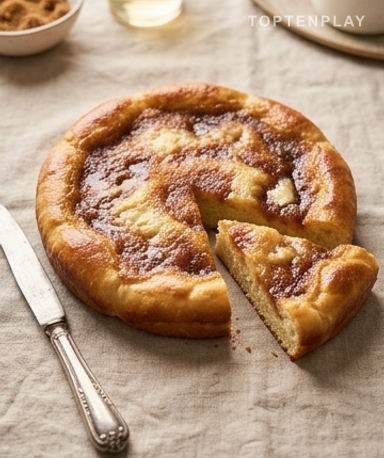
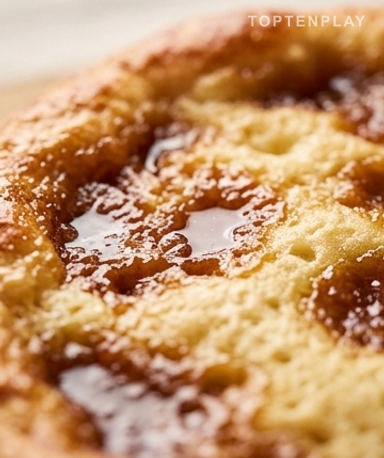
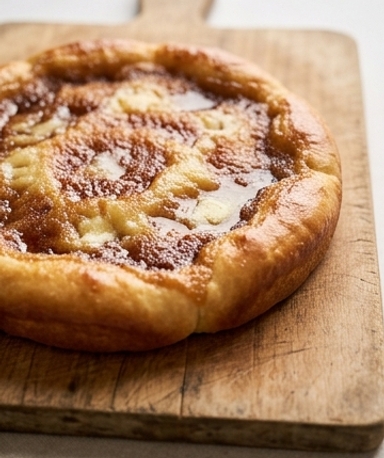
The first thing you notice is that deep brown caramel that has melted into irregular little puddles on the dough. The brown beet sugar has taken on a light caramel hue, almost amber, and nearly black in spots where the butter roasted against the tin. The dough itself stays moist underneath — you can see it when you slice it, that brioche-like crumb that barely resists the knife. And the smell as you get closer: warm sugar, butter, and something resembling a lace crêpe fresh out of the oven.
Why you’ll love this recipe
Ingredient Notes
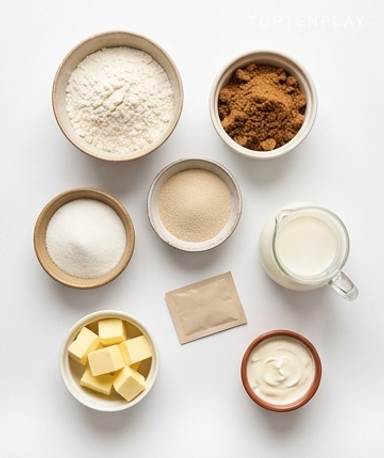
All the simple ingredients that go into this gourmet tart from the North.
- Vergeoise Brune (Brown Beet Sugar) : This is what makes all the difference. Vergeoise brune is a beet sugar with molasses — moist, slightly sticky, with a taste leaning towards caramel and licorice. It’s easy to find in French supermarkets, but abroad, dark brown sugar is a good substitute. If you can’t find it, cassonade helps out, but the result will be flatter in flavor.
- Butter : For both the dough and the topping. For the dough, it must be soft — really soft, not melted. Taken out of the fridge an hour before, it should easily squash under your finger. For the topping, we cut it into small cubes and place them directly on the raw dough.
- Liquid heavy cream : Not thick cream, but liquid cream — it spreads better over the dough and seeps into the little hollows we’ve formed. A tiny amount is enough, but it’s what makes the topping melty rather than dry and grainy.
- Active dry yeast : Half a packet. Before mixing it, activate it in lukewarm milk for five minutes — when it starts to foam slightly on the surface, that’s a good sign. Lukewarm, not hot: if the milk burns the back of your hand, the yeast will be completely useless.
Take the butter out an hour before starting
People often skip this step. That’s a mistake. Cold butter doesn’t work well into the dough — it stays in chunks instead of incorporating uniformly. Taken out in advance, it crushes under your fingers effortlessly and the dough texture becomes sandy very quickly. While the butter softens, activate the yeast in the lukewarm milk. Five minutes in a small bowl, no more — you’ll see small bubbles appearing on the surface, a slight sourdough smell. That’s the signal.
Knead until it becomes silky
Mix the flour, sugar, and salt, add the soft butter in pieces and work it with your fingertips. The texture is grainy at first, like shortcrust pastry. Then gradually pour in the milk-yeast mixture and start kneading — by hand, it takes eight to ten minutes, with a stand mixer five minutes at medium speed. The dough is ready when it pulls away from the sides and becomes supple, almost silky under your palms. It stays slightly sticky. Don’t add more flour.
Leave it alone for an hour
Form a ball, cover the bowl with a tea towel and place it in a warm spot. Next to the radiator in winter works very well. After an hour, the dough has doubled in size. When you press it with your fingertip, it sinks in and rises back slowly — spongy, airy, a bit like shaving foam. This rise is what gives the tart its characteristic fluffiness. Don’t skip it.
Dig holes, spread everything on top
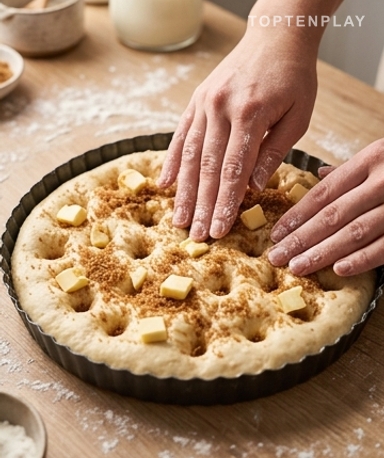
Spread the risen dough into the buttered tin with floured hands — no need for a rolling pin, fingers are enough and you feel the thickness better. With your fingertips, form small cavities over the entire surface, as if you were pressing on an imaginary keyboard. These hollows are essential: they will trap the butter cubes and the sugar. Then distribute the cold butter cubes, the granulated sugar, the brown beet sugar, and drizzle the liquid cream over everything. It seems like little. It’s plenty.
Watch the last five minutes
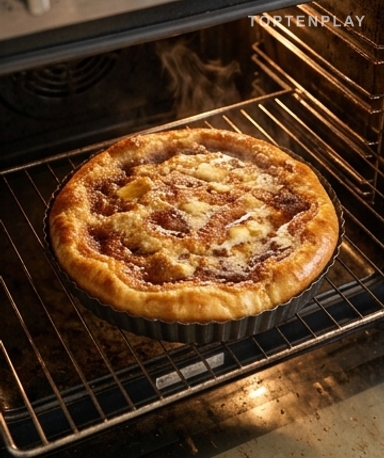
Bake at 180°C for fifteen minutes. For the first ten, the topping melts gently. In the last five, the sugar starts to caramelize — it takes on a light to dark caramel color in different spots, and the smell changes: warmer, more intense, with a hint of brown butter filling the kitchen. This is the critical moment. Overcooked, and the caramel hardens like praline as it cools. We want a shiny surface, slightly puffed, with dough edges golden like a bakery brioche.
Tips & Tricks
- Don’t test the milk with a thermometer: just dip a finger in. It should be lukewarm like a baby’s bath, never hot — if it burns, wait two minutes before adding the yeast.
- The topping seems too liquid in the tin before baking. That’s normal. It will melt, seep into the hollows, and caramelize. Don’t add anything, don’t touch anything.
- This tart is best eaten the same day. The next day it’s still good, but the dough loses its fluffiness. If you know there will be leftovers, reheat the slices for two minutes in the microwave — it revives the texture.
Can I replace the brown beet sugar (vergeoise) with another sugar?
Yes, light or dark brown sugar is the best substitute — same color, similar result. Standard raw sugar also works, but the taste will be less deep, without that caramel-licorice edge that vergeoise provides. White sugar is the last resort: the topping will be sweeter and less complex.
How do I keep the sugar tart soft?
At room temperature under a tea towel or in an airtight box, it keeps for 24h without any problem. After that, the dough becomes firmer. Reheat the slices for 2 minutes in the microwave to regain the first-day fluffiness.
Why didn’t my dough rise?
The most common cause: milk that was too hot and killed the yeast. The milk should be lukewarm, not hot — between 30 and 35°C. Also check the expiration date of your dry yeast; old yeast loses its effectiveness even if the packet isn’t open.
Can I prepare the dough in advance?
Yes. After kneading, wrap the dough and let it rise overnight in the refrigerator instead of one hour at room temperature. The next day, take it out 30 minutes before spreading. The slow cold rise even develops a bit more flavor.
Is a stand mixer mandatory?
No. A mixer makes life easier, but by hand it works very well — you just need to knead for 8 to 10 minutes instead of 5. Brioche dough is easy to work by hand, and you feel better when it reaches the right consistency.
The topping looks too liquid before baking, is that normal?
Completely normal. The cream and butter will melt together during baking, seep into the hollows of the dough, and caramelize on the surface. Don’t change anything and don’t add more sugar — the topping concentrates as it cooks.
Soft Sugar Tart
French
Dessert
The brioche-style tart from Northern France, with its melting topping of caramelized brown beet sugar. Simple, quick, and much better warm.
Ingredients
- 225g wheat flour
- 30g granulated sugar (for the dough)
- 60g soft butter (for the dough)
- ½ sachet (3,5g) active dry yeast
- 1 pinch salt
- 75ml (7,5cl) lukewarm milk
- 30g cold butter, diced (for the topping)
- 25ml full-fat liquid heavy cream
- 40g granulated sugar (for the topping)
- 40g vergeoise brune (or dark brown sugar)
Instructions
- 1Pour the lukewarm milk into a bowl, add the dry yeast, mix and let rest for 5 to 10 minutes until small bubbles appear.
- 2In a large bowl, mix the flour, sugar, and salt. Add the soft butter in pieces and work with your fingertips until you get a sandy texture.
- 3Gradually pour in the milk-yeast mixture and knead for 8 to 10 minutes by hand (or 5 minutes with a mixer) until you get a supple and slightly sticky dough.
- 4Form a ball, cover the bowl with a tea towel and let rise for 1 hour in a warm place until the dough doubles in size.
- 5Butter a round tin (26-28cm), place the risen dough and spread it with floured hands, covering the entire bottom.
- 6With your fingertips, dig regular small holes over the entire surface of the dough.
- 7Distribute the cold butter cubes, granulated sugar, and brown sugar over the dough, then drizzle with the heavy cream.
- 8Bake at 180°C (fan oven) for 15 minutes. The tart is ready when the surface is shiny, caramelized, and the edges are well browned.
- 9Let cool for 10 minutes before serving.
Notes
• Storage: at room temperature under a tea towel, maximum 24h. Reheat for 2 minutes in the microwave to regain softness.
• Vanilla variation: add a few drops of vanilla extract to the cream for a more fragrant version.
• Advance prep: the dough can rise overnight in the fridge after kneading. Take it out 30 minutes before shaping the tart.
Nutrition Facts (per serving, estimated)
| 255 kcalCalories | 4gProtein | 36gCarbs | 11gFat |