📌 Slow-Roasted Lamb Shoulder with Garlic, Honey, and Mustard
Posted 2 April 2026 by: Admin
Have you ever left something in the oven for three hours on a Sunday afternoon, knowing the result would be worth every minute of the wait? This slow-cooked lamb shoulder is exactly that. A low-stress, slow-roast weekend recipe that transforms a beautiful piece of meat into something memorable.
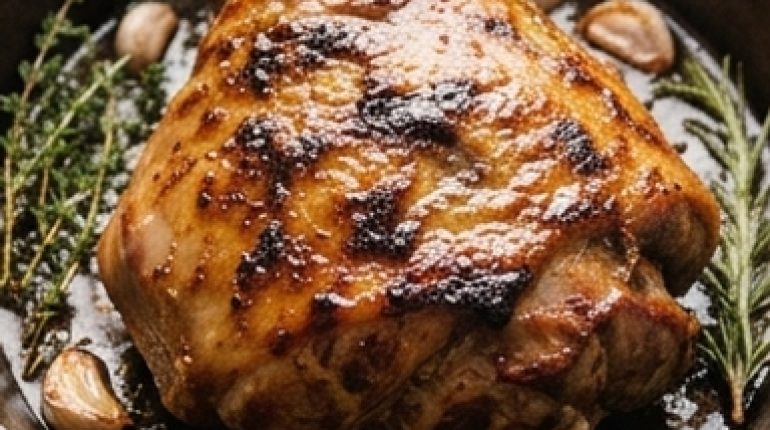
The shoulder emerges from the oven with a dark caramel lacquered crust, shining like fresh varnish. It perfumes the entire room — a scent of warm honey mixed with confit garlic and rosemary, which catches your nose long before you lift the lid. When you place the knife on the meat, the fibers give way without resistance, into long tender threads soaked in amber juices. It’s the kind of dish that brings silence to the table.
Why you’ll love this recipe
Ingredient Notes
All the ingredients gathered: the shoulder, aromatics, and the honey-mustard marinade that make all the difference.
- Lamb Shoulder : The ideal cut for slow roasting: well-marbled, it melts in its own juices without ever drying out. Boneless is more practical for serving and cooking evenly. If you can, visit your butcher — a quality shoulder really makes a difference for such a long cook.
- Honey : Ordinary liquid honey works great. But if you have thyme or rosemary honey on hand, use it — it pairs naturally with the herbs in the recipe. Avoid overpowering honeys like chestnut, which might dominate everything else.
- Dijon Mustard : It does two things at once: brings acidity to balance the honey, and helps the marinade stick to the meat like a coating. Whole grain mustard also works, for a slightly more rustic texture. No real substitution needed here.
- Garlic : 8 cloves seems like a lot. But after 3 hours in the oven, garlic loses all its aggression — it becomes sweet, almost candied, with a rounded flavor. Cloves inserted into the meat flavor it from the inside. That’s the real secret to the depth of flavor in this dish.
- Broth : Use vegetable or chicken broth rather than water. This liquid at the bottom of the dish creates the humidity necessary for slow cooking — and it concentrates for 3 hours to become a full-bodied jus, perfect for drizzling over the meat at the table.
Garlic first
Take the shoulder out of the refrigerator and let it come to room temperature for half an hour. Cold meat put directly into the oven cooks unevenly — the center stays cold for too long while the outside dries out. Meanwhile, prepare your garlic cloves: peeled, lightly crushed flat with the side of the knife. With the tip of the blade, make small incisions in the meat and insert a clove into each. It takes two minutes. But it’s what will flavor the meat from the inside during the whole cook, where no marinade can reach.
Marinade in two minutes
In a bowl, mix the honey, Dijon mustard, olive oil, thyme, salt, and pepper. You’ll get a slightly thick sauce, a bit sticky between the fingers — that’s exactly what we’re looking for. Generously brush the entire surface of the shoulder, not forgetting the sides and underneath. The honey gives the marinade an amber color that will turn into a shiny crust during cooking. Place the rosemary sprig in the dish, pour the broth into the bottom, then cover tightly with aluminum foil.
And now, patience
Oven at 160°C, static heat. The shoulder will cook covered for 2h30 to 3 hours. Time for the fibers to relax, the aromas to meld, and the broth to start concentrating into golden juices at the bottom of the dish. Every 45 minutes or so, open the oven and baste the meat with these juices — halfway through it’s still clear, a bit cloudy, with the first smell of honey and rosemary beginning to assert itself. This step is not optional. It’s what prevents the surface from drying out during these long hours of cooking.
Caramelization time
Thirty minutes before the end, remove the foil and increase the temperature to 190°C. This is where everything changes. The honey starts to react — the surface goes from pale beige to golden, then to that brilliant reddish-brown we’re after. You’ll hear a slight crackling in the dish. The smell becomes more intense, sweeter, with a slight hint of roast that tickles the nostrils. Don’t wander too far at this stage: at 190°C, a few minutes can make the difference between a beautiful caramelized crust and a burnt surface.
Resting — as important as cooking
Take the shoulder out of the oven and resist the urge to carve it immediately. 10 to 15 minutes under a foil sheet placed in a tent — loosely. During this time, the concentrated juices in the center of the meat redistribute toward the outside. If you cut too early, they escape into the dish and you end up with less juicy meat. This rest is what makes the difference between just a good shoulder and a truly melting one.
Tips & Tricks
- Use chicken broth instead of water: after 3 hours, this liquid concentrates and becomes a much tastier cooking jus than a plain water base. You can serve it directly at the table to drizzle over the slices.
- For a complete meal without extra effort, add large chunks of potatoes and carrots directly to the dish around the shoulder at the start of cooking. They cook in the juices and absorb all the flavors.
- To check the cooking, stick a fork into the thickest part: it should enter and come out with zero resistance, and the meat should shred easily. If it’s not there yet, recover with foil and leave for another 20 minutes.
- Leftovers are even better the next day. The shredded lamb, gently reheated in a pan with a bit of its cooking jus, develops even more concentrated flavors than on day one.
Can I prepare the slow-roast lamb shoulder the day before?
Yes, and it’s actually recommended. Once cooked, let the shoulder cool in its juices, then store everything in the refrigerator. The next day, reheat at 150°C for 30 minutes under foil — the flavors are even more concentrated after a night of rest.
Do I absolutely need a boneless shoulder?
No, a bone-in shoulder works too. The bone even adds extra flavor to the juices. Just allow for a slightly longer cooking time (about 30 minutes more) and adjust portions as the meat yield will be slightly lower.
What if the crust caramelizes too quickly at the end?
Partially cover the dish with foil, leaving one side open for air to circulate, or lower the temperature to 180°C. The goal is a shiny reddish-brown crust, not black. If the surface is already well-colored but the meat isn’t tender yet, cover completely and extend the cooking.
Can I make this recipe in a Dutch oven?
Absolutely — it’s actually an excellent alternative. First sear the marinated shoulder in the pot over high heat to color it, then add the broth, cover, and bake at 160°C. The pot retains moisture even better than a dish with foil.
How long do leftovers keep?
3 days in the refrigerator in an airtight container with its roasting juices. To reheat, warm the shredded meat over low heat in a pan with a little jus — it regains all its tenderness in a few minutes. You can also freeze leftovers for up to 2 months.
How do I know if the lamb is perfectly cooked?
A fork is the best indicator: it should enter and exit without any resistance in the thickest part of the shoulder. The meat should shred easily when pulled with two forks. If it still resists, cover and extend for 20 minutes — it’s better to overcook than undercook this recipe.
Slow-Roasted Lamb Shoulder with Garlic, Honey, and Mustard
French
Main Course
A lamb shoulder slow-roasted at 160°C, brushed with a honey-mustard-garlic marinade that caramelizes at the end. The meat shreds with a fork after 3 hours.
Ingredients
- 1,5 kg boneless lamb shoulder
- 8 garlic cloves, peeled and lightly crushed
- 60 g (3 tbsp) liquid honey
- 30 g (2 tbsp) Dijon mustard
- 70 ml (5 tbsp) olive oil
- 5 g (1 tbsp) dried thyme
- 1 rosemary sprig
- 150 ml vegetable or chicken broth
- salt and freshly ground pepper
Instructions
- 1Remove the shoulder from the refrigerator 30 minutes before and preheat the oven to 160°C (static heat).
- 2Make incisions in the meat with a knife and insert a crushed garlic clove into each.
- 3In a bowl, mix the honey, mustard, olive oil, thyme, salt, and pepper until you have a smooth sauce.
- 4Generously brush the shoulder on all sides with the marinade.
- 5Place the meat in a large ovenproof dish. Add the rosemary sprig and pour the broth into the bottom of the dish.
- 6Cover tightly with aluminum foil and bake for 2h30 to 3 hours.
- 7Every 45 minutes, open the oven and baste the meat with the cooking juices.
- 830 minutes before the end, remove the foil and increase the temperature to 190°C. Let it caramelize until you have a shiny reddish-brown crust.
- 9Remove the shoulder from the oven, cover loosely with foil, and let rest for 10 to 15 minutes before serving.
Notes
• Storage: Keeps for 3 days in the refrigerator in its cooking juices. Reheat over low heat in a pan or in the oven at 150°C under foil.
• Pot roasting: First sear the marinated shoulder over high heat in a Dutch oven to brown it, then add broth, cover, and bake at 160°C. The result is even more melting due to the trapped moisture.
• All-in-one option: Add potatoes and carrots in large chunks directly to the dish from the start — they cook in the juices and form a side dish with no extra work.
Nutrition Facts (per serving, estimated)
| 545 kcalCalories | 41 gProtein | 10 gCarbs | 37 gFat |