📌 Slow Cooker Ravioli Lasagna
Posted 16 April 2026 by: Admin
A lazy Saturday, grey skies outside, and you have zero desire to watch a pot for two hours. That’s exactly why this lasagna exists. You assemble it in fifteen minutes, put the lid on, and three hours later you have a dish that tastes like you spent the whole afternoon on it.
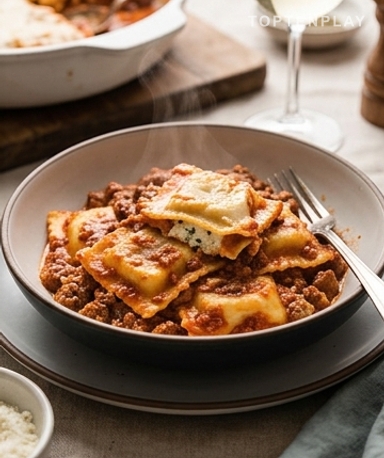
The cheese on top is a creamy white with golden spots like light caramel around the edges. Underneath, the ravioli have puffed up in the sauce—tender to the core, soaked in both tomato and meat juices. The sauce itself has transformed from a bright red to something deeper, almost brown at the edges where it caught the sides of the slow cooker. When you lift the lid for the first time, the oregano hits you first, then a sweet, caramelized note of long-cooked tomato.
Why you’ll love this recipe
Ingredient Notes
Everything you need for this dish: frozen ravioli, ground beef, and a few pantry staples.
- Frozen cheese ravioli : Choose the ricotta-spinach filled ones if you can find them: the spinach disappears into the sauce but adds an earthy undertone that balances the acidity of the tomato. Avoid fresh ravioli from the refrigerated section—they fall apart too quickly in the slow cooker.
- Ground beef : Get beef with at least 15% fat. Lean beef results in a dry sauce and grainy bits. If you want to lighten it up, half beef and half ground turkey works great—the sauce stays flavorful.
- Jarred marinara sauce : Don’t skimp here. The marinara accounts for 60% of the final taste. A good sauce—Mutti, Rao’s, or any serious brand in your aisle—really changes the result compared to the cheapest option.
- Ricotta : It gets mixed with the meat before assembly. As it melts gently, it creates little creamy pockets between the ravioli layers. If you don’t have any, basic cream cheese works fine without much difference.
- Shredded mozzarella : Add this only during the last half hour, not before. Put in too early, it melts completely and disappears into the sauce. Added at the right time, it forms a distinct, stringy layer on the surface that stretches when you dive in with your spatula.
Why starting in the morning changes everything
The slow cooker works best when you really let it do its job. Start it around 11:00 for a 15:00 meal, or at 10:00 for dinner—you’ll have all the time you need. Start by browning the meat in a pan over high heat. Not gently: you want to hear that dry searing sound and see the meat go from pink to deep brown in spots. It takes five minutes. This quick caramelization provides a solid flavor base for the whole sauce—if you put raw meat directly in the slow cooker, the result is flat. Once browned, drain the excess fat, mix with the marinara and seasoning in the pan, then transfer everything to the slow cooker.
The layer everyone skips — the ricotta
The ricotta is what separates this recipe from a simple cafeteria lasagna. Mix it with an egg and a pinch of salt, then drop spoonfuls between the layers of ravioli. As it slow-cooks, it solidifies slightly and forms creamy zones, almost like a natural béchamel. Many people skip it because they fear it will disappear into the sauce. It doesn’t disappear. It stays there, soft, with a light milky flavor that contrasts with the acidity of the tomato. Don’t overbeat it with the egg—just a few turns of the fork is enough; you want it to keep its characteristic grainy texture.
The cheese on top: a question of timing
Only add the shredded mozzarella during the last half hour. That’s the rule. Put it in at the start and it melts completely, dissolves into the sauce, and disappears—a total loss. By adding it late, it forms a distinct layer on the surface, melting into that stringy texture that stretches when you serve it. The slow cooker doesn’t brown the cheese; that’s its limit. But if you absolutely want a gratin finish—those little brown spots that smell like roasted cheese—transfer the insert under the oven broiler for two minutes just before serving. Not mandatory. Just very good.
Resting: the step everyone ignores that makes the difference
When you turn off the heat, don’t serve immediately. Let it rest for ten minutes. During this time, the sauce stabilizes, the ravioli hold together better on the plate, and you won’t burn your mouth on a 90°C sauce. It’s the same logic as letting a roast rest before slicing. The dish is much more pleasant to serve and the presentation is significantly better—the layers stay visible instead of collapsing.
Tips & Tricks
- Don’t lift the lid during cooking—every time you do, you lose accumulated heat and add 15 to 20 minutes to the cooking time. Leave it alone.
- If your sauce seems too watery at the end, remove the lid for the last 20 minutes. The moisture will evaporate, and the sauce will thicken naturally.
- It’s even better the next day. The ravioli soak up the sauce overnight, and when gently reheated, the dish has an intensity of flavor you won’t get on the first night.
Can I use fresh ravioli instead of frozen?
Technically yes, but the result isn’t as good. Fresh refrigerated ravioli are more fragile and break apart easily after several hours in the slow cooker. Frozen ones hold up better to long cooking and absorb the sauce without collapsing.
How do I prevent the ravioli from getting too soft?
Follow the indicated times and avoid lifting the lid during cooking. If you have a powerful slow cooker, start checking the ravioli texture after 3h. Once they are tender but still slightly firm under the fork, they’re ready.
How long does this keep in the refrigerator?
Up to 4 days in an airtight container. To reheat, add a spoonful of water to the portion before microwaving—it prevents the sauce from drying out and the ravioli from sticking. It’s actually better the next day.
Can I prepare this dish in advance?
Yes, it’s actually recommended. Assemble all the layers the night before in the slow cooker insert, cover, and refrigerate. The next morning, just place the insert in the base and start cooking. Add 30 minutes to the usual time since the insert starts cold.
Can I replace the ground beef with something else?
Absolutely. Ground turkey works very well and lightens the dish. You can also make a 100% vegetarian version by replacing the meat with sautéed mushrooms—button mushrooms or shiitake—which provide a similar texture and plenty of flavor.
Do I need to defrost the ravioli before putting them in the slow cooker?
No, they go straight from the freezer into the slow cooker. This is one of the advantages of this recipe. Defrosting them beforehand would risk them getting too soft and disintegrating before the sauce is ready.
Slow Cooker Ravioli Lasagna
Italian
Main Course
A generous and melting lasagna where frozen ravioli cook directly in the meat sauce. Fifteen minutes of prep, the slow cooker does the rest.
Ingredients
- 900g frozen cheese ravioli (ricotta or ricotta-spinach)
- 500g ground beef (minimum 15% fat)
- 680g jarred marinara sauce (1 large jar)
- 250g ricotta
- 1 egg
- 200g shredded mozzarella
- 2 garlic cloves, minced
- 1 tsp dried Italian herbs
- 1 tsp salt
- ½ tsp black pepper
Instructions
- 1Brown the ground beef in a skillet over high heat for 5 minutes until well browned. Drain excess fat.
- 2Add minced garlic, Italian herbs, salt, and pepper. Pour in the marinara, stir, and remove from heat.
- 3In a bowl, mix the ricotta with the egg and a pinch of salt. Set aside.
- 4Coat the bottom of the slow cooker with a thin layer of meat sauce.
- 5Place a layer of frozen ravioli over the sauce, then distribute dollops of ricotta, then cover with meat sauce. Repeat layers until ingredients are used up, ending with meat sauce.
- 6Cook on LOW for 3h to 3h30, or on HIGH for 2h, without lifting the lid.
- 7Spread shredded mozzarella evenly over the top. Replace the lid and cook for another 20 to 30 minutes until the cheese is melted.
- 8Turn off the heat and let rest for 10 minutes before serving.
Notes
• For a golden top, transfer the insert under a broiler for 2 minutes just before serving.
• Advance prep: assemble all layers the night before in the insert, refrigerate overnight, and start cooking the next morning, adding 30 minutes to the time.
• Storage: up to 4 days in the fridge in an airtight container. Reheat in the microwave with a spoonful of water per serving to keep it moist.
Nutrition Facts (per serving, estimated)
| 770 kcalCalories | 44gProtein | 65gCarbs | 35gFat |