📌 Slow Cooker Brown Sugar Glazed Potatoes
Posted 20 April 2026 by: Admin
Brown sugar glazed potatoes are the kind of dish you systematically underestimate — and always end up scraping the bottom of the dish for. Three ingredients, a slow cooker, and you get something that looks like a festive side dish. No need to do more.
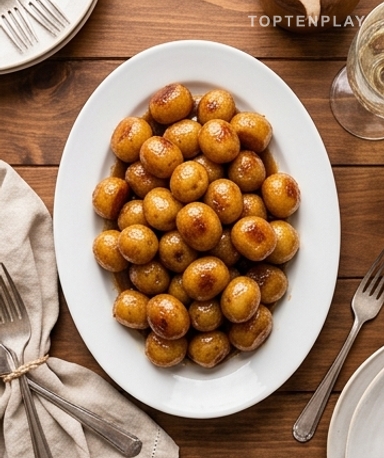
Imagine a small potato whose skin shines like a light caramel, slightly crackled under your fingers. Inside, the flesh yields without resistance, almost creamy, with that buttery and sweet taste reminiscent of candied sweet potatoes from holiday meals. The smell rising from the slow cooker after four hours of cooking is that blend of melted butter and warm brown sugar starting to caramelize — a bit like a Tarte Tatin at the very beginning of its bake. You haven’t even served yet and everyone is already asking what you prepared.
Why you’ll love this recipe
Ingredient Notes
Everything you need to succeed with glazed potatoes: small gold potatoes, brown sugar, and butter.
- Small yellow or gold potatoes : It’s really important to choose small ones. Varieties like Charlotte, Ratte, or baby potatoes stay firm during cooking while becoming meltingly soft inside. Avoid floury potatoes like Bintje — they fall apart and you’ll end up with caramelized mashed potatoes. Not bad, but not the goal.
- Light brown sugar : Light brown sugar is softer and moister than dark brown sugar. It melts better and creates a more even, less bitter glaze. If you only have dark brown sugar, it works too, but the molasses taste will be more pronounced.
- Unsalted butter : Unsalted, not salted — you control the salt yourself with the pinch added separately. It’s the butter that binds the glaze and gives it that creamy texture that sticks well to the potato skin. Don’t replace it with margarine; the result isn’t the same.
- Sweet paprika and garlic powder : Optional on paper, essential in practice. Without them, it’s good but a bit flat. With them, you get a slightly spicy and fragrant dimension that prevents the dish from becoming too sweet. A teaspoon of each, no more — they are there to support, not to dominate.
Why I never make this dish any other way than in the slow cooker
In the oven, potatoes can dry out or cook unevenly depending on the spots. In a pan, the glaze burns if you look away for two minutes. In the slow cooker, the trapped steam keeps everything moist and the sugar melts progressively, layer by layer, without ever reaching the burning point. After two hours at high temperature, the smell in the kitchen starts to resemble warm caramel with a note of hazelnut butter. After four hours at low temperature, you lift the lid and the potatoes shine as if they had been hand-lacquered. That’s exactly what we’re looking for.
The part everyone fails at: the coating
The glazing is simple — but you really have to coat each potato well, not just pour the mixture over and hope it distributes itself. Take the potatoes in your hands and turn them one by one in the butter-brown sugar mixture until every square centimeter is covered with a thin glossy film. This direct contact between the skin and the glaze is what creates the caramelized crust. Another point people forget: the potatoes must be very dry before being coated. Residual moisture makes the glaze slide off instead of sticking to the skin.
What happens in the pot during cooking
At first, the butter melts and mixes with the brown sugar to form a thick, dark syrup that pools at the bottom of the pot. This syrup begins to simmer gently — not boil violently, just simmer — at a temperature well below what an oven would reach. The potatoes cook in their own steam, coated in this syrup that slowly rises up their sides. If you can stir once halfway through cooking, do it: it helps the glaze distribute over all sides and you’ll see that some potatoes already have a very inviting amber color. But even without stirring, the result holds up.
What to serve them with without ruining everything
This dish acts like a chameleon. The sweetness of the glaze calls for something salty and slightly acidic on the opposite side. A simply seasoned roast chicken, a leg of lamb, lemon chicken — all work very well. Avoid very sweet or very rich sauces on the side; the dish doesn’t need competition in that area. For a Sunday brunch, these potatoes hold up perfectly alongside eggs and grilled vegetables. A touch of fresh chopped parsley just before serving and a few grains of fleur de sel that crunch under the teeth is all the dish needs.
Tips & Tricks
- Do not overfill the slow cooker — the potatoes should not exceed two-thirds of the pot, otherwise the steam won’t circulate correctly and some will stay raw in the center while others are overcooked.
- If after cooking the glaze seems too liquid, remove the lid for the last twenty minutes: the moisture evaporates, the syrup concentrates, and the potatoes take on a much more lacquered appearance.
- To reheat leftovers the next day, a few minutes in a pan over medium heat is enough — the glaze restarts immediately and the potatoes regain their shine without drying out.
Can I make this recipe without a slow cooker?
Yes, in the oven at 180°C in a dish covered with aluminum foil for 45 minutes, then 15 minutes uncovered to lacquer the glaze. The result is slightly less melting than in the slow cooker, but very satisfying. Monitor closely at the end of cooking to prevent the glaze from burning.
Can I prepare this dish in advance?
Absolutely. You can coat the potatoes in the glaze the day before and leave them in the refrigerator in a covered dish. The next day, transfer directly to the cold slow cooker and start cooking. Allow for maybe 30 extra minutes since the potatoes will be cold at the start.
How to store and reheat leftovers?
Leftovers keep for 3 days in the refrigerator in an airtight container. To reheat, a pan over medium heat with a small splash of water is ideal — the glaze remelts in a few minutes and the potatoes regain their shine. The microwave also works but softens the skin.
Why is my glaze too liquid at the end of cooking?
This is normal if you kept the lid closed the whole time — steam accumulated and diluted the syrup. Remove the lid for the last 20 minutes, the steam escapes, and the glaze concentrates. You can also slightly increase the amount of brown sugar next time.
Can I use any type of potato?
Small waxy potatoes — Charlotte, Ratte, baby potatoes — give the best results southern they hold up well during long cooking. Avoid floury varieties like Bintje which fall apart and give a pasty texture. If your potatoes are medium-sized, cut them in half to ensure even cooking.
Can this dish work for a holiday meal prepared long in advance?
It’s actually one of its big advantages. Once cooking is finished, the slow cooker stays in ‘keep warm’ mode without any problem for 1 to 2 hours. The potatoes stay shiny and hot without drying out, which is perfect when guests arrive at different times.
Slow Cooker Brown Sugar Glazed Potatoes
American
Side Dish
Small whole potatoes slow-cooked in a butter and brown sugar glaze until they are meltingly tender at the core and shiny like caramel. The simplest holiday side dish there is.
Ingredients
- 1,5 kg small yellow or gold potatoes (Charlotte, Ratte or baby potatoes)
- 200 g firmly packed light brown sugar
- 115 g melted unsalted butter
- 1 pinch salt
- 1 pinch ground black pepper
- 1 tsp sweet paprika (optional)
- 1 tsp garlic powder (optional)
- 1 handful fresh chopped parsley for finishing (optional)
- a few grains fleur de sel for serving
Instructions
- 1Rinse the potatoes under cold water and scrub them to remove any trace of dirt. Dry them thoroughly with a towel — they must be perfectly dry. Cut in half any that exceed the size of a golf ball.
- 2In a large bowl, mix the brown sugar, melted butter, salt, pepper, and if desired the paprika and garlic powder. Stir until you get a thick and homogeneous mixture.
- 3Add the potatoes to the bowl and coat them by hand, one by one, making sure to cover every side with glaze.
- 4Pour the coated potatoes into the slow cooker. Scrape the remaining glaze from the bottom of the bowl and pour it over. Close the lid.
- 5Cook for 4 to 5 hours on low or 2 to 3 hours on high. Stir gently once halfway through if possible.
- 6Check doneness with the tip of a knife: it should slide in without resistance. If the glaze is too liquid, remove the lid for the last 20 minutes.
- 7Just before serving, stir gently to well coat all the potatoes. Sprinkle with fresh chopped parsley and a few grains of fleur de sel.
Notes
• Storage: leftovers keep for 3 days in the refrigerator in an airtight container. Reheat in a pan over medium heat with a splash of water to revive the glaze.
• Make ahead: potatoes can be coated in the glaze the day before and placed in the refrigerator. Add about 30 minutes of extra cooking time if they start cold.
• Spicy variant: add 1 pinch of Cayenne pepper to the glaze for a sweet-spicy effect that works very well with roasted meats.
Nutrition Facts (per serving, estimated)
| 340 kcalCalories | 3 gProtein | 57 gCarbs | 12 gFat |