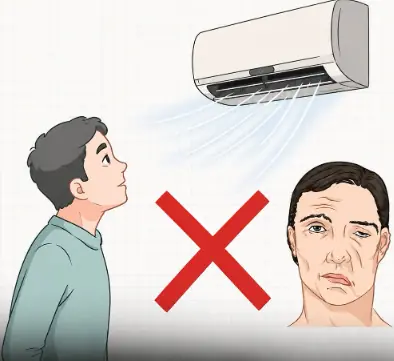
Sleeping with an air conditioner blowing directly onto your face may increase the risk of facial nerve inflammation in susceptible individuals, according to expert warnings circulating this summer. While cold air is not identified as the sole cause of facial paralysis, prolonged exposure is flagged as a potential contributing factor — particularly for older adults and people with conditions such as diabetes or high cholesterol.
In brief
- —Direct AC airflow while sleeping may raise facial paralysis risk
- —Older adults and people with diabetes or high cholesterol are most at risk
- —Early symptoms include ear pain, facial stiffness, and mild twitching
Cold air as a contributing factor, not a direct cause
Air conditioners have become a fixture in homes during summer, but experts caution that allowing cold air to blow directly onto the body for extended periods — especially overnight — may not be entirely harmless for everyone.

The distinction experts draw is important: cold air is not described as the direct cause of facial paralysis, but rather as a potential contributing factor in certain cases. The underlying mechanism involves the effect of sustained cold exposure on blood circulation and nerve health.
Viral infections, complications following surgery, and a range of other medical conditions are also recognized causes of facial nerve paralysis. Experts emphasize that early diagnosis generally improves treatment outcomes, regardless of the underlying cause.
What is facial nerve paralysis?
Facial paralysis occurs when the facial nerve — which controls the muscles on one side of the face — becomes inflamed, compressed, or damaged. The most common form, Bell’s palsy, is often linked to viral infections. The condition can affect anyone, but certain health factors are known to increase vulnerability.
Older adults and people with diabetes or high cholesterol face higher risk
Not everyone faces the same level of risk. Experts identify people with weakened immune systems, older adults, and individuals with underlying conditions such as diabetes or high cholesterol as particularly vulnerable.

These conditions can impair blood circulation and compromise nerve health, meaning that sudden or prolonged exposure to cold air may be more likely to trigger facial nerve inflammation in these groups than in the general population.
For healthy individuals without these risk factors, the concern is described as lower — though the recommendation to avoid sustained direct airflow to the face applies broadly.
Stiffness, ear pain, and twitching: the warning signs to watch for
Facial paralysis often develops suddenly, but some patients do experience early warning signs before obvious weakness appears. Recognizing these signals may allow for faster medical intervention.

According to experts, warning signs can include a feeling of stiffness or tightness around one side of the face, forehead, or eye, mild facial twitching or numbness, and pain around or behind the ear that precedes any visible facial weakness.
Once paralysis sets in, symptoms become more pronounced: difficulty raising one eyebrow or fully closing one eye, drooping facial muscles on one side, a drooping mouth corner when smiling, trouble speaking clearly or eating, and either excessive tearing or dryness in one eye. These symptoms typically affect only one side of the face.
From anti-inflammatory drugs to surgery: treatment depends on severity
There is no single treatment protocol for facial paralysis. Experts note that the approach depends on both the underlying cause and the severity of the condition.

For mild cases, doctors may prescribe medications to reduce inflammation and swelling, alongside pain relief and nerve-protective drugs. Moderate to severe cases may combine medication with physical therapy — including facial massage, muscle exercises, acupuncture, or structured rehabilitation programs.
Recovery timelines vary considerably. Some patients improve within one to two weeks, while others require extended treatment depending on the degree of nerve damage. In the most severe cases, surgery may be considered when other approaches have not produced results.
As a preventive measure, experts recommend redirecting air conditioner airflow away from the face, maintaining a comfortable room temperature, and limiting prolonged exposure to cold air during sleep.
No clinical studies or specific case figures are cited in the available expert guidance, leaving open questions about the precise frequency of AC-related facial nerve cases and which populations are most affected. Medical authorities have yet to issue formal public health guidelines specifically targeting air conditioner use and facial paralysis risk. As summer temperatures remain high, whether this advisory gains broader institutional backing — and whether further research quantifies the risk — remains to be seen.