📌 Sleep position: how sleeping on your back worsens apnea and back pain
Posted 28 December 2025 by: Admin
Sleeping On Your Back: The Dangers For The Spine And Respiration
The dorsal position, often perceived as natural, hides respiratory and spinal risks that the majority of sleepers ignore. When the body rests flat on the back, the tongue and soft tissues of the throat naturally relax, creating a progressive obstruction of the airways. This phenomenon triggers two immediate consequences: chronic snoring and sleep apnea, a condition during which breathing stops briefly but repeatedly during the night.
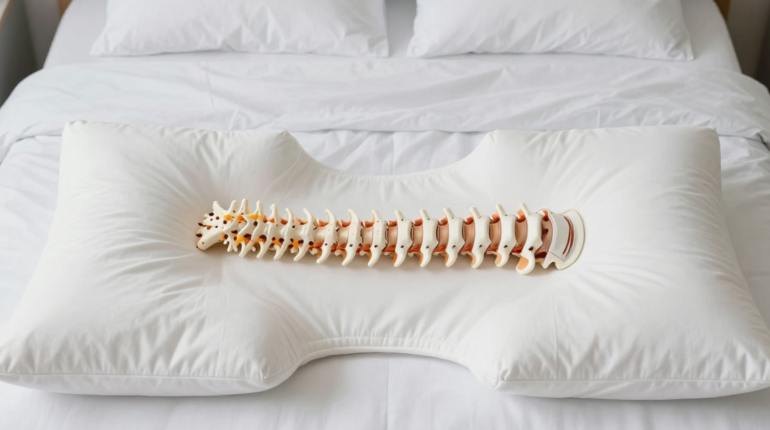
Beyond respiratory disorders, this position inflicts considerable pressure on the spinal architecture. Without adequate support, the natural curvature of the lumbar spine loses its optimal alignment, generating severe tension on the intervertebral discs. The neck also suffers from this mechanical constraint, trapped between the mattress and gravity. These structural imbalances translate, upon waking, into persistent lower back pain and disabling neck stiffness.
The solution lies in precise ergonomic adjustments. Slightly elevating the head with a suitable pillow clears the obstructed airways. Placing a second pillow under the knees restores the natural lumbar curve, redistributing pressure evenly along the spine. These simple modifications transform a risky position into a viable alternative for those who cannot sleep otherwise.
The Side Position: The Healthiest Option With Precautions
Faced with the dangers of the back position, sleeping on the side stands out as the alternative recommended by sleep specialists. This body orientation naturally clears the airways by preventing the tongue from falling back into the throat. Snoring decreases drastically, while sleep apnea episodes become rarer, allowing for continuous oxygenation of the brain throughout the night.
The benefits extend far beyond the respiratory sphere. The spine maintains its natural alignment without undergoing the vertical compression of back rest. Chronic lower back pain gradually subsides as the intervertebral discs regain their optimal spacing. Blood circulation also improves, as the heart pumps more efficiently when the body rests laterally rather than crushed against the mattress.
However, this position requires specific adjustments to avoid new imbalances. The lower shoulder bears the entire weight of the torso, risking nerve compression and morning numbness. The upper knee, if it falls toward the mattress, causes excessive rotation of the lumbar spine. These side effects necessitate the use of strategically placed pillows: one between the knees to stabilize the pelvis, another thick enough to fill the space between the shoulder and the head, ensuring that the cervical vertebrae remain perfectly aligned with the rest of the spine.
Other Sleep Positions And Their Impacts
Beyond these two dominant positions, other body orientations deserve in-depth analysis. Sleeping on the stomach, although little discussed in recent studies, generates permanent cervical torsion since the head must necessarily pivot 90 degrees to breathe. This prolonged rotation compresses the vertebral arteries, reducing blood flow to the brain and causing morning headaches. The lumbar region also undergoes excessive arching, with the discs being crushed in their posterior part.
For stomach sleepers unable to change their habit, adjustments become crucial. Placing a thin pillow under the pelvis partially restores lumbar alignment, while a very flat pillow or the total absence of a pillow limits cervical rotation. Some physiotherapists even recommend sliding an arm under the pillow to create a slight natural elevation of the torso.
The natural and medical remedies adapt to each profile. Lavender essential oils promote falling asleep in a side position, while nocturnal lumbar belts maintain the spinal curvature for back sleepers. Memory foam mattresses adjust to specific pressure points according to the chosen orientation. This therapeutic personalization transforms sleep into true restorative care, provided you precisely identify what your body is expressing during these hours of unconsciousness.
Body Diagnosis Through Sleep Position
These ergonomic adjustments are only a symptomatic response. The true revelation lies in what your nightly position reveals about your deep physiological state. Sleep doctors now consider body orientation as a reliable diagnostic marker, in the same way as a blood test or an X-ray.
A sudden shift to the left side can signal emerging heart problems, as the body instinctively seeks to reduce pressure on the aorta. Patients suffering from gastroesophageal reflux spontaneously adopt this position, as the digestive anatomy favors keeping gastric juices in the stomach. Conversely, a marked preference for the back often reveals chronic muscle tension or an unconscious search for body symmetry in the face of stress.
Nocturnal manifestations speak a precise language. Frequent awakenings in the prone position generally indicate compensatory respiratory distress, as the body attempts to widen the rib cage to maximize oxygenation. Morning cramps in side sleepers signal prolonged vascular compression requiring a circulatory check-up.
This body reading transforms every night into a passive consultation. Rather than forcing a change in position, the preventive approach consists of decoding these signals and consulting when sudden changes occur. Your body orchestrates a permanent adaptation during sleep, thus revealing the imbalances that your daytime consciousness ignores.