📌 Simmered beef cheek: why this modest cut became the chefs’ secret for meltingly tender meat
Posted 12 March 2026 by: Admin
The Secrets Of A Great French Classic Reinvented
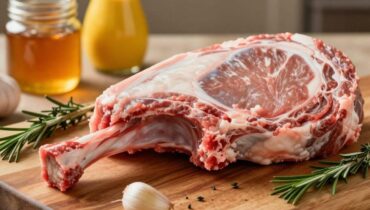
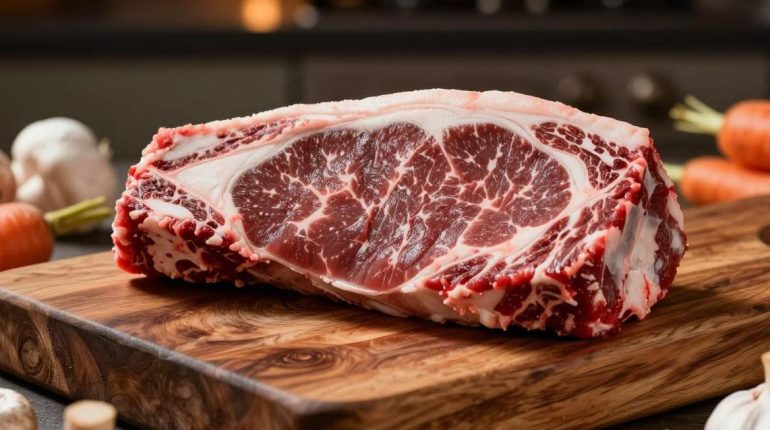
Long relegated to the humblest family preparations, beef cheek is now making a spectacular comeback in chefs’ kitchens. This cut from the muscular part of the beef head, once considered modest, contains an exceptional physiological peculiarity: a naturally gelatinous texture that transforms into a quasi-candied tenderness after slow cooking.
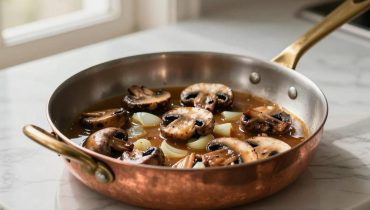
This culinary rehabilitation is no accident. Professionals have rediscovered what older generations knew intuitively: the collagen richness of this muscle, constantly used by the animal, becomes the secret of a melting, almost confit-like meat under the effect of prolonged cooking. In this recipe simmered with mushrooms, the alchemy fully operates thanks to the alliance of red wine and button mushrooms, whose woody notes enrich the aromatic depth of the sauce.
Unlike noble cuts served immediately, this dish reveals another of its secrets: it improves with time. The flavors continue their fusion work after cooking, making the next day the ideal time to taste this preparation. The red wine sauce, soaked in the juices of the browned meat and vegetable aromas, then reaches its gustatory peak. This ability to improve transforms a simple simmered dish into a patient gastronomic experience, where each hour of rest amplifies the aromatic complexity.
The Science Behind Exceptional Tenderness
This gustatory transformation is based on a precise chemical phenomenon: the conversion of collagen into gelatin during the 2.5 to 3 hours of simmering. This process, invisible to the naked eye, explains why slow cooking remains irreplaceable. Under the combined effect of gentle heat and humidity, the muscle fibers gradually relax while the collagen literally melts, coating the meat with a silky texture and giving the sauce that natural creaminess so characteristic of simmered dishes.
But before this metamorphosis, a critical step conditions success: the initial browning of the meat on all sides for 5 to 7 minutes. This surface caramelization, far from being trivial, creates the complex aromatic compounds that will form the gustatory backbone of the dish. The brown juices adhering to the bottom of the pot constitute a treasure that deglazing with 75cl of red wine allows to recover entirely. By scraping vigorously with a wooden spatula, these precious residues dissolve into the liquid, exponentially multiplying the depth of the sauce.
The late incorporation of the 500g of mushrooms, only 30 minutes before the end, follows a precise logic. Added too early, they become excessively waterlogged and lose their texture. Introduced at the right time, they absorb just enough sauce to concentrate the flavors while preserving their structure. This gentle cooking, never in violent boiling, guarantees that each element reaches its optimal texture simultaneously.
Execution Protocol For Perfect Results
Mastering this recipe relies on a rigorous sequence of operations. Before you: 1kg of beef cheeks cut into large pieces, 500g of cleaned and cut button mushrooms, two carrots in rounds, one sliced onion, and two cloves of minced garlic. This methodical setup avoids any rushed improvisation during cooking.
The first critical phase occurs during browning: in a cast-iron pot heated over medium heat with olive oil, the meat pieces must color uniformly for 5 to 7 minutes. Each exposed side develops a golden crust that will seal in the juices. Once removed, the vegetables take their place. The professional tip comes here: sprinkle two tablespoons of flour directly over the sautéed vegetables. By cooking for one minute while stirring, this flour creates a light roux that will naturally thicken the sauce without resorting to artificial thickeners.
Deglazing with red wine is the decisive moment. The 75cl poured into the hot pot causes immediate evaporation of the alcohol while the wooden spatula vigorously scrapes the bottom, pulling up every caramelized bit. The tomato paste, incorporated at this stage, enriches the sauce with additional depth. The cheeks then return to the pot, covered by the beef broth, with bay leaf and thyme added. With the lid closed, the temperature drops to very low heat: no violent boiling should disturb this simmering. Thirty minutes before turning off, the mushrooms join the preparation to absorb the aromas without becoming excessively waterlogged. This precise chronology transforms simple ingredients into a gustatory revelation.
Optimization And Exclusive Variations
A little-known peculiarity distinguishes this dish: it gains complexity after resting. Kept for three days in the refrigerator in an airtight container, the mixture fuses its aromatic components overnight. Upon reheating, each element has permeated the others, creating a depth impossible to obtain immediately. This property allows for advance preparation for social meals. The freezer extends this preservation up to two months.
Chefs reveal three variations that transcend the classic version. The dark beer variant replaces the 75cl of red wine with a full-bodied beer, offering malty notes and a pronounced rusticity. The Provençal adaptation incorporates black olives and crushed tomatoes. The Burgundian version adds pearl onions and smoked bacon. These modifications do not betray the original recipe: they exploit its robust structure to explore different gustatory registers.
A few secret enrichments magnify the whole without weighing it down. A knob of butter incorporated just before serving brings a satin luster to the sauce. Smoked bacon, sautéed with the initial onion, diffuses its savory fat into every bite. An extra finely chopped shallot accentuates the aromatic complexity. These discreet adjustments transform an excellent dish into a memorable experience. The accompaniment also reveals its importance: creamy homemade mash, fresh pasta, or smooth polenta absorb the generous sauce.