📌 Shepherd’s Pie: the chef’s technique for a savory filling that never makes the mash soggy
Posted 13 March 2026 by: Admin
The Secrets Of An Iconic Comfort Food Recipe
Behind the golden crust of the shepherd’s pie lies a distinction that few know: the authentic British version requires ground lamb, while beef transforms the dish into a “cottage pie”. This nuance, jealously guarded by purists, reveals the DNA of a classic born in the rural English kitchens.
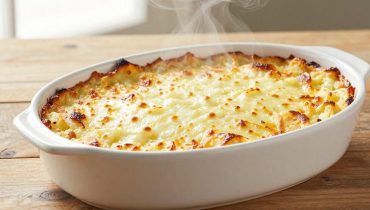
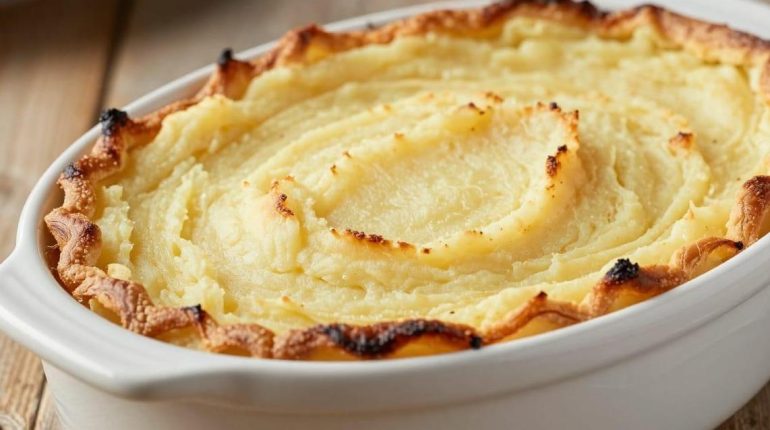
The structure of the dish is based on a three-layer architecture: a rich filling combining meat, onion, garlic, and vegetables coated in a smooth beef broth and Worcestershire sauce; a creamy mashed potato topping serving as a lid; and a surface browned at 200°C until achieving that characteristic golden crust. The whole creates a textural contrast between the melting base and the crispy top.
Modernity enters this ancestral recipe thanks to mixed frozen vegetables that eliminate the tedious chopping step. Once thawed and drained, they integrate directly into the preparation without altering the final quality. For those in a hurry, instant mash advantageously replaces the homemade version, while a “loaded potato” variant enriched with cheddar transforms the traditional dish into a gourmet version.
This flexibility explains why shepherd’s pie spans generations: capable of accommodating leftover mash from the day before or an express sauce made with condensed soup, it oscillates between traditional rigor and culinary pragmatism according to the needs of the moment.
The Foolproof Technique In 4 Steps
Mastering shepherd’s pie relies on a precise sequence where each step conditions the next. In a large skillet, the ground meat cooks with the chopped onion and garlic until all traces of pink have completely disappeared. This initial browning develops the Maillard compounds that form the aromatic base of the dish.
Incorporating the flour requires particular attention: mixed with thyme, salt, and pepper, it must cook for exactly one minute on the heat to eliminate its raw taste without burning. This step creates the thickening agent that will transform the liquid into a velvety sauce. Too short, the flour leaves a floury aftertaste; too long, it loses its binding power.
The beef broth, Worcestershire sauce, and tomato paste then join the preparation. Brought to a boil and then simmered for 2 to 3 minutes uncovered, the sauce reaches that smooth consistency characteristic of a true British gravy. The mixed vegetables are added at the end of cooking, thus preserving their texture without reducing them to mush.
Transferring to a 2-liter dish precedes the final step: the evenly spread mash on the filling forms a hermetic lid. Baked at 200°C for 25 to 30 minutes, the surface transforms into a golden crust under a quick pass under the broiler. This methodical succession guarantees the balance between savory filling and crispy topping that defines the excellence of the dish.
Chef’s Tips For Guaranteed Success
The texture of the filling immediately reveals the cook’s level of mastery. Frozen vegetables, practical but treacherous, release their water during thawing. Meticulous draining is required, followed by an additional minute of uncovered cooking. This targeted evaporation avoids the watery sauce that drowns the dish in an aqueous puddle.
The choice of lean meat and its careful drainage after browning eliminate the greasy layer that inevitably rises to the surface during cooking. This oily film, unsightly and unappetizing, betrays rushed preparations. The patience of a few seconds of draining transforms an ordinary dish into a refined creation.
To amplify the aromatic depth, professionals slide a small additional amount of tomato paste directly into the hot pan. Left for 30 seconds before adding the broth, it caramelizes slightly and develops those complex umami notes that distinguish an exceptional sauce from a banal preparation. This discreet gesture multiplies the flavor intensity without weighing down the recipe.
Advance assembly offers precious freedom: prepared up to 24 hours in advance, the shepherd’s pie waits in the refrigerator before cooking. This maturation even strengthens the fusion of flavors. Taken out during the oven preheating to reach room temperature, it cooks uniformly without the risk of a cold center under a burnt surface. Purists add grated cheddar to the potatoes for a loaded version that transforms the classic into pure indulgence.
Storage And Adaptations For Everyday Life
This generous dish finds its full utility in its ability to stand the test of time. Completely cooled and then hermetically covered, it keeps for four days in the refrigerator or four months in the freezer, wrapped in aluminum foil. This longevity transforms a single cooking session into several ready-to-use meals, freeing busy evenings from any stressful improvisation.
Reheating requires particular attention to preserve the creaminess of the filling. After overnight thawing in the refrigerator, a few spoonfuls of broth poured over the edges before baking at 175°C constitute the little-known trick that prevents drying out. This extra moisture migrates to the center during heating, reviving the silky texture of the initial sauce. The microwave offers a quick alternative for individual portions.
Leftover homemade mash transforms this classic into a last-minute express solution. Spread directly over a freshly prepared filling, they eliminate twenty minutes of preparation. For evenings when time is critically short, the shortened version substitutes the elaborate sauce with a simple can of undiluted condensed tomato soup. Mixed with the browned meat and vegetables, it generates a savory base in a fraction of the usual time.
This uncompromising adaptability explains why this gratin spans generations. Between rigorous British tradition and modern pragmatism, shepherd’s pie remains that culinary safe haven that feeds both the body and the nostalgia of a shared meal.