Image d’illustration © TopTenPlay EN
The Hidden Culprits Behind Towel Deterioration
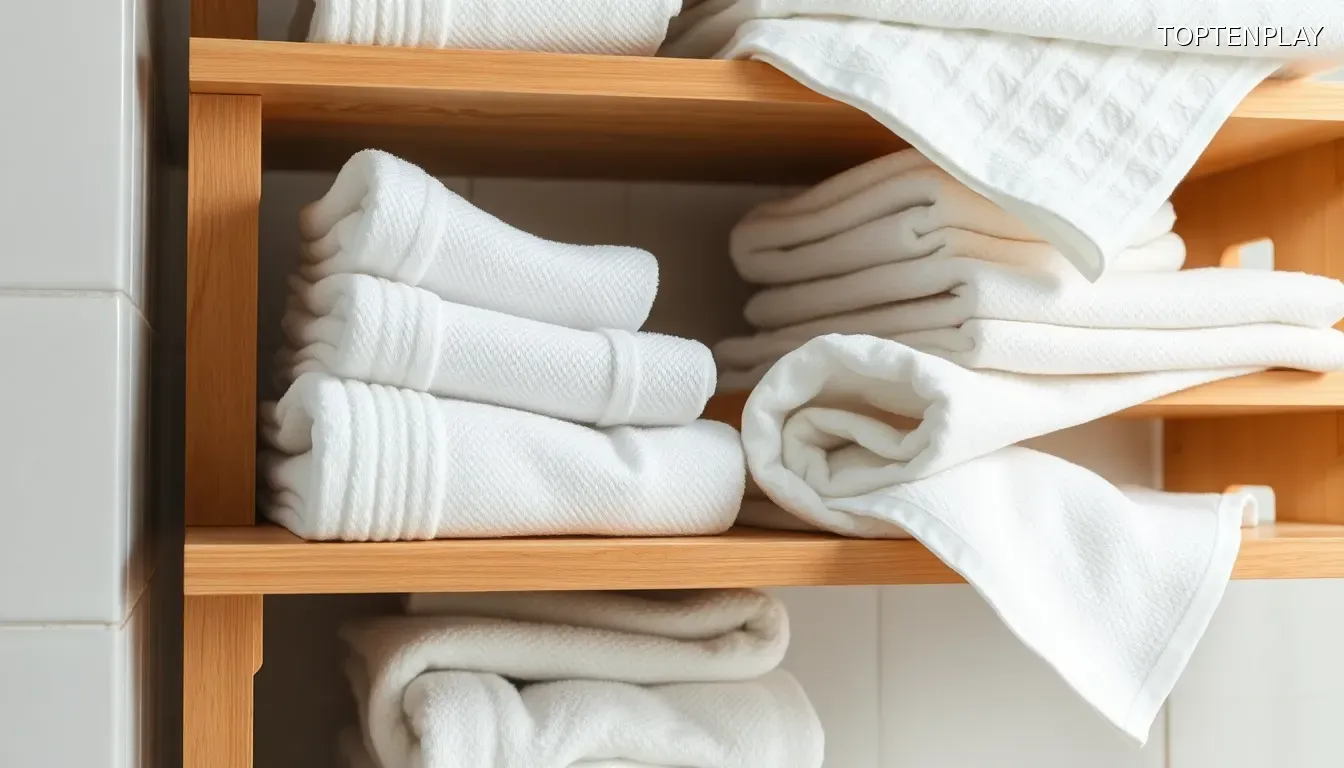
What if the very products designed to clean your towels were systematically destroying them? Almost everyone makes mistakes when washing their towels, unknowingly transforming their most luxurious, plush investments into stiff, scratchy disappointments that smell worse than when they started.
The culprits operate in plain sight. Hard water deposits silently accumulate in towel fibers with each wash cycle, creating an invisible mineral prison that strips away softness. Meanwhile, detergent and fabric softener residues build a chemical coating that blocks absorption and traps odors deep within the fabric structure.
Even more concerning is the bacterial growth flourishing in this compromised environment. Well-loved towels become breeding grounds for germs that resist traditional cleaning methods, creating persistent odors that return shortly after washing. This gradual transformation from plush comfort to scratchy disappointment happens so slowly that most households accept deteriorated towels as inevitable.
The revelation becomes clear when examining the science: mineral, detergent, and fabric softener buildup creates a perfect storm of textile destruction. These residues don’t simply wash away—they accumulate, layer by layer, fundamentally altering the towel’s original texture and performance.
What most people dismiss as normal wear actually represents a preventable chemical process that can be completely reversed. The solution lies not in expensive replacements or commercial treatments, but in understanding how common household acids can break this destructive cycle.
Image d’illustration © TopTenPlay EN
The Kitchen Ingredient That Outperforms Expensive Solutions
The household acid capable of breaking this destructive cycle sits in virtually every kitchen cabinet: white distilled vinegar. This unassuming pantry staple delivers restoration results that surpass expensive commercial fabric treatments, costing a fraction of specialized products while providing superior cleaning power.
Vinegar’s secret lies in its precise acidic composition. Unlike harsh cleaning chemicals, its gentle acidity specifically targets the mineral deposits and chemical residues that transform soft towels into scratchy disappointments. The acetic acid component acts as a natural solvent, dissolving hard water buildup that standard detergents cannot penetrate.
But vinegar’s restoration abilities extend beyond simple residue removal. Its acetic acid serves as a proven odor-neutralizer, attacking the molecular compounds responsible for persistent musty smells rather than merely masking them. Simultaneously, vinegar’s antibacterial properties eliminate the germs lurking in compromised towel fibers—the same bacteria that resist conventional washing methods.
This versatile cleaning tool delivers what expensive fabric treatments promise but rarely achieve: complete restoration to factory-fresh softness and absorption. The key distinction lies in vinegar’s ability to reverse chemical buildup rather than adding more layers of treatment products.
However, precision matters. Not all vinegar types deliver these results—apple cider vinegar and cleaning vinegar can damage washing machines. Only white distilled vinegar provides the correct acidity balance for safe, effective towel restoration. The transformation process requires specific application techniques to unlock vinegar’s full potential.
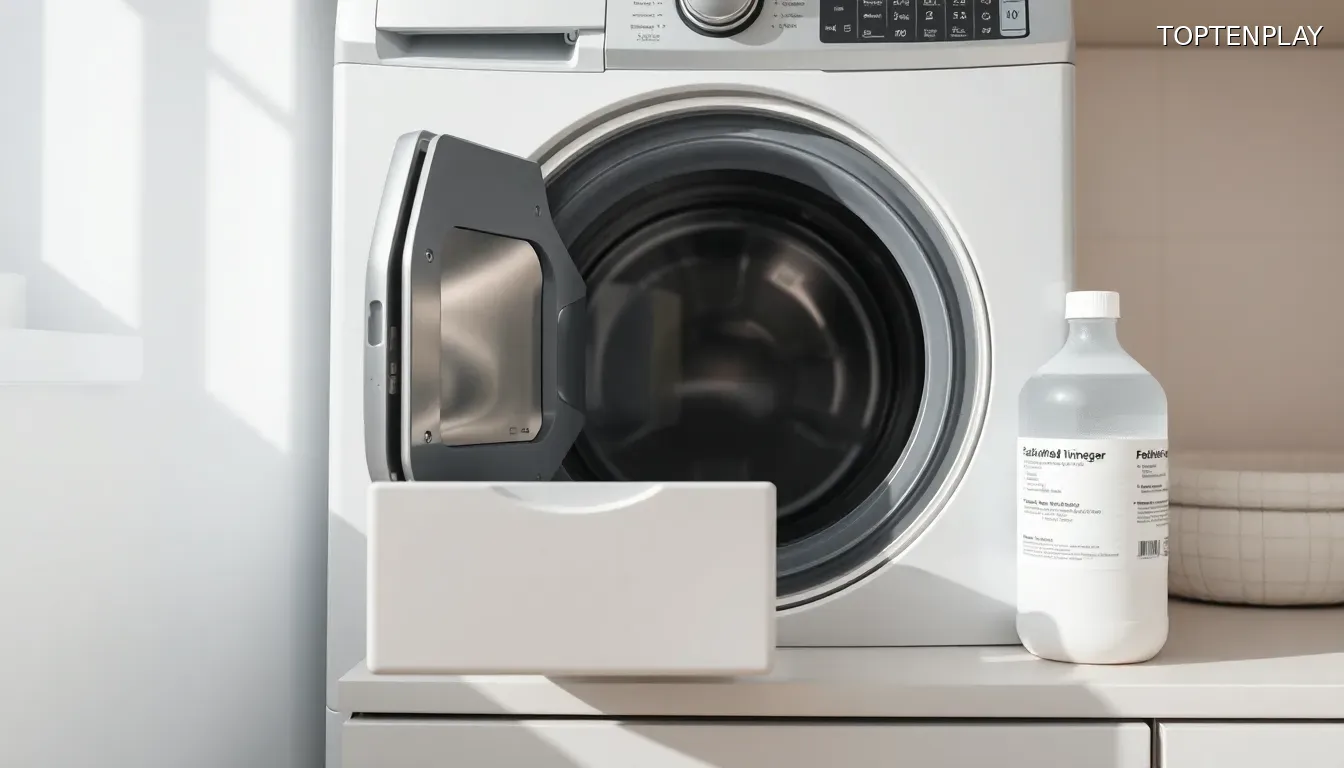
Image d’illustration © TopTenPlay EN
The Step-By-Step Restoration Technique
These specific application techniques transform the vinegar restoration process from guesswork into guaranteed results. The methodology requires precision at every stage, starting with the critical selection of white distilled vinegar—the only type safe for both fabrics and washing machines.
Begin by gathering compromised towels and loading them into your washing machine, ensuring adequate space for thorough agitation. Overcrowded loads prevent proper cleaning action, so divide large quantities into multiple cycles. This spacing allows water and vinegar to penetrate every fiber effectively.
The restoration magic happens in the fabric softener compartment. Measure precisely 1/4 to 1/2 cup of white distilled vinegar and pour it directly into this slot—never into the main detergent dispenser. This timing ensures the vinegar releases during the rinse cycle when it can neutralize residues most effectively.
Set your water temperature to warm or hot, creating the optimal environment for vinegar’s acidic action. Crucially, run this cycle without any detergent whatsoever. Adding soap during vinegar treatment interferes with the acid’s ability to dissolve mineral deposits and chemical buildup.
Allow the complete wash cycle to run undisturbed. The combination of heat, agitation, and vinegar’s acetic acid systematically breaks down every trace of residue that standard washing cannot reach. This targeted approach restores absorption capacity while eliminating the scratchy texture that compromises towel performance.
Most towels emerge completely restored after this single treatment, though heavily compromised items may require additional intervention using specialized backup techniques.
Image d’illustration © TopTenPlay EN
Advanced Tactics For Stubborn Cases
Those specialized backup techniques become essential when dealing with towels suffering from extreme neglect or persistent odor challenges. Even after the initial vinegar treatment, some heavily compromised textiles require a secondary intervention to achieve complete restoration.
The solution lies in baking soda’s alkaline power, which complements vinegar’s acidic action through a different chemical pathway. Load the previously vinegar-treated towels back into your washing machine and measure 1/2 to 1 cup of baking soda, adding it directly to the drum—not the detergent compartment. This generous quantity ensures sufficient alkaline coverage to neutralize any remaining acidic residues and tackle embedded odors that vinegar alone cannot eliminate.
Run another complete wash cycle using the same warm-to-hot temperature settings, again omitting traditional detergent. The baking soda works systematically to absorb lingering smells while providing additional softening action through its mineral-dissolving properties.
The restoration process concludes with strategic drying techniques. Set your dryer to low or medium heat to prevent fiber damage while maintaining the newly restored texture. For maximum fluffiness enhancement, add wool dryer balls during the drying cycle—these natural agitators create additional air circulation that separates fibers and prevents matting.
This dual-phase approach successfully revives even the most neglected towels, transforming musty, scratchy textiles into luxuriously soft, odor-free essentials. The combination of vinegar’s acid action followed by baking soda’s alkaline treatment creates a comprehensive restoration system that outperforms commercial alternatives while preserving your investment in quality linens.