π Semolina Cake with Raisins
Posted 16 April 2026 by: Admin
Do you remember that dessert we used to eat warm in a bowl, standing right next to the stove because we didn’t have the patience to wait? Semolina cake with raisins is exactly that: a recipe that doesn’t try to impress, but hits the spot with every bite. Five pantry ingredients. Why make it complicated?
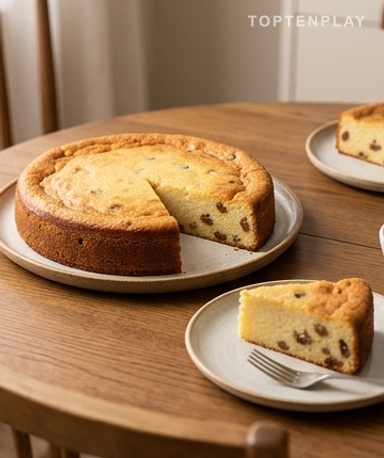
This cake has something immediately reassuring about it. The crust, golden like light caramel, hides a crumb of almost creamy sweetness—a texture halfway between flan and pudding that yields under the fork without resistance. The plump raisins release a slight sugary acidity that balances the whole dish. And when you open it while still warm, it releases a scent of vanilla milk and home baking that only belongs to true childhood desserts.
Why you’ll love this recipe
Ingredient Notes
Fine semolina, raisins, milk, eggs, sugar, and lemon zest: everyday ingredients for a stunning result.
- Fine semolina : It’s the fine semolina that gives this melting texture. Medium semolina gives a grainier, less creamy result. Get the finest you can find—the kind sold for desserts, not for couscous.
- Whole milk : Don’t skim here. Whole milk brings the richness and creaminess that make all the difference. With skimmed milk, the texture is firmer and much less indulgent.
- Raisins : Get Zante currants if you can find them—they are small, concentrated in flavor, and blend better into the batter. Otherwise, classic sultanas work very well.
- Orange blossom water : The little trick that changes everything. A tablespoon in the soaking water for the raisins, and the whole cake takes on a discreet but deep fragrance. Not more, otherwise it dominates everything else.
- Eggs : They bind the mixture and give it lightness. But be careful: add them off the heat once the preparation has cooled down. Added too early, they cook into strands in the semolina while it’s still too hot.
Start by rehydrating your raisins—ten minutes flat
Before touching anything else, put your raisins in a bowl of warm water with a tablespoon of orange blossom water. Ten minutes, no more. You will immediately smell that floral and slightly sweet perfume rising from the bowl. The raisins will swell and become supple instead of staying tough as leather in the baked cake. Drain them well before incorporating them—excess liquid could unbalance the texture of the mixture.
Don’t let go of the spoon when the semolina hits the milk
Heat your liter of milk with the sugar until it gently steams, with small bubbles appearing on the edges. Pour the semolina in a steady stream while stirring with the other hand. If you pour it all at once, you’ll get lumps that are impossible to fix. Semolina thickens quickly—in less than two minutes, you’ll feel the resistance in the spoon increase, like polenta taking shape. Remove from the heat when the texture is supple but holds on the spoon.
Wait until it really cools down before adding the eggs
This is the step everyone rushes because they want to go fast. Let the preparation rest for a good five minutes off the heat. Touch the bottom of the pan—it should be warm but not burning hot. Then add the eggs one by one, whisking quickly between each addition. The mass will relax slightly and take on a uniform cream color. Fold in the drained raisins last and mix gently.
Let the oven do its work—without opening the door
Pour the mixture into a lightly buttered mold and bake at 180°C for 35 to 40 minutes. The top should turn golden like light caramel, sometimes with a few small blisters on the surface. Don’t touch the oven door for the first 30 minutes—temperature variations can cause the center to sink. The cake is done when a knife blade comes out almost dry, with just a slight creamy coating.
Tips & Tricks
- Unmold cold, not warm. The semolina needs time to set completely—if you unmold too early, the center may slightly sag and the cake may break.
- If your semolina thickens too quickly during cooking, add a splash of hot milk while stirring—the consistency should remain supple, not sticky like wallpaper paste.
- A layer of caramel at the bottom of the mold before pouring the mixture gives you a more spectacular version, almost like a flan renversé. Two extra minutes, but the effect is guaranteed.
Can this cake be prepared the day before?
Yes, and it’s even recommended. After a night in the refrigerator, the texture firms up slightly and the orange blossom scent diffuses better throughout. Take it out 15 minutes before serving if you prefer it at room temperature.
How to avoid lumps in the semolina?
Pour the semolina in a very fine, continuous stream into the hot milk, stirring with the other hand without ever stopping. If you pour too fast, lumps form instantly and are almost impossible to fix later.
Can the raisins be replaced with something else?
Absolutely. Dried apricots cut into small pieces, dried figs, or pitted dates work very well. You can also omit them completely and add dark chocolate chips instead.
How do I know if the cake is cooked?
The top should be uniformly golden and slightly domed in the center. Insert a thin knife blade in the middle—it should come out with just a slight creamy coating, no liquid. If the blade comes out clean and dry, the cake is slightly overcooked.
Can this cake be frozen?
Freezing is not recommended. The semolina and eggs tend to release water upon thawing, resulting in a grainy and spongy texture. This cake keeps very well for 3 days in the refrigerator, which is more than enough.
Can plant-based milk be used?
Yes, plain (unsweetened) oat or soy milk gives the best results because they have a texture close to whole milk. Avoid almond or rice milk, which are too thin—the semolina doesn’t thicken the same way and the final texture is less creamy.
Semolina Cake with Raisins
French
Dessert
A classic family dessert: melting, creamy, and scented with orange blossom. Simple to make with five pantry ingredients.
Ingredients
- 1 litre whole milk
- 120g fine semolina (dessert type, not couscous)
- 100g sugar
- 3 eggs
- 80g raisins
- 1 sachet (7g) vanilla sugar
- 1 tablespoon orange blossom water
- 1 lemon zest (optional)
- 1 knob butter (for the mold)
Instructions
- 1Soak the raisins in warm water with orange blossom water for 10 minutes, then drain.
- 2Preheat the oven to 180°C.
- 3Heat the milk with the sugar and vanilla sugar in a saucepan until simmering, without boiling.
- 4Pour the semolina in a very fine stream into the hot milk while stirring constantly. Cook over low heat for 2 to 3 minutes until thickened.
- 5Remove from heat and let cool for 5 minutes.
- 6Add the eggs one by one, whisking quickly between each addition, then stir in the drained raisins and lemon zest.
- 7Pour the mixture into a buttered mold (22 cm cake tin or loaf pan).
- 8Bake for 35 to 40 minutes until the top is golden like light caramel. Let cool before unmolding.
Notes
• Storage: 2 to 3 days in the refrigerator, covered with plastic wrap. The texture improves the next day.
• Caramel variation: pour a layer of liquid caramel into the buttered mold before adding the mixture for an elegant ‘flan renversé’ effect.
• Do not freeze this cake—the semolina releases water upon thawing and the texture becomes grainy.
Nutrition Facts (per serving, estimated)
| 270 kcalCalories | 9gProtein | 43gCarbs | 7gFat |