📌 Seared Scallops on Vegetable Julienne: The 15-Minute Technique That Keeps Them Perfectly Tender
Posted 7 December 2025 by: Admin
The Art Of Julienne: Precision Cutting Technique For Perfect Texture
French cuisine demands mastery of fundamental techniques, and the julienne stands as one of the most essential cuts in professional kitchens. This deceptively simple method—transforming vegetables into uniform matchsticks—requires the precision that separates polished dishes from mediocre ones.
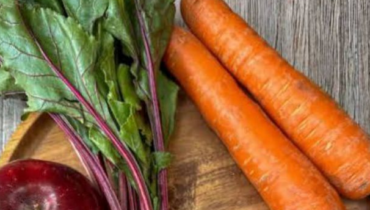
Begin by washing 600g of potatoes and one carrot thoroughly, then peel both with meticulous care. The next step demands attention: slice each vegetable into thin sheets of exactly 3mm thickness. This uniformity matters profoundly—inconsistent sizing leads to uneven cooking, leaving some pieces undercooked while others turn mushy. Once sliced, stack these sheets and carefully cut them into 3mm bâtonnets, creating the characteristic matchstick strips that define a proper julienne.
The precision here isn’t merely aesthetic. Uniform dimensions ensure even heat distribution during cooking, guaranteeing that every vegetable reaches the ideal texture simultaneously. This consistency becomes crucial when paired with delicate proteins like scallops, where vegetables must maintain their firmness without dominating the plate.
Transfer your carefully cut julienne to a steam basket, ready for the gentle cooking method that preserves both texture and nutrients. The architecture of your cut determines everything that follows.
Steam Cooking: The Gentle Method For Preserving Vegetable Integrity
With your julienne precisely cut and arranged in the steam basket, the cooking phase demands equally careful attention. Bring a pot of water to a rolling boil and position the basket above the surface, ensuring steam circulates freely around every matchstick. This gentle cooking method preserves both the delicate texture and nutritional value that sharp knife work alone cannot guarantee.
Monitor the vegetables closely for approximately 10 minutes. The critical benchmark is firmness—potatoes and carrots should yield slightly to a fork without crumbling or becoming mushy. This distinction separates restaurant-quality vegetables from those that collapse during plating. Visual inspection proves more reliable than rigid timing; some stovetops cook faster than others, so check regularly and extend cooking by another minute or two if needed.
The risk of overcooking cannot be overstated. Vegetables that become too tender will inevitably break apart when transferred to the plate, destroying the elegant presentation you’ve worked to achieve. Maintain structural integrity throughout by removing the basket the moment vegetables reach that perfect tender-firm balance. This vigilance transforms a simple side into a showcase of culinary restraint.
While steam does its work, your attention shifts to the proteins awaiting their moment of transformation.
Searing Scallops: Timing And Temperature For Restaurant-Quality Results
As your vegetables reach that perfect tender-firm state, the stage belongs entirely to the scallops. Heat the 20g of butter in a large skillet over medium-high flame until it shimmers with barely perceptible movement—this is the threshold where heat transforms protein into golden perfection. The timing here separates amateur cooks from kitchen professionals: rush the temperature and butter burns; hesitate and scallops emerge rubbery rather than tender.
Slide the 16 scallops into the hot butter and resist the urge to move them. A mere 1-2 minutes per side creates that signature caramelized crust while preserving the delicate, buttery interior that defines restaurant-quality preparation. Overcrowding the pan invites steaming rather than searing, so work in batches if necessary. Once both sides achieve that golden-brown seal, transfer the scallops to a plate.
Return the skillet to heat for the coral—that prized nugget of richness—requiring barely 30 seconds of attention. Its brief exposure prevents the delicate flavor from overwhelming the dish’s balance. A final seasoning of salt and pepper across both scallops and coral completes this phase of transformation.
Your proteins now rest, ready for their place atop the vegetables you’ve so carefully preserved. The final assembly awaits.
Elegant Plating: Assembling A Refined Four-Person Dish
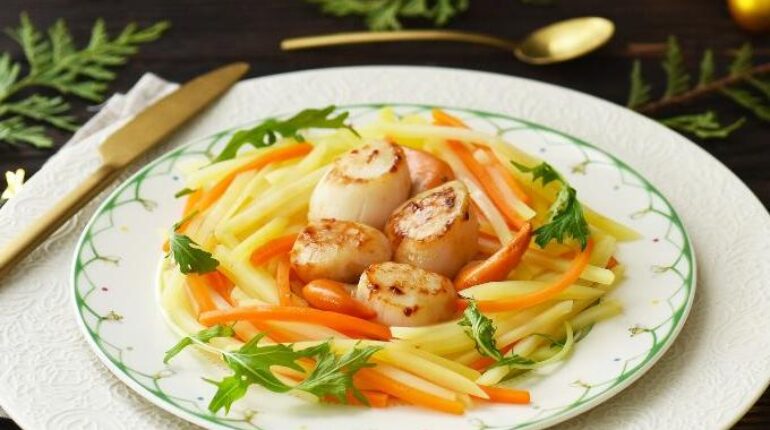
The moment of transformation arrives—where technique yields to artistry. Begin by distributing the julienne vegetables evenly across each of four plates, creating a delicate foundation that anchors the entire composition. This base layer, still warm and holding its firm texture, establishes both structural integrity and visual sophistication.
Position your seared scallops and coral deliberately atop this vegetable bed, allowing their golden surfaces to command attention without overwhelming the palate. The arrangement matters: each plate should mirror its companions, demonstrating the deliberate sequencing that defines restaurant presentation. This layering—vegetables first, protein second—builds flavor complexity while maintaining visual hierarchy.
Crown each plate with a handful of fresh arugula leaves, their peppery character cutting through the richness of butter and scallop. The greens introduce textural contrast and aromatic brightness essential to balance. Finish with a modest drizzle of excellent olive oil, allowing it to pool slightly around the vegetables and coat the scallops with glossy refinement.
What emerges on the plate tells a complete story: humble ingredients elevated through precision and respect. The 35-minute journey from preparation to plating demonstrates how simple components—600g potatoes, a carrot, butter, and 16 scallops—transform into a sophisticated four-person dish. Each element holds its purpose, each technique serves the whole, and each plate becomes a quiet statement of culinary intentionality.