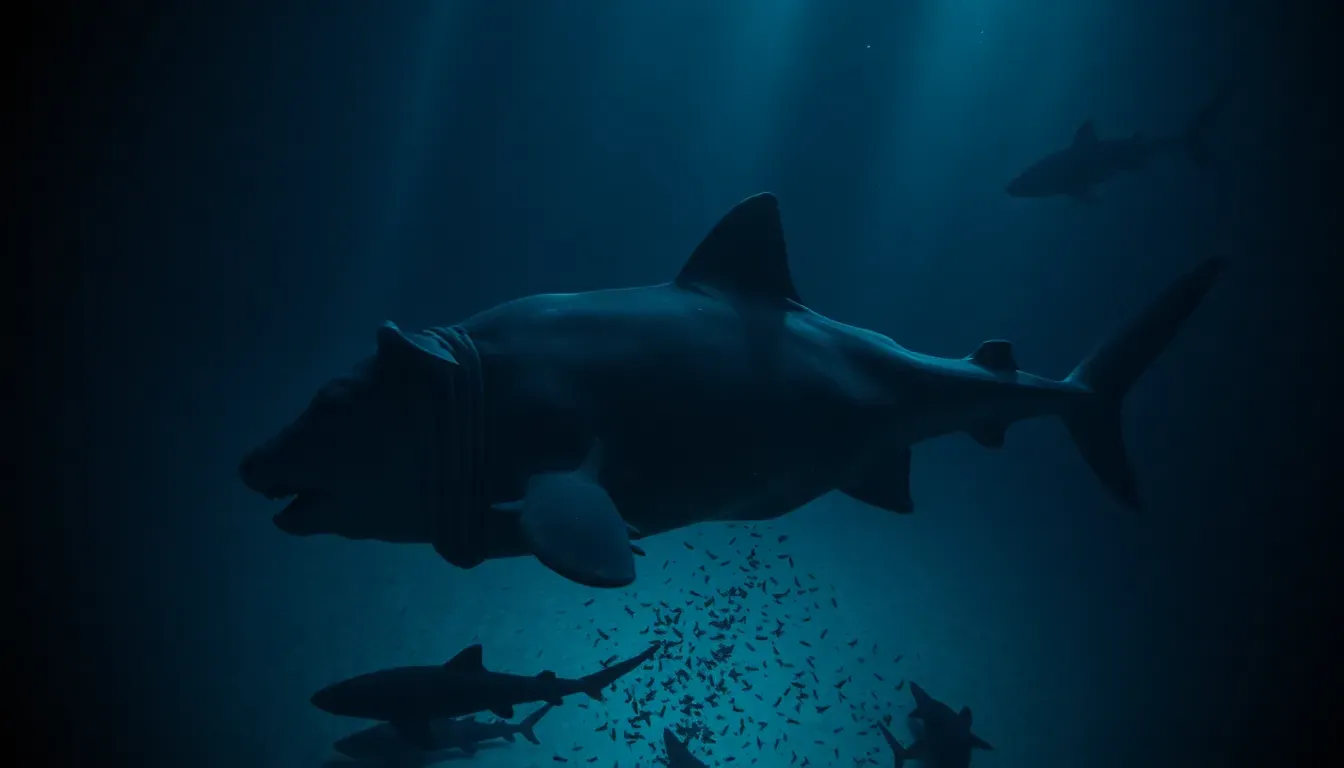
Unexpected Deep-Sea Experiment Reveals Shocking Shark Behavior
When Chinese scientists decided to drop a cow carcass into the depths of the South China Sea, they expected to study whale fall processes. What they discovered instead defied all expectations.
The experiment took place 1,629 meters beneath the surface, off the continental slope southeast of Hainan Island. Armed with underwater cameras, researchers anticipated observing typical deep-sea scavengers slowly breaking down the organic matter. The setup was methodical, designed to capture natural decomposition patterns in one of Earth’s most mysterious environments.
But the ocean had other plans.
Pacific sleeper sharks emerged from the darkness, converging on the carcass with an intensity that stunned the research team. These apex predators, capable of diving beyond 1,000 meters depth, are notoriously elusive in these waters. Their sudden appearance transformed a routine scientific observation into an extraordinary behavioral study.
The sharks’ unexpected presence in the South China Sea raised immediate questions about their distribution patterns. These massive predators typically inhabit North Pacific waters, making their documented feeding frenzy a significant discovery for marine biology.
What started as a controlled experiment to understand deep-sea decomposition became a window into the hidden world of one of the ocean’s most enigmatic species. The cameras captured not just feeding behavior, but a complex social dynamic that would challenge everything scientists thought they knew about Pacific sleeper sharks.
Size Matters: The Brutal Feeding Hierarchy Among Deep-Sea Predators
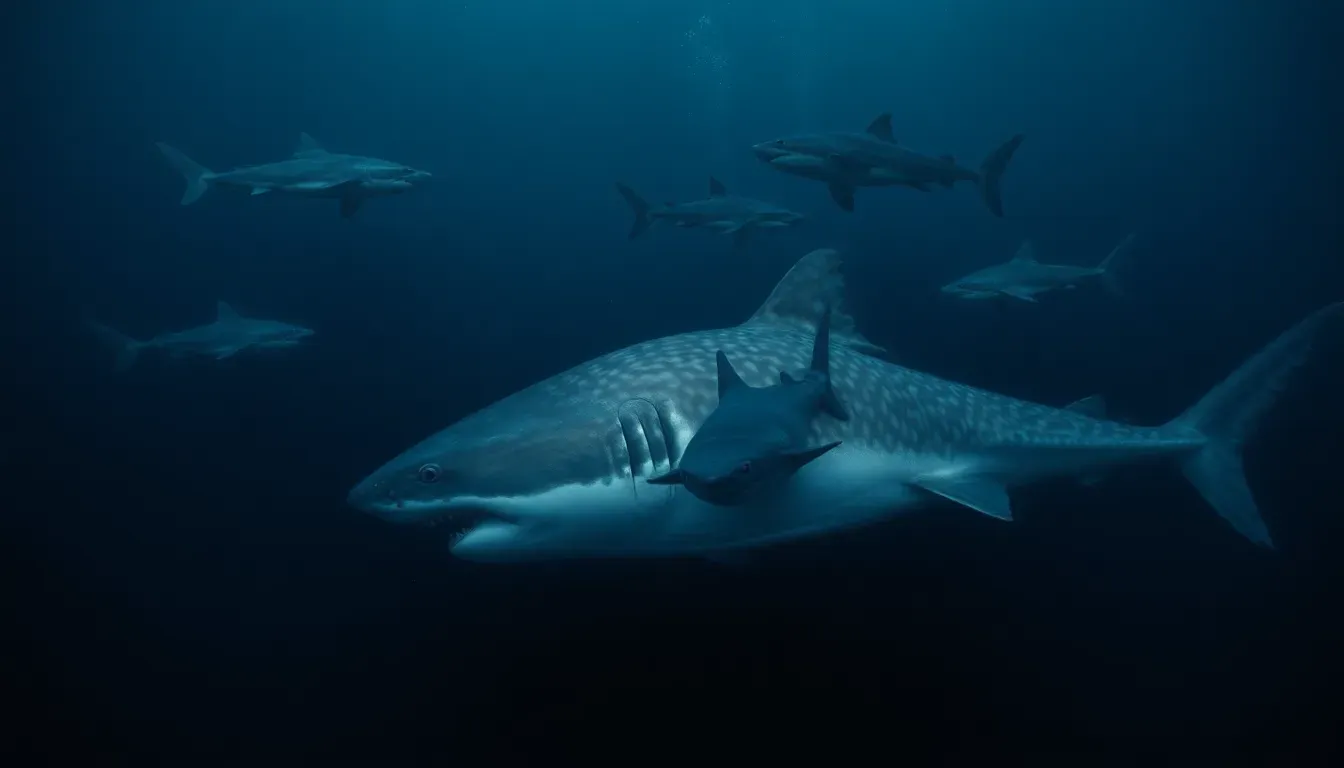
The complex social dynamic revealed itself through a striking size-based hierarchy that defied expectations of chaotic deep-sea feeding.
Larger sharks, measuring 2.7 meters or more, launched vicious attacks on the carcass with predatory precision. They tore into the beef with calculated aggression, claiming prime feeding positions through sheer dominance. These apex predators demonstrated no hesitation, treating the unexpected meal as rightful territory.
In stark contrast, smaller sharks measuring less than 2.7 meters displayed remarkably cautious behavior. They circled the carcass at respectful distances, waiting for their turn in what researchers described as “polite queuing behavior.” These subordinate predators understood the unspoken rules of deep-sea survival.
The feeding patterns revealed sophisticated social structures previously unknown in Pacific sleeper sharks. Scientists observed clear hierarchical organization, with each shark respecting the established pecking order. The larger predators fed first, while smaller individuals maintained patient vigil around the perimeter.
« This behaviour suggests that feeding priority is determined by individual competitive intensity, even in deep-water environments, reflecting a survival strategy suitable for non-solitary foraging among Pacific sleeper sharks, » explained Han Tian from Sun Yat-sen University and Southern Marine Science and Engineering Guangdong Laboratory.
The cameras captured more than feeding dynamics. They documented a sophisticated social intelligence that transforms our understanding of these enigmatic predators. Among the remarkable footage, one particular detail would soon capture global attention in the most unexpected way.
Internet Goes Wild Over Shark’s Hollywood Smile
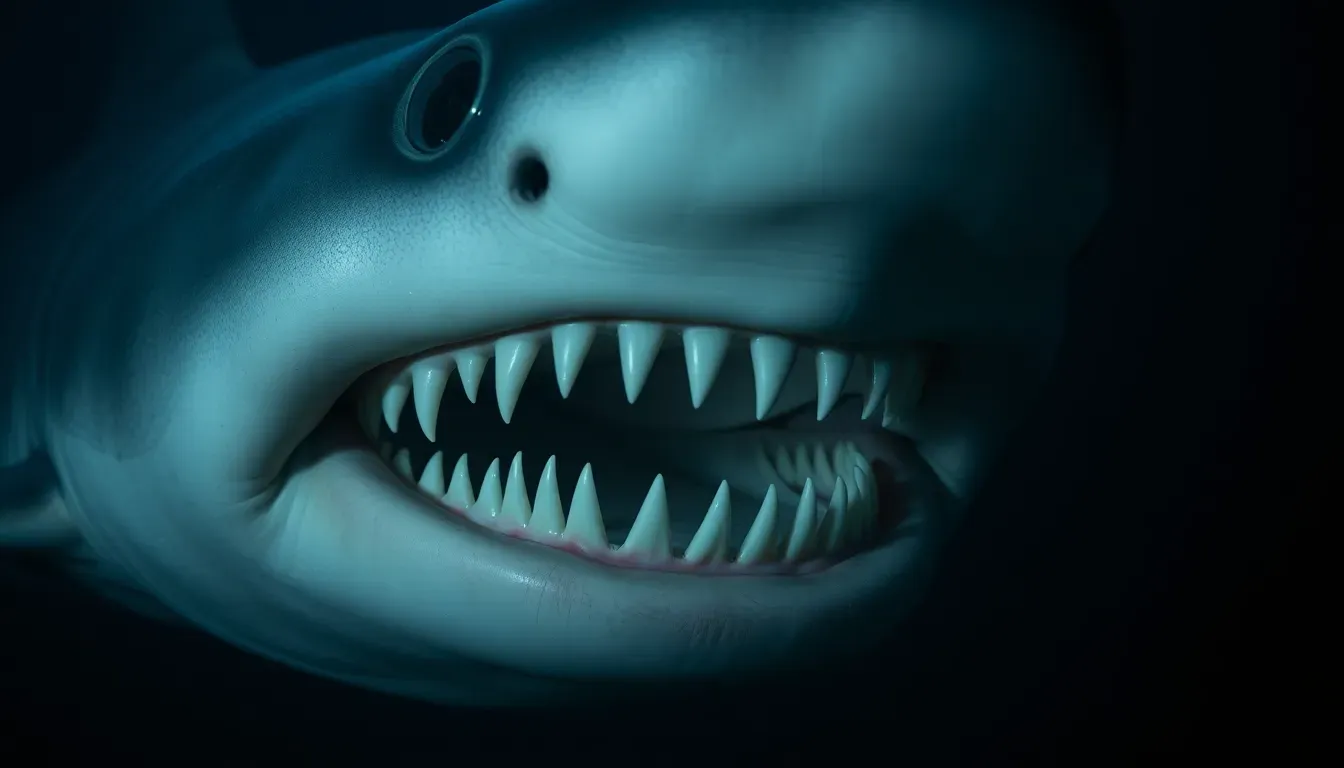
That particular detail turned out to be a pearly white smile that transformed scientific footage into viral internet gold.
Among the feeding predators, one Pacific sleeper shark displayed what appeared to be a perfect set of gleaming teeth arranged in an unmistakable grin. The striking dental display immediately caught the attention of online viewers, who couldn’t ignore the uncanny resemblance to a beloved animated character.
Film enthusiasts flooded social media with comparisons to Bruce, the friendly great white shark from Pixar’s Finding Nemo. The resemblance proved too compelling to ignore, sparking a wave of nostalgic recognition across digital platforms.
« I wouldn’t have expected Bruce from Finding Nemo either but I know that smile anywhere, » one viewer commented, perfectly capturing the collective sentiment. The comparison spread rapidly as more people discovered the footage.
The dental health theme dominated subsequent reactions. « Shark has better dental health than I do!!? » another user observed, highlighting the pristine condition of the predator’s teeth. The observation resonated with thousands who marveled at the creature’s immaculate dental display.
Creative commentary flourished as users embraced the unexpected entertainment value. « Beefs back on the menu boys, » one person joked, while another quipped: « Guys gonna be chasing that beef taste for the rest of their lives lol. »
The viral moment demonstrated how scientific discovery could capture public imagination in entirely unforeseen ways. Yet beneath the internet humor lay deeper questions about these mysterious predators and their true purpose in South China Sea waters.

Scientific Mystery: What These Sharks Are Really Hunting
Those deeper questions reveal a fundamental scientific puzzle that extends far beyond viral entertainment value.
The Pacific sleeper sharks captured on camera represent a biological anomaly. These predators typically inhabit North Pacific waters, yet their frequent appearance in the southwestern South China Sea challenges existing distribution models. Han Tian from Sun Yat-sen University acknowledges the striking implications: « Our understanding of this population remains significantly limited. »
The aggressive feeding behavior documented during the experiment suggests something remarkable about this deep-sea environment. These sharks didn’t stumble upon the cow carcass by accident—their coordinated response indicates they’re actively hunting in these waters.
But hunting what exactly? Tian poses the critical question driving future research: « This region still harbors abundant food sources in the deep sea. But what exactly are they? »
The highly aggressive behavior observed contradicts typical assumptions about deep-sea feeding patterns. Such coordinated, hierarchical feeding suggests these sharks have established territories and regular food sources at depths exceeding 1,600 meters.
The mystery deepens when considering the energy expenditure required for such aggressive displays. These predators wouldn’t waste precious calories on theatrical feeding unless substantial rewards justified the effort.
« This question is intriguing for both animal distribution and behavioral research, » Tian emphasizes, highlighting the broader implications for marine biology understanding.
The research, published in Ocean-Land-Atmosphere Research on June 1, 2025, opens new avenues for deep-sea exploration. Each aggressive bite captured on camera represents a clue pointing toward hidden ecosystems thriving in Earth’s most mysterious depths.