📌 Scallop Tartare with Artichokes, Green Apple, and Apple Juice Reduction
Posted 10 April 2026 by: Admin
This is a November recipe, for those grey days when scallops are finally back on the stalls and you want to cook something that impresses without looking like you’re trying too hard. A tartare as a starter sets the tone for the table. And this one, sober and generous at the same time, has that special something you can’t quite explain.
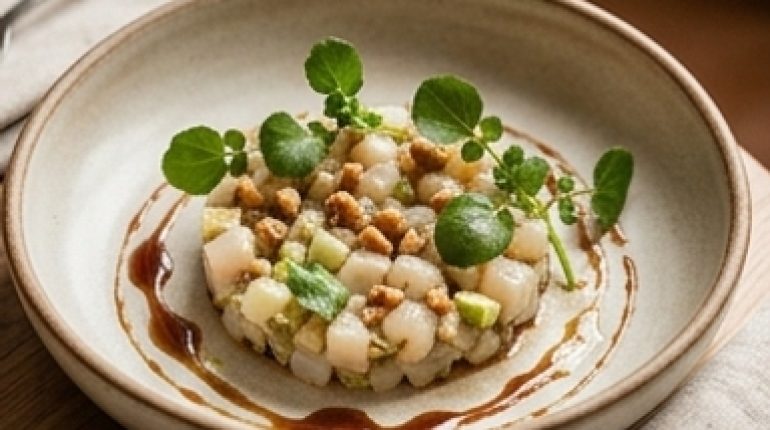
Before you, pearly cubes of raw scallops, almost translucent, capturing the light like small pieces of porcelain. The green apple cuts through with its bright, almost sharp green dice. A drizzle of mahogany-brown reduction draws shiny arabesques on the plate. And the walnut halves, irregular and broken by hand, add a raw texture that contrasts with everything else.
Why you’ll love this recipe
Ingredient Notes
The stars of the dish: scallops, artichokes, Granny Smith apples, and fresh walnuts.
- The Scallops : Get them fresh, not frozen. The texture of a thawed scallop is cottony—it releases water into the tartare and drowns out other flavors. Ask your fishmonger for large scallops: they yield clean 1 cm cubes, providing the necessary bite to the dish.
- The Artichokes : Two artichokes might seem like little, but we only use the bottoms (hearts). Choose them heavy and tightly closed—an artichoke that is opening up is tired. The one-hour cooking time is essential: you want a bottom that yields under light thumb pressure, neither crunchy nor mushy.
- Granny Smith Apple : No other variety will do. Granny Smith provides a sharp acidity and a crunch that holds up even after a few minutes in the tartare. A Golden apple softens, a Fuji is too sweet. And its bright green color on the plate is a detail that matters.
- Walnut Oil : This is the main seasoning—so quality is directly felt. A cold-pressed oil has a slight bitterness and a very clear fresh walnut taste. Cheap oils are often rancid. Simple rule: smell before you buy; the bottle should smell like walnuts, not cardboard.
- Unfiltered Apple Juice : We use unfiltered apple juice instead of cider—the cloudy kind that looks like home-pressed apple juice. It has more body than clarified juice, and its reduction is more interesting. Expect 1 liter to yield about 4 to 5 tablespoons of syrup in the end.
Artichokes: One hour, no shortcuts
Always start with the artichokes because they take time. One hour simmering in a large pot of well-salted water, with half a lemon squeezed in to prevent them from turning black. During cooking, the water takes on a slightly greyish hue and the rising smell is vegetal, a bit earthy. To know if they’re cooked, pull an outer leaf: it should come off without resistance. Let them cool completely before preparing the bottoms—if you try to work with them hot, you’ll just burn yourself. The resulting bottom is pale ivory, smooth, with a slight resistance under the knife before giving way.
The reduction: the part everyone messes up
Pour your liter of unfiltered apple juice into a small saucepan and let it reduce over medium heat—not high, or it will caramelize too quickly and become bitter. At first, it’s liquid and smells strongly of apples. Then it starts to thicken, and the color gradually turns from straw yellow to a light caramel brown, like slightly darkened acacia honey. The foolproof test: dip a spoon, turn it over, and run your finger through—the line should remain clean. Remove from heat as soon as you have that coating consistency. It will thicken further as it cools.
Why I’ll never overcomplicate the assembly again
The tartare is prepared at the last moment. Five minutes before serving, no sooner. Cut the scallops into cubes of about one centimeter—no smaller, or the texture disappears. Finely dice the apple (brunoise), and crush the walnuts coarsely by hand. Mix everything with a generous drizzle of walnut oil, a pinch of Espelette pepper, and salt. Taste and adjust—proper seasoning is the difference between a tartare that sings and one that is bland. Arrange using a ring mold or a spoon, place the artichoke hearts cut into wedges around it, add a few fresh watercress leaves, and finish with a drizzle of the reduction.
Watercress: the detail I ignored for a long time
For years, I would have replaced watercress with arugula or lamb’s lettuce without a second thought. Bad idea. Watercress has a very specific peppery bitterness that cuts through the sweetness of the apple and the richness of the walnut oil. Its small, round, shiny leaves also hold up better than arugula, which wilts quickly when in contact with oil. Grab a fresh bunch, pick off the best leaves by hand, and that’s it.
Tips & Tricks
- Season the scallops separately before mixing everything—they absorb salt and oil differently than other ingredients, and if you salt the whole bowl at the end, you lose control.
- The reduction keeps for a week in the refrigerator in a small closed jar. Make double: use it on cheese, in a vinaigrette, or on pan-seared scallops during the week.
- If you prepare the tartare more than ten minutes in advance, don’t add the apple—it releases juice and softens the scallops. Add it truly at the last moment.
Can this tartare be prepared in advance?
Partially, yes. The cooked artichokes, the reduction, and the crushed walnuts can be prepared the day before without any problem. However, the scallops must be cut and seasoned at the last moment—maximum 10 minutes before serving. The apple should be added at the very last second: it releases juice very quickly and softens the rest.
How do I know if my scallops are truly fresh?
A fresh scallop is firm, slightly pearly, and smells of iodine—not fish. If it is soft, grey, or gives off a strong odor, pass it by. For a raw tartare, freshness is non-negotiable: buy them the same day and keep them in the refrigerator until the last moment.
My reduction has thickened too much and stuck to the pan, what should I do?
Add a few tablespoons of fresh apple juice off the heat and stir over very low heat to loosen it. The reduction continues to thicken as it cools, so remove it from the heat slightly earlier than it seems necessary. A drizzle that’s too thick will break into shards on the plate—you want something that flows like a ribbon.
Can I replace the artichokes with something else?
If you don’t have artichokes or are short on time, canned artichoke hearts (rinsed and drained) work in a pinch. For a different angle, thin slices of raw fennel also provide crunch and a light anise flavor that pairs well with scallops.
Can I use frozen scallops?
For a recipe where they are pan-seared, frozen ones work fine. For a raw tartare, no—freezing breaks down the texture and thawed scallops release water into the dish. If you can’t find fresh ones, it’s better to change the recipe than compromise the result.
How should I store leftovers?
The tartare does not keep: raw scallops do not store well once seasoned. However, the reduction keeps for a week in the refrigerator in a closed jar, and cooked artichokes last for 2 days. If you know you’ll have leftovers, only assemble the portions you are serving.
Scallop Tartare with Artichokes, Green Apple, and Apple Juice Reduction
French
Starter
An elegant, no-cook tartare where the pearly sweetness of scallops meets the tangy crunch of Granny Smith apple, melting artichokes, and a concentrated, shiny apple juice reduction.
Ingredients
- 16 fresh scallops (approx. 600g)
- 2 fresh artichokes
- 2 Granny Smith apples
- 10 fresh walnuts (halves)
- 1L unfiltered apple juice
- 3 tbsp cold-pressed walnut oil
- 1 bunch fresh watercress (approx. 80g)
- 1 half lemon (for cooking the artichokes)
- 1 pinch Espelette pepper powder
- 1 pinch fine salt
Instructions
- 1Pour the apple juice into a small saucepan and reduce over medium heat for 45 to 60 minutes until you obtain a mahogany-brown coating syrup. Let cool.
- 2Bring a large pot of salted water to a boil with the juice of half a lemon. Submerge the artichokes and simmer for 1 hour.
- 3Drain the artichokes and let cool completely. Remove the leaves, salvage the bottoms, remove the choke, then cut the bottoms into wedges.
- 4Coarsely crush the walnut halves by hand.
- 5Peel the Granny Smith apples and cut them into a fine brunoise (cubes of about 5 mm).
- 6Cut the scallops into regular cubes of about 1 cm.
- 7In a bowl, mix the scallops, apple brunoise, and crushed walnuts. Drizzle with walnut oil, season with salt and a pinch of Espelette pepper. Mix gently and taste.
- 8Arrange the tartare using a ring mold in the center of the plates. Place the artichoke wedges around it, add a few fresh watercress leaves, and finish with a drizzle of the reduction.
Notes
• Make ahead: The reduction and artichokes can be prepared up to 24 hours in advance and stored in the refrigerator. Tartare assembly must be done just before serving.
• Storage: The assembled tartare does not keep. The reduction alone keeps for 7 days in a closed jar in the refrigerator—it’s also delicious on hard cheeses.
• Variation: For an even fresher effect, add a few drops of lime juice directly onto the scallops before mixing. This awakens the whole dish without masking the iodine flavor.
Nutrition Facts (per serving, estimated)
| 380 kcalCalories | 21gProtein | 18gCarbs | 19gFat |