📌 Scallop carpaccio: how apple juice reduction transforms this classic dish
Posted 31 December 2025 by: Admin
Preparation And Treatment Of Scallops
Thawing in milk in the refrigerator for an entire night constitutes the first technical step of this refined recipe. This professional method, little known to the general public, preserves the delicate texture of the scallops while giving them a subtle sweetness. The next day, meticulous drying is essential to eliminate any residual moisture that could alter the cutting.
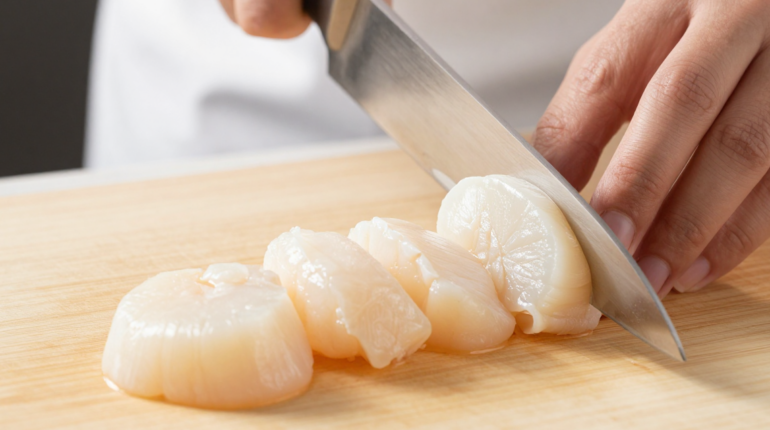
Removing the lateral smooth muscle precedes the crucial phase: cutting into thin slices. This operation requires a perfectly sharpened knife, the only guarantee of regular slices that respect the delicate flesh of the mollusk. The blade must slide effortlessly through the scallop to obtain slices of constant thickness, an essential condition for a harmonious presentation.
Arranging them in a rosette on the plate transforms these slices into an elegant visual pattern. This plating technique, borrowed from haute gastronomy, enhances the pearly whiteness of the scallops. The plates then go into the refrigerator, allowing the flesh to firm up slightly before finalizing the dish. This methodical organization of work anticipates the final plating and guarantees optimal freshness at the time of service.
Reduction And Emulsion With Apple Juice
Apple juice poured into the saucepan begins its transformation over medium heat for fifteen minutes. This reduction by half concentrates the fruity aromas and develops a gustatory complexity that structures the entire dish. A tablespoon taken at this precise stage will later be used for the vinaigrette, thus creating aromatic consistency between the different elements.
Incorporating cream into the reduced juice marks the transition to accessible molecular cuisine. The homogeneous mixture goes into the siphon where two gas cartridges transform it into an airy foam. This professional technique, once reserved for fine dining, produces a light texture that contrasts with the melting texture of the scallops. The siphon brings a spectacular visual dimension while preserving the intensity of the apple taste.
An alternative with an immersion blender remains possible for those who do not have a siphon, although the resulting texture differs slightly. Refrigerating the emulsion is necessary to stabilize the foam and guarantee optimal hold during plating. This double use of reduced juice demonstrates a thoughtful culinary approach where each ingredient plays several complementary roles, preparing the final harmony of the carpaccio.
Roasting Nuts And Preparing The Vinaigrette
Walnut kernels are placed on a baking sheet in an oven preheated to 180° for roasting for twelve to fifteen minutes. This crucial step reveals the deep aromas of the dried fruit and develops a gustatory intensity that dialogues with the fruity sweetness of the reduced apple juice. Coarse chopping preserves pieces large enough to provide crunch without dominating the delicacy of the scallops.
The vinaigrette is born from the combination of two tablespoons of colored alcohol vinegar and one tablespoon of the precious reduced apple juice, creating a balanced two-to-one ratio. The acidity of the vinegar softens upon contact with the concentrated sugars of the juice, while salt-pepper seasoning adjusts the whole. Six tablespoons of olive oil are whisked to produce a stable emulsion that will harmoniously coat each element of the dish.
This apple-walnut signature structures the identity of the carpaccio by multiplying the meeting points between the fruit and the sea. Roasting transforms a simple accompaniment into a true aromatic partner, capable of supporting the iodized finesse of the scallops. Green apple sticks, cut with their skin and soaked in water to preserve their crunch, wait their turn to complete this thoughtful gustatory construction.
Plating And Finalization
Green apples, cut into thin sticks without removing their skin, bring a tangy note and a frank crunch that contrasts with the silky melting texture of the scallops. Soaking them in cold water maintains the firmness of the fibers and prevents oxidation, guaranteeing visual freshness until service. The harmonious arrangement of these sticks on the rosette of refrigerated scallops composes the first visible layer of this layered construction.
Roasted walnut pieces are then scattered over the whole, creating points of texture and aromatic intensity. The vinaigrette is applied in a regular drizzle, delicately coating each element without drowning the presentation. The peaks of apple emulsion, light and airy, are deposited with precision using the siphon, forming foamy touches that visually lighten the dish while concentrating the fruity flavors.
Chopped chives finish this culinary choreography with an herbaceous touch that wakes up the whole. Each superimposed layer plays its role in the overall balance: the crunch of the raw apples responds to the softness of the scallops, the roasted walnuts dialogue with the creamy emulsion, while the vinaigrette unifies the flavors. This methodical construction transforms a classic carpaccio into a gastronomic experience where each bite reveals the complexity of perfectly mastered associations.