📌 Savory Salmon & Leek Clafoutis
Posted 30 March 2026 by: Admin
Have you ever looked for a quiche alternative on a weeknight without really wanting to wrestle with a shortcrust pastry? This salmon and leek savory clafoutis is the answer. No crust, no complications, just a dish that smells like pure comfort.
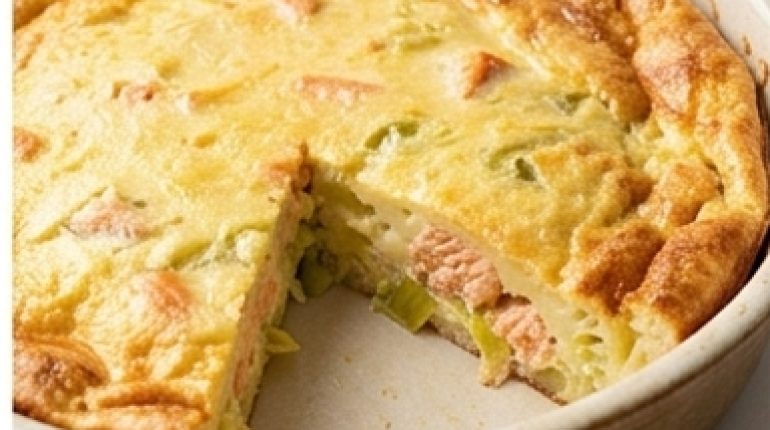
The clafoutis comes out of the oven with a slightly domed surface, golden like light caramel, and that little sizzle when you place the pan on the rack. Underneath, the batter is creamy, almost trembling in the center. The candied leeks form soft green ribbons between the pieces of pink salmon. It smells of warm cream, melted cheese, with that sweet, briny note rising from the dish as soon as you get close.
Why you’ll love this recipe
Ingredient Notes
All the simple ingredients that make up this light and flavorful clafoutis.
- The leeks : This is the aromatic heart of the dish. Choose medium-sized leeks — very large ones can be fibrous in the center. What really matters is melting them in a pan before assembling: translucent, almost caramelized, not just Wilted. If you skip this step, they will release water in the mold and your batter will be soggy.
- The salmon : Fresh or smoked, both work but give different results. Fresh salmon provides a firmer texture and a milder taste. Smoked salmon gives more aromatic power — but be careful not to over-salt the batter in that case. In practice, a mix of both is often the best compromise if you have both on hand.
- Crème fraîche : 20 cl of thick cream (heavy cream), not liquid. Thick cream holds up better during cooking and is what gives that melting, dense texture. If you use light liquid cream, the batter will be thinner, take longer to set, and will be less indulgent on the plate.
- Grated cheese : Emmental or Gruyère depending on what you have. Gruyère has a more assertive, slightly nutty taste, while Emmental is milder and stretches beautifully. Avoid soft cheeses — they would make the batter too wet. 50 grams is the right dose for flavor and a crust without overwhelming other flavors.
Why I never rush the leeks anymore
This is the only part of the recipe that requires patience. Leeks in the pan, over medium heat with a drizzle of olive oil — you hear that soft hiss when they hit the heat. Ten minutes minimum. Not five. They go from a crunchy bright green to a translucent jade green, and their texture changes completely: silky, almost melting under the spatula. That’s when they release their natural sweetness. Put them in the mold while still firm, and they will release water during baking. The batter ends up soggy, the clafoutis won’t set correctly, and you’ll be looking for the problem in the wrong place.
The clafoutis batter: the part everyone rushes
Three eggs, the cream, the milk — whisk together until the mixture is homogeneous and slightly foamy on the surface. Then the flour, sprinkled in gradually. Not all at once. If you pour all the flour into a cold liquid at once, lumps form immediately and won’t go away. By sprinkling while whisking, the flour incorporates without resistance. The grated cheese is added last. The batter should have the consistency of a slightly thick pancake batter — fluid but coating the spoon. That’s the right texture.
What happens in the oven — and why you shouldn’t open it
The oven at 180°C, oiled mold, leeks at the bottom, salmon on top, batter poured gently to cover everything. For the first 20 minutes, the batter remains liquid. Don’t give in to the temptation to open. Around the 30th minute, it starts to set, the edges firm up first, and the smell of melted cheese fills the kitchen. The clafoutis is ready when the center no longer really wobbles and the top has that golden color with a few small bubbles that have burst on the surface. Let it rest for 5 minutes out of the oven before cutting — the texture stabilizes, and it holds together better on the plate.
Tips & Tricks
- Drain the leeks well after sautéing them — press them gently in a colander or place them on paper towels. The water they release is the enemy of the batter: too much moisture and it will never set properly.
- If using smoked salmon, salt the batter sparingly. Taste before pouring — it should be slightly under-salted; the cheese and salmon will do the rest during baking.
- Choose a mold that isn’t too large, 20 to 22 cm in diameter for 4 people. In a large mold, the batter spreads too thinly, and the clafoutis loses that melting thickness that makes it so charming.
Can this clafoutis be prepared in advance?
Yes, it prepares very well the day before. Keep it in the refrigerator in its filmed mold and reheat it for 10 minutes at 160°C before serving. The texture remains melting and the taste is often even better the next day.
Fresh or smoked salmon: which to choose?
Both work, but yield different results. Fresh salmon is milder and more discreet, letting the leeks shine. Smoked salmon brings more character and aromatic power — in this case, reduce the salt in the batter as smoked salmon is already salty.
How do I know if the clafoutis is fully cooked?
The surface should be golden like light caramel and the center should no longer wobble when you lightly shake the mold. If in doubt, insert the tip of a knife into the center: it should come out clean and hot. If the top browns too quickly, cover with aluminum foil for the last 10 minutes.
Can the clafoutis be frozen?
Technically yes, for up to one month. In practice, the texture of the cream and egg-based batter changes slightly when thawed — it becomes a bit grainier. It is best consumed fresh or within 2-3 days in the refrigerator.
What can I substitute for crème fraîche to lighten the recipe?
Replace part of the cream with semi-skimmed milk or 20% fat Greek yogurt/fromage blanc. The batter will be less rich but still well-bound. Avoid replacing all the cream: you would lose the melting texture that makes the difference.
My clafoutis is soggy underneath — what happened?
The culprit is almost always water released by the leeks. They must be well-melted in the pan and drained before going into the mold. A mold that is too large for the amount of batter can also result in a mixture that is too thin and doesn’t set correctly.
Savory Salmon & Leek Clafoutis
French
Main course
A creamy and melting savory clafoutis, crustless, with candied leeks and salmon. Lighter than a quiche, ready in one hour.
Ingredients
- 2 medium leeks
- 200g fresh or smoked salmon
- 3 eggs
- 200ml thick crème fraîche
- 100ml milk
- 60g flour
- 50g grated cheese (Emmental or Gruyère)
- 1 tbsp olive oil
- 1 pinch salt
- 1 pinch ground black pepper
Instructions
- 1Preheat the oven to 180°C. Lightly oil a 20-22 cm diameter baking dish.
- 2Clean the leeks and slice them into thin rounds. Sauté them over medium heat in olive oil for 10 minutes until translucent and soft. Season with salt and pepper, drain, and let cool slightly.
- 3Cut the fresh salmon into 2 cm cubes. If using smoked salmon, cut it into strips.
- 4In a bowl, whisk the eggs with the crème fraîche and milk. Gradually whisk in the flour to avoid lumps. Add the grated cheese, salt, and pepper.
- 5Spread the leeks at the bottom of the dish. Arrange the salmon evenly on top.
- 6Pour the batter over the leeks and salmon, covering everything well.
- 7Bake for 35 to 40 minutes until the top is golden and the center is set. Let rest for 5 minutes before slicing and serving.
Notes
• Storage: 2 to 3 days in the refrigerator, covered. Reheat for 10 minutes at 160°C to restore the melting texture.
• Gluten-free variant: replace the flour with 50g of cornstarch (Maizena). The batter will be slightly softer but just as tasty.
• For more flavor: add a tablespoon of fresh dill or chopped chives to the batter before pouring into the mold.
Nutrition Facts (per serving, estimated)
| 400 kcalCalories | 23gProtein | 18gCarbs | 24gFat |