📌 Sautéed Red Onions
Posted 31 March 2026 by: Admin
Red onion is that ingredient everyone has in their kitchen and nobody really takes seriously. We chop it for a salad, slide it into a sandwich, and move on. Big mistake.
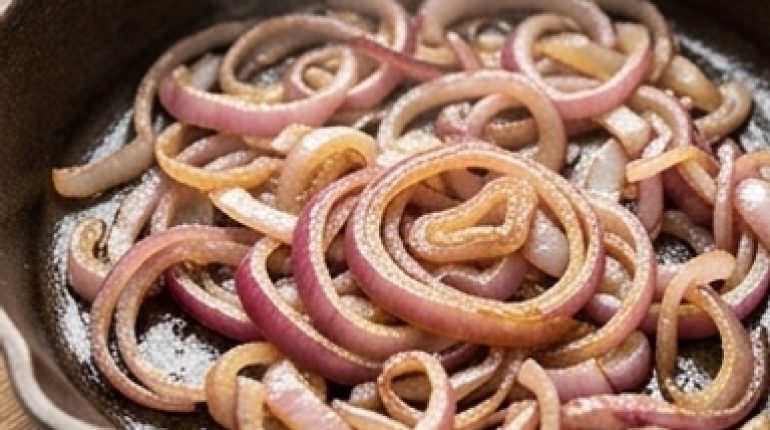
What you see before you is a transformation. Translucent rings, colored like stained glass, that have lost their bite and kept their character. The aroma rising from the pan is sweet and slightly sugary — nothing like the aggressive pungency we know from the raw version. Under the fork, it gives way without resistance, melting and silky, with those edges that have turned into light caramel.
Why you’ll love this recipe
Ingredient Notes
Four ingredients, that’s all it takes to transform the red onion into something truly good.
- Red onions : Choose the firmest ones, those that resist when you squeeze slightly. A soft onion has already surrendered — it will soften too quickly and won’t caramelize properly. Ideal size: medium. Not too big (layers are thick, cooking is uneven), nor too small (you’ll spend all your time peeling).
- Olive oil : No need to pull out the overpriced bottle. Ordinary olive oil does the job perfectly here — heat destroys fine aromas anyway. What matters is the quantity: enough to coat the entire bottom of the pan, no more. Too little and it sticks. Too much and it slides, and nothing browns.
- Salt : Salt isn’t primarily there for seasoning — it’s there to draw the water out of the onions. This water then evaporates, triggering the caramelization. Add it right at the start with the onions, not at the end.
- Lemon juice or balsamic vinegar : Optional on paper, indispensable in practice. The acidity at the very end of cooking cuts through the sweetness of the onions and wakes everything up. Lemon provides lightness and freshness. Balsamic adds a darker, slightly syrupy depth. Choose based on what you are serving the dish with.
Slice thin — really thin
This is where it all happens. Thick slices, and you end up with onions that are half-raw in the center and overcooked on the outside. Aim for between 3 and 4 millimeters thick — barely more than thick paper. To go fast: cut the onion in half lengthwise, place it flat on the board, and slice into regular half-moons. Feeling your eyes sting already? Good news. It means the sulfur compounds are present and your dish will have character.
Heat the pan before adding anything
A cold pan with onions in it is a recipe for onions that boil in their own water instead of searing. Heat the pan for a minute over medium-high heat, then add the oil. When the oil ripples slightly — that almost imperceptible shimmer on the surface — that’s the signal. Add the onions and salt all at once. The first contact should yield a brief and satisfying ‘shhh’. If it doesn’t make that sound, your pan wasn’t hot enough.
Don’t touch anything for 3 minutes
Resist. Those first 3 minutes without intervention are what create the golden edges like light caramel on the bottom onions. Only then, stir, and let it rest again for 2 to 3 minutes. This alternating rest-stir cycle is the true technique. The onions turn from pearly white to translucent purple, then to that amber-pink indicating it’s almost done. If you stir them constantly, they will cook, certainly — but they will never caramelize.
Acidity, at the very last second
Remove the pan from the heat — completely, not just to the edge. Add a few drops of lemon or a drizzle of balsamic vinegar and stir immediately. The steam rising in spirals at that moment is the acidity integrating into the residual heat without cooking further. If you add it during cooking, it evaporates too quickly and you lose the contrast effect. Taste. Adjust the salt if needed. It’s ready.
Tips & Tricks
- If your onions are releasing too much water and refuse to brown, turn up the heat. The water must evaporate fast, not simmer — that’s the difference between a melting golden onion and an accidental onion soup.
- Double the quantities and keep the rest in the fridge in a sealed jar. Sautéed onions keep for 4 to 5 days and are even better the next day — the flavors concentrate while resting.
- For impeccable service with guests: reheat in the pan over low heat for 2 minutes and add a small pinch of fresh salt just before serving. It wakes everything up without overcooking.
Why are my onions releasing too much water and not caramelizing?
Two possible causes: the pan wasn’t hot enough at the start, or you are stirring them too often. The water needs to evaporate quickly — if it accumulates, turn up the heat and let the onions rest without touching them for 2 to 3 minutes. Caramelization only happens when the surface is dry and in direct contact with heat.
Can they be prepared in advance?
Yes, and it’s even recommended. Sautéed onions keep for 4 to 5 days in the refrigerator in a closed jar, and the flavors concentrate during rest. Reheat in a pan over low heat for 2 minutes with a pinch of fresh salt — they regain their full texture without overcooking.
Can I use yellow or white onions instead of red onions?
Absolutely. Yellow onions yield a sweeter and milder result after cooking, while white onions remain slightly sharper. Red onions have the advantage of keeping a beautiful rosy color after cooking, which is more visually appealing — but technically, the method is identical.
Lemon or balsamic vinegar: what is the practical difference?
Lemon juice brings a sharp, fresh acidity, perfect with grilled vegetables, fish, or light dishes. Balsamic vinegar gives a rounder, slightly syrupy touch that works better with meats, cheeses, or grains. When in doubt, lemon is more versatile.
Which pan should I use for a good result?
A stainless steel or cast iron pan is ideal — they conduct heat well and promote caramelization. A non-stick pan also works, but the onions brown less easily because the surface doesn’t reach such high temperatures. Avoid pans that are too small: if the onions are crowded, they will steam instead of searing.
How to include them in a complete meal?
They work as a universal garnish: on rice, with grilled chicken, in a wrap, on toasted bread with cheese, or mixed into a warm salad. Prepare a larger quantity at the start of the week and use them across several meals — it’s one of the best shortcuts to give flavor to any dish effortlessly.
Sautéed Red Onions
Mediterranean
Side Dish
A melting and slightly caramelized garnish, ready in 12 minutes, that pairs with everything. The technique is simple, the result always impresses.
Ingredients
- 2 medium (about 300g) red onions
- 2 tbsp (30ml) olive oil
- 1 pinch (2g) fleur de sel or sea salt
- 1 tbsp (15ml) — optional fresh lemon juice or balsamic vinegar
Instructions
- 1Peel the onions and cut them into thin half-moons 3 to 4 mm thick.
- 2Heat the olive oil in a pan over medium-high heat until it shimmers slightly.
- 3Add the onions and salt all at once. Stir just once, then let cook without touching for 3 minutes.
- 4Stir, then let rest again for 2 to 3 minutes. Repeat until the onions are translucent and edged with light caramel (7 minutes total).
- 5Remove the pan from the heat. Add the lemon juice or balsamic vinegar, stir immediately, and serve.
Notes
• Storage: up to 5 days in the refrigerator in an airtight jar. Reheat in a pan over low heat with a pinch of fresh salt.
• Spicy variation: add a pinch of ground cumin or mild chili powder at the same time as the salt for a warmer profile.
• For impeccable service: prepare the onions 30 minutes before, cover the pan off the heat, and reheat for 2 minutes before serving.
Nutrition Facts (per serving, estimated)
| 145 kcalCalories | 1gProtein | 13gCarbs | 10gFat |