📌 Sautéed Cabbage with Garlic Scrambled Eggs

Posted 20 April 2026 by: Admin #Recipes

Prep Time
10 minutes
Cook Time
15 minutes
Total Time
25 minutes
Servings
2 servings

That sharp sizzle when the cabbage strips hit the hot pan — that’s the sign that things are off to a good start. No need for a full fridge or complicated techniques. Just cabbage, eggs, and a clove of garlic that will change everything.
Advertisement:
Final result
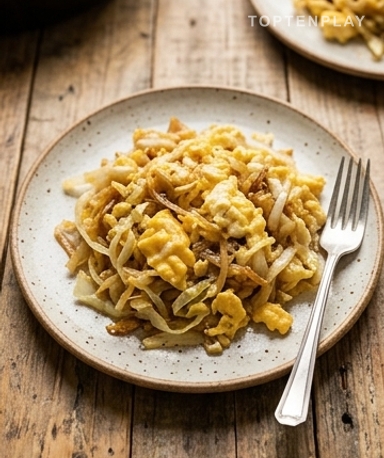
A simple and comforting dish: caramelized cabbage pairs perfectly with soft scrambled eggs.

Before you, a generous pan where the cabbage strands have taken on a light caramel color, translucent and slightly shriveled. The egg is still creamy, not overcooked, wrapping around the fibers like a sauce. The garlic melted into the oil long before — it perfumes without being aggressive. You smell that sweet-savory scent of caramelized vegetables, with just that slightly smoky background that says the pan was truly hot.

Why you’ll love this recipe

Ready in 25 minutes, flat : No marinating, no resting in the fridge, no prep the night before. You chop, you sauté, you eat.
The kind of dish that surprises : People expect something mundane and find themselves going back for seconds. Caramelized cabbage develops a sweetness that no one anticipates.
Only one ingredient to really watch : The egg. Everything else is very forgiving. The cabbage can stay an extra two minutes without drama. Eggs, however, do not forgive inattention.
The ultimate fridge-clearer : Cabbage that’s been hanging around for a few days, two or three eggs, and a garlic clove — that’s often all it takes for a truly satisfying meal.

Ingredient Notes

Ingredients

Advertisement:

Everything you need to succeed with this dish: green cabbage, fresh eggs, and a good head of garlic.

  • Green Cabbage : Get a classic head of cabbage, firm to the touch with tight leaves. Avoid softened outer leaves — they often lean towards bitter. Cut it into thin strips, not large chunks: it’s the surface contact with the hot pan that creates the caramelization. A medium cabbage feeds two people easily.
  • Eggs : Very fresh eggs make a real difference for the yolk — it remains shiny and dark orange rather than pale. Small tip: count two large eggs per person. Whisk them with a fork right before pouring, with a pinch of salt, not before.
  • Garlic : One large clove is enough for two servings. Sliced thin or crushed with a knife, never through a garlic press — that gives a bitter, metallic taste. The garlic should perfume the oil at the start, not cook dry until it burns. As soon as it starts to smell good and barely turns golden, the cabbage goes in.
  • Olive Oil : It holds up better to the high heat needed to caramelize the cabbage than butter, which would blacken too quickly. A standard olive oil does the job perfectly — no need to bring out the expensive bottle saved for salads.

Cabbage wants heat, not pity

The pan must be really hot before the cabbage enters. Not lukewarm — hot. Pour the oil, let it shimmer for 30 seconds, brown the garlic, then add all the cabbage at once. It will crackle loudly. Don’t touch it for two minutes. This prolonged contact with the hot bottom is where the vegetable’s natural sugars transform: the strands go from raw green to golden translucent, taking on a slight nutty flavor that boiling would never give. Then you stir, let it cook further on medium heat, and adjust the salt before moving to the next step.

Cabbage wants heat, not pity
The secret to successful cabbage is patience — let it brown quietly in hot oil.

The part everyone messes up: the egg

The cabbage is ready when it is supple, slightly shriveled, with light caramel-colored areas. Lower the heat to medium-low. Pour the beaten eggs directly over the hot cabbage — and then, wait ten seconds without touching. This little resting time allows the bottom to set without the top being coagulated yet. Then gently scrape with a wide spatula in long, slow motions, bringing the still-liquid eggs toward the center. Stop as soon as there’s just a bit of moist shine left: they will continue to cook off the heat in the residual warmth. Overcooked, they become dry and grainy. Just enough, they are silky.

Advertisement:

Why I never complicate this dish anymore

You could add grated cheese, fresh herbs, smoked paprika — and it works, yes. But the simplest version is also the one I make most often. The cabbage has enough character when well-caramelized, the egg brings the roundness, and the garlic holds it all together. Three ingredients speaking the same language. The sophistication here is the execution: the heat, the timing, not being heavy-handed with the salt. Not the grocery list.

Why I never complicate this dish anymore
The eggs come last, over low heat, to remain soft and creamy.

Tips & Tricks
  • Cut the cabbage thin — strips of 3 to 4 mm maximum. The thicker it is, the more time you need to soften it, and you risk burning the outside before the inside is tender.
  • A squeeze of lemon juice just before serving changes everything. Not during cooking — that makes the cabbage soggy and removes the beautiful golden color it took time to achieve.
  • Leftovers keep for 24h in the fridge and reheat very well in a pan over high heat for 2-3 minutes. The microwave makes eggs rubbery — avoid it.
Close-up
The magic of the dish: golden cabbage strands coated in silky scrambled egg, with that hint of garlic that finishes everything.
FAQs

Can I use red cabbage instead of green cabbage?

Advertisement:

Yes, but the result will be different. Red cabbage is firmer and takes longer to soften — count an extra 5 minutes of cooking. It will also lose its beautiful purple color and turn bluish upon contact with heat, which isn’t very appetizing. Green cabbage remains the best choice for this dish.

How do I prevent the eggs from being overcooked and rubbery?

The key is to turn off the heat (or remove the pan from the heat) as soon as the eggs still look slightly undercooked. The residual heat from the cabbage and the pan finishes the job. If you wait until they are completely set in the pan, they will be overcooked on the plate.

Advertisement:

Can I prepare this dish in advance?

The caramelized cabbage adapts very well to being prepared in advance and keeps for 2 days in the fridge. However, the eggs must be added at the last moment — reheating scrambled eggs never gives the same creamy texture. Reheat the cabbage in the pan over high heat, then add fresh eggs just before serving.

What should I serve this with to make it a complete meal?

Advertisement:

Toasted rustic bread works perfectly to mop up the eggs. Otherwise, a lightly dressed green salad brings fresh contrast. For a more filling version, add a few slices of sautéed turkey bacon or melted grated cheese on top.

Can I add other vegetables?

Absolutely. Sliced mushrooms, peppers, or onions melt well with the cabbage and reinforce the umami side of the dish. Add them at the same time as the cabbage or slightly before depending on their cooking time. Avoid vegetables that release a lot of water, like raw zucchini — they would prevent caramelization.

Advertisement:
Sautéed Cabbage with Garlic Scrambled Eggs

Sautéed Cabbage with Garlic Scrambled Eggs

Easy
International
Main course
Prep Time
10 minutes
Cook Time
15 minutes
Total Time
25 minutes
Servings
2 servings

A quick and comforting dish that transforms three everyday ingredients into something truly delicious. The secret: letting the cabbage caramelize properly before adding the eggs.

Ingredients

  • 400g green cabbage (about ¼ medium head), sliced into thin strips
  • 4 eggs
  • 2 garlic cloves, thinly sliced
  • 2 c. à soupe olive oil
  • ½ c. à café salt
  • ¼ c. à café freshly ground black pepper
  • 1 c. à soupe lemon juice (optional, for serving)

Instructions

  1. 1Slice the cabbage into thin strips of 3-4 mm. Mince the garlic finely.
  2. 2Heat the olive oil in a large skillet over high heat until it shimmers.
  3. 3Add the garlic and sauté for 30 seconds until lightly golden and fragrant.
  4. 4Add all the cabbage at once. Let cook without stirring for 2 minutes so it begins to caramelize.
  5. 5Stir, then continue cooking for 8-10 minutes over medium heat, stirring occasionally, until the cabbage is tender and golden. Season with salt and pepper.
  6. 6Lower the heat to medium-low. Whisk the eggs with a fork and a pinch of salt, then pour over the hot cabbage.
  7. 7Wait 10 seconds, then gently scrape with a spatula in wide, slow motions. Stop as soon as the eggs are just set but still slightly glossy.
  8. 8Serve immediately with a squeeze of lemon juice if desired.

Notes

• Storage: the caramelized cabbage (without the eggs) keeps for 2 days in the refrigerator in an airtight container. Reheat in a pan over high heat before adding fresh eggs.

Advertisement:

• Richer variant: add 30g of grated cheese (Comté, Gruyère) directly onto the hot eggs, off the heat, and cover for 1 minute to melt.

• For 4 people: double all quantities and use two pans in parallel — a single pan that is too full will steam the cabbage instead of caramelizing it.

Nutrition Facts (per serving, estimated)

260 kcalCalories 14gProtein 10gCarbs 18gFat

Advertisement:
Share it!

Thanks for your SHARES!

You might like this

Add a comment:

Latest posts

Thick and Creamy Quiche Lorraine

Slow Cooker Brown Sugar Glazed Potatoes

Potato Salad with Tuna and Boiled Eggs

Stuffed Cabbage Rolls with Beef and Rice in Slow-Simmered Tomato Sauce

Cucumber Tomato Onion Salad

Crispy Parmesan Potatoes

Ground Beef and Melting Potato Gratin with Cheddar

Creamy Seafood Salad with Mayo and Black Olives

Potato and Ground Beef Gratin

4-Ingredient Slow Cooker Christmas Cake

Loading...