📌 Saumon Wellington à la tomate: How ricotta and Provençal tomato sauce transform the classic French recipe
Posted 13 December 2025 by: Admin
The Refined Salmon Wellington Concept
The classic Wellington has long been synonymous with beef—a showstopper that graces the finest dining tables. Yet culinary innovation thrives when tradition meets contemporary palate, and salmon proves the perfect vessel for this elegant reinterpretation. This gourmet adaptation maintains the architectural integrity of its predecessor while embracing Mediterranean sensibilities, transforming a protein-forward centerpiece into something equally sophisticated but distinctly lighter.
At its core, this dish combines a pristine 600g salmon fillet with the delicate crispness of homemade or store-bought puff pastry, creating a textural contrast that defines refined French cookery. The real distinction lies beneath the golden exterior: a carefully composed filling that weaves together 400g of fresh spinach, creamy ricotta, and Mutti’s Provençal tomato sauce with IGP thyme certification. This layered approach transforms what could be a simple en papillote preparation into a presentation-worthy composition worthy of special occasions.
The beauty of this recipe resides not in complexity but in thoughtful ingredient selection and precise technique. Whether you craft your pâte feuilletée from scratch—a meditative process requiring cold butter, precise hydration, and patience—or opt for commercial excellence, the foundation remains uncompromised. The Provençal sauce serves dual purposes: lending authentic herbaceous depth while its acidity perfectly counterbalances the richness of both salmon and ricotta.
What distinguishes this Wellington from its beef counterpart is accessibility married with sophistication. The preparation timeline spans merely 25 minutes of active work before a restorative 30-minute rest, democratizing restaurant-quality execution for home cooks willing to honor the process.
Mastering The Spinach-Tomato Filling
The foundation of this Wellington’s distinction lies not in the salmon itself, but in the thoughtfully constructed filling that craddles it. Building this signature layer begins with 150g of Mutti Provençal tomato sauce—a choice that extends far beyond mere convenience. The IGP thyme certification signals terroir-driven quality, lending authentic herbaceous depth that commercial alternatives struggle to replicate. This ingredient alone transforms the dish from competent to compelling.
The filling’s architecture requires methodical construction. Finely diced shallots and garlic meet a whisper of olive oil in the pan, their aromatics slowly blooming before 400g of fresh or frozen spinach joins the chorus. The greens collapse into tenderness, their bitterness mellowing as the flavorful base absorbs their moisture. Here lies a critical detail: well-drained frozen spinach works identically to fresh, making this preparation genuinely accessible regardless of seasonal constraints.
Once the spinach reaches yielding tenderness, 200g of ricotta enters the equation. This creamy counterpoint serves dual functions—binding the filling while tempering the acidity of the tomato sauce. A measured hand with salt, pepper, and a whisper of nutmeg completes the seasoning architecture, creating balance rather than dominance. The mixture must cool completely before assembly, a non-negotiable step that prevents the puff pastry from becoming saturated and compromising its structural integrity during the baking process.
This cooling period transforms preparation from rushed execution into controlled technique, allowing the cook to work methodically when precision matters most.
Assembly Technique And Timing Strategy
With the filling cooled and ready, the assembly phase demands precision—not complexity. Roll out your puff pastry into a thin, even rectangle, then spread a deliberate layer of the spinach-tomato mixture across its surface, leaving a modest border along the edges. This margin proves essential; it provides the adhesive space where pastry seals against itself, preventing any escape of filling or precious juices during baking.
Position your 600g salmon fillet directly atop this foundation, then distribute a final, judicious layer of filling over the fish. The temptation to generously coat the salmon must be resisted—excess filling compromises the seal and risks rupturing the delicate pastry envelope. Fold the pastry edges up and over with deliberate care, pressing gently but firmly to create an impermeable seal. The corners require particular attention; overlap them slightly and press to ensure no gaps remain.
This completed parcel now enters mandatory refrigeration for a minimum of 30 minutes. This step cannot be abbreviated. Cold pastry contracts slightly, strengthening its structural bonds and preventing the filling from migrating during the heat of the oven. The chilled surface also ensures the egg wash adheres properly, creating the conditions for that coveted golden crust. This waiting period separates hasty cooking from methodical craftsmanship—the difference between adequate results and exceptional ones.
Baking Precision And Serving Excellence
The oven temperature and timing represent the final test of your preparation’s integrity. Preheat to 200°C and ensure your refrigerated parcel has reached optimal coldness—this temperature differential between pastry and oven heat creates the dramatic rise and golden crust that defines Wellington’s visual appeal. Brush the chilled surface generously with beaten egg yolk, applying even coverage to every exposed edge. This protective coating transforms into a lacquered finish, signaling perfection to any discerning eye.
Slide the parcel onto a lined baking tray and commit to patience: 25 to 30 minutes at 200°C until the pastry achieves deep golden brown. Resist the urge to open the oven door excessively; thermal stability matters as much as initial temperature. The salmon within will cook gently, remaining tender while the ricotta-tomato filling equilibrates internally.
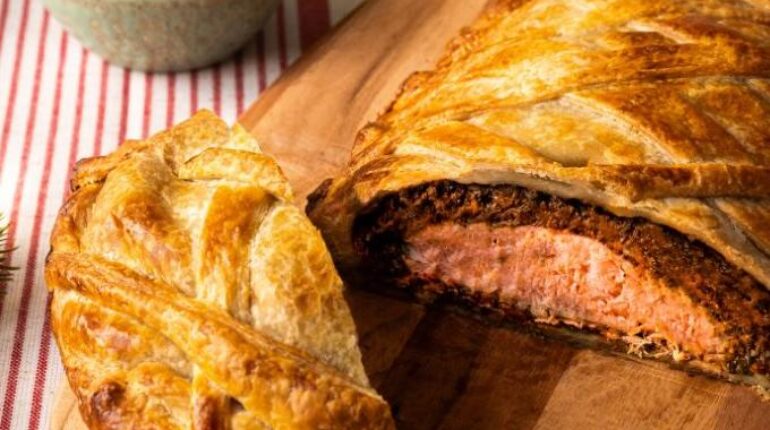
Upon removal, allow the Wellington to rest for several minutes before slicing—this crucial pause permits the filling to set slightly, preventing the cross-section from collapsing when the knife passes through. When you do cut, that moment reveals the payoff: flaky pastry giving way to vibrant spinach, the rosy salmon center, and the tomato-ricotta binding all layers in harmonious unity. Serve alongside a crisp salad or caramelized roasted vegetables, permitting each component to shine without competing for attention.