Homemade herbal teas: everyone thinks they’re reserved for people with shelves full of hand-labeled glass jars. Reality: three ingredients you probably already have, ten minutes of your Sunday morning, and a mug that smells like an Oriental spice shop — in the best possible way. No complicated ritual, no investment.

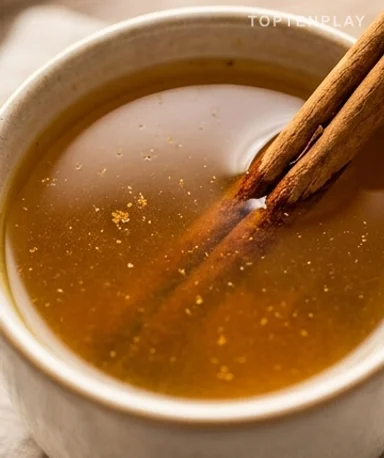
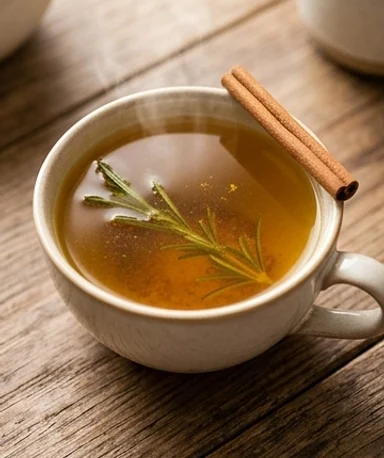
In the cup, it’s a deep amber color — not the pale yellow of industrial chamomile, but something deeper, almost orange with copper reflections. The rosemary floats on the surface, its small needle-like leaves still releasing their resinous fragrance ten minutes after preparation. The scent is both warm and slightly peppery, with that earthy note of turmeric that rounds out as soon as the cinnamon comes into play. Even before drinking, you get the feeling it’s going to do you good.
Why you’ll love this recipe
Ingredient Notes
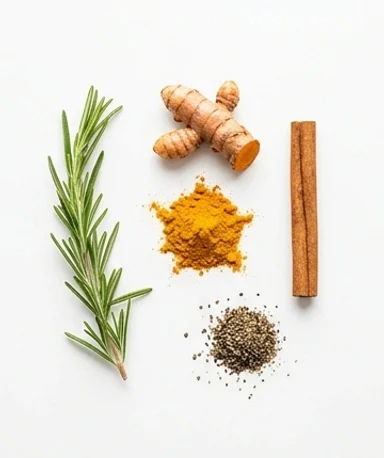
The winning trio: fresh rosemary, turmeric powder, and Ceylon cinnamon stick.
- Rosemary : A fresh sprig is ideal. Snap it slightly between your fingers before adding it — the smell is immediately more intense, almost camphor-like, and you feel it will release more into the hot water. Dried also works; half a teaspoon is enough. Avoid powdered rosemary: it gives a harsh taste and clouds the liquid unnecessarily.
- Turmeric : Powder is the most practical. Choose a vibrant orange color — if it’s leaning towards pale beige, it’s old and has lost its essence. Fresh turmeric root can be found in Asian groceries: it looks like miniature ginger with brown skin and an almost fluorescent orange interior. A thin slice is enough. Final point: it stains everything it touches, including the countertop — you’ve been warned.
- Ceylon Cinnamon : The ‘Ceylon’ mention on the label matters. Cassia cinnamon — the one found everywhere, cheaper — has a stronger and slightly bitter taste. Ceylon is sweeter, more complex, slightly lemony. One whole stick per cup is the right measure. If you have powder, use half a teaspoon.
- Black pepper : Optional on the list, but useful in practice. A pinch of freshly ground black pepper — just one — multiplies the absorption of turmeric. It’s not a legend: the piperine in pepper directly affects the bioavailability of curcumin. You’ll barely taste it in the cup, but it does its job discreetly.
Why bagged herbal teas can’t compete with this
An industrial bag contains dried, crushed, packaged plants — stored for months, sometimes longer. Essential oils evaporate over time. They are what concentrate the aromas and the essence of what the plant has to offer. When you snap a fresh rosemary sprig between your fingers, you smell the difference immediately: a resinous, vivid scent that has nothing to do with a bag taken from a drawer. That’s the whole value of homemade. Not the romanticism of the gesture — the actual quality of the product.
Turmeric in a hot drink: you have to know how to handle it
Alone in hot water, turmeric is earthy and slightly bitter. Frankly uninviting. Most people who say they don’t like turmeric drinks have tried it without combining it correctly. Cinnamon rounds out that bitterness and brings natural sweetness without adding sugar. Rosemary cuts the heavy side and adds a grassy dimension that lightens the whole. The result smells like the warm spices of a souk — but in a balanced, drinkable version, without being overwhelming. You can’t directly distinguish the pinch of black pepper, but it’s there regardless.
The part everyone misses: the steeping time
Waiting two minutes is what most people do. It’s not enough. These spices need time to give what they have — eight to ten minutes minimum, under a lid. The lid is essential: volatile essential oils escape with the steam if you leave the cup uncovered. After ten minutes, the liquid has taken on that deep amber hue, like a very light caramel slightly tinted with orange, and the smell in the room is much more present. That’s when you strain. Not before.
The right time to drink it — and when to avoid it
The morning, before eating, is the classic time. On an empty stomach, the ritual fits naturally into the wake-up routine. The afternoon also works — between meals, as a warm break to replace a coffee. One cup per session is reasonable. No need to make three liters a day hoping for a tenfold effect: these ingredients should be respected in moderate quantities. If you are sensitive to stimulating plants, avoid it in the evening — rosemary can be enough to delay sleep for some people.
Tips & Tricks
- Snap the rosemary sprig between your fingers before adding it to the water: you release the essential oils and the result is much more aromatic than an intact sprig thrown in as is
- Cover your cup or pot during the 10 minutes of steeping — the volatile compounds of rosemary and cinnamon escape with the steam when uncovered, and you lose much of the benefit
- If you want to naturally sweeten without honey or sugar, add a slice of fresh ginger to the mix: it integrates perfectly into this trio and warms you up even more in winter
Can I use fresh turmeric instead of powder?
Yes, and it’s even recommended if you can find it. A thin slice of fresh root (about 1 cm) easily replaces half a teaspoon of powder. Fresh turmeric has a slightly brighter and less earthy taste than powder, and it tints the liquid less.
How long can this infusion be stored?
It can be kept for 24 hours in the refrigerator in a closed jar. Reheat gently in a pan — not in the microwave, which deteriorates the aromas. That said, it’s truly better prepared fresh: the rosemary’s essential oils fade quickly once filtered.
Can I prepare a large quantity in advance?
You can multiply the quantities and prepare 2 to 3 cups at once, but no more. Beyond that, the infusion continues to concentrate and becomes bitter, especially because of the rosemary. Always strain before storing.
Does dried rosemary work as well as fresh?
It works, but the result is different. Dried rosemary gives a more subtle and slightly woodier taste. Use half a teaspoon of dried rosemary to replace a fresh sprig, not more — dried, it is more concentrated and can easily dominate the other flavors.
Can I sweeten or flavor this infusion?
A teaspoon of acacia honey sweetens it well without masking the spices. Fresh ginger slices also blend naturally into this trio. Avoid refined white sugar which flattens the aromas — if you want sweetness, honey or a whole date added during steeping does the job better.
Are there people for whom this infusion is not recommended?
Turmeric at therapeutic doses is not recommended for pregnant women, people on anticoagulants, or those with gallstones. In culinary quantities (the half teaspoon in this recipe), it is generally problem-free — but in case of medical treatment, professional advice remains the best course of action.
Rosemary, Turmeric & Cinnamon Infusion
Traditional
Hot beverage
A homemade herbal tea with three warm spices, ready in ten minutes with what you already have in your kitchen. Aromatic, balanced, with no added sugar.
Ingredients
- 250 ml water
- 1 sprig (10 cm) fresh rosemary (or ½ tsp dried rosemary)
- ½ tsp (about 1.5 g) turmeric powder (or 1 thin slice of fresh root)
- 1 stick (5 cm) Ceylon cinnamon (or ½ tsp ground cinnamon)
- 1 pinch freshly ground black pepper (optional)
Instructions
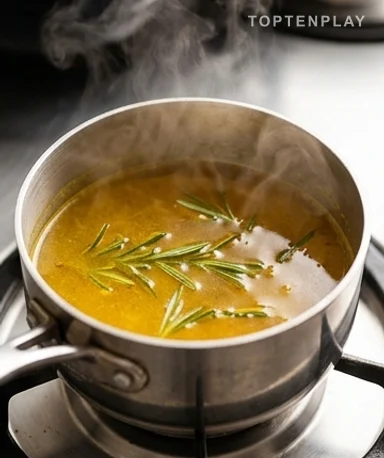
- 1Bring water to a boil in a small saucepan.
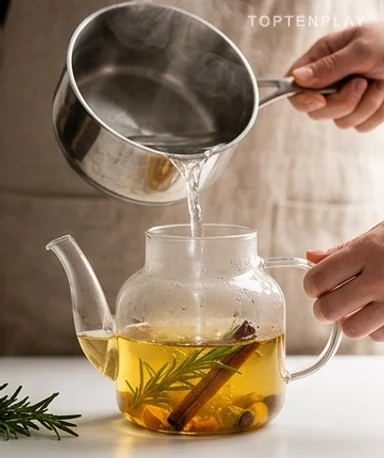
- 2Remove from heat. Snap the rosemary sprig between fingers to release essential oils, then add it along with the turmeric, cinnamon, and pepper.
- 3Cover and let steep for 8 to 10 minutes without lifting the lid.
- 4Strain into a cup using a fine mesh strainer. Drink hot.
Notes
• Ceylon cinnamon is sweeter and slightly lemony compared to classic Cassia — if you want to avoid bitterness, search for this in specialty or organic stores.
• For a milder version, add a teaspoon of acacia honey after straining, never during steeping (excessive heat degrades the honey’s enzymes).
• This infusion should always be prepared to order — strained and kept in the fridge, it loses its aromas within a few hours.
Nutrition Facts (per serving, estimated)
| 12 kcalCalories | 0.3 gProtein | 2.5 gCarbs | 0.2 gFat |