📌 Roasted Leg of Lamb with Garlic and Herbs
Posted 8 April 2026 by: Admin
Leg of lamb: people make such a fuss about it. A grand festive dish, delicate cooking, pro technique. The truth: it’s one of the easiest roasts to master, and the oven does 90% of the work for you.
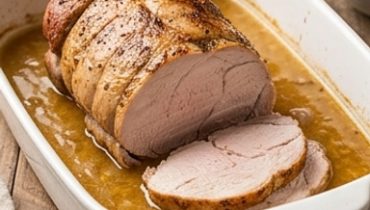
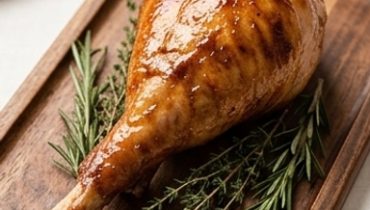
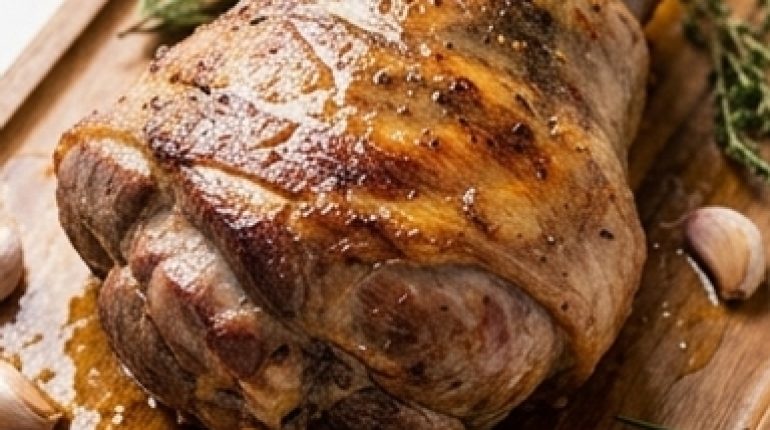
Set this leg of lamb on the table and watch the reactions. The crust is a deep amber, almost lacquered, with small visible pockets of caramelized garlic in the meat. The scent arrives before you even get close—toasted rosemary, concentrated juices, a hint of lemon that cuts through the richness of the lamb. When carved, the knife slides through pink meat that holds its shape without resisting. That’s what we’re looking for.
Why you’ll love this recipe
Ingredient Notes
All ingredients together: garlic, rosemary, thyme, lemon, and olive oil to flavor the meat.
- Leg of lamb : Get it with the bone in. Boneless leg of lamb exists, and it’s easier to carve, but it loses in flavor what it gains in convenience. The bone conducts heat and nourishes the juices—it’s what makes the sauce. Count on 300 to 350 g per person with the bone.
- Garlic : Six cloves. Don’t crush or mince them—slide them in slivers into deep incisions. They will cook directly inside the meat and flavor it from within. No substitute here, garlic is structural in this recipe.
- Fresh rosemary : Dried rosemary works, but fresh has a completely different aromatic power—more resinous, almost camphorous when you rub the needles between your fingers. If you don’t have any, thyme alone will do the trick.
- Lemon zest : This might be surprising in a roast. But lamb is a fatty, rich meat—the lemon doesn’t just perfume it, it balances it. It cuts through the heaviness without you really noticing it’s there. One tablespoon is enough, no more.
- Olive oil : No need to bring out the luxury bottle. A standard fruity olive oil works just fine—it serves as a binder for the herbs and helps form the golden crust. Three good tablespoons.
Garlic first
Take the leg of lamb out of the refrigerator thirty minutes before starting. It must be at room temperature when it goes into the oven—otherwise, the outside will cook while the inside stays cold, and you’ll get a crust that’s too dark on meat that is still lukewarm in the center. Meanwhile, peel and slice the garlic cloves into thick slivers. With the tip of a paring knife, make one-centimeter incisions in the meat, spread across the surface, not too close to the edge. Slide the slivers in until they disappear completely. The meat resists slightly, then closes back around the garlic. That’s exactly what we want.
The massage that makes the crust
In a small bowl, mix the olive oil, salt, pepper, lemon zest, and the rosemary and thyme leaves. This forms a thick paste, almost grainy under the fingers, that already smells wonderful. Rub the leg of lamb with this mixture over the entire surface—everywhere, including underneath and around the bone. Take a minute to massage it properly: we want to ensure the aromatics stick to the meat, not just look pretty. Then place the lamb on a rack over a roasting pan. The rack is important: hot air circulates underneath and prevents the bottom from sitting in the juices, which would soften the crust.
The oven takes over
Preheat to 200 °C. The first fifteen minutes are for searing—the surface begins to color, the herb oil sizzles slightly against the heat of the oven, and the scent of roasted rosemary starts to fill the room. Then reduce to 160 °C and let it go. Allow 15 to 18 minutes per 500 g for medium-rare: for a 2 kg leg, that’s about an hour and fifteen minutes at low temperature. Every twenty minutes, baste the lamb with its juices. You’ll see the crust darken gradually, shifting from pale beige to a golden brown like light caramel. If you have a meat thermometer, aim for 57-58 °C at the center for medium-rare.
The rule no one follows
Take the lamb out of the oven and resist temptation. Place a piece of foil in a tent over it and let it rest for 15 to 20 minutes without touching it. This moment is as important as the cooking. The heat continues to work inside, muscle fibers relax, and juices redistribute throughout the meat. If you carve too early, those juices run out into the dish and the meat dries out before your eyes. After resting, carve across the grain—the pieces will open cleanly, the meat stays pink and juicy, and the juices barely bead on the surface. Drizzle with the juices collected in the pan, reduced for two minutes in a saucepan.
Tips & Tricks
- Invest in a meat thermometer if you cook roasts regularly—it costs a few dollars and eliminates all uncertainty. 57-58 °C for medium-rare, 65 °C if you prefer medium. More reliable than any weight calculation.
- Marinate the lamb the day before if you have time: rub it with the herbs and oil, cover it, and refrigerate overnight. The next day, take it out thirty minutes before oven time. The flavors penetrate deeper and the result is significantly more aromatic.
- Collect the pan juices after removing the lamb. Deglaze with a bit of chicken stock, scrape the bottom well, and reduce for two minutes over high heat—you get a concentrated sauce effortlessly without flour.
How do I know if the lamb is done without a thermometer?
Pierce the thickest part of the leg with a thin skewer and hold it for 5 seconds. Then place it on your wrist: lukewarm = still rare, hot = medium-rare, very hot = medium. It’s approximate, but it works. Ideally, invest in a meat thermometer—57-58 °C for medium-rare, 65 °C for medium.
Can I prepare the lamb the day before?
Yes, and it’s actually recommended. Insert the garlic and massage the lamb with the herb mixture the day before, then cover and refrigerate overnight. The next day, take it out 30 minutes before putting it in the oven. The flavors will have had time to penetrate deeply.
How to store and reheat leftovers?
Leftovers keep for 3 days in the refrigerator in an airtight container. To reheat, avoid the oven which dries it out—prefer a pan over low heat with a splash of chicken stock, covered, for 3 to 4 minutes per side. Cold sliced lamb is also excellent in a sandwich with mustard.
Can I use a boneless leg of lamb?
Yes, but the cooking time changes—a boneless, tied leg is more compact, count about 12 to 15 minutes per 500 g at 160 °C. The result is easier to carve, but the cooking juices will be less rich than with the bone. Keep the bone if you can.
Can I cook the lamb without a rack in the pan?
You can, but the crust underneath will be soft and the bottom of the lamb will boil in the juices rather than roast. The rack allows heat to circulate all around. If you don’t have a rack, place the lamb on a bed of roughly chopped vegetables (onions, carrots)—they will act as a natural support.
Which herbs can I use instead of rosemary?
Rosemary is the classic pairing with lamb, but you can replace it with fresh oregano, bay leaves (2-3 leaves in the pan), or simply double the thyme. Tarragon also works for a milder, slightly aniseed version.
Roasted Leg of Lamb with Garlic and Herbs
French
Main Course
A leg of lamb slow-roasted with garlic slivers tucked into the meat, rosemary, thyme, and lemon zest. A classic, simple, and foolproof recipe.
Ingredients
- 2 kg bone-in leg of lamb
- 6 cloves garlic, peeled and sliced into slivers
- 3 sprigs fresh rosemary
- 3 sprigs fresh thyme
- 45 ml (3 tbsp) olive oil
- 1 tbsp lemon zest (about 1 lemon)
- 15 g (1 tbsp) salt
- 3 g (1 tsp) ground black pepper
Instructions
- 1Take the leg of lamb out of the refrigerator 30 minutes before cooking. Preheat the oven to 200 °C.
- 2Make 1 cm incisions across the entire surface of the lamb using a paring knife. Slide a garlic sliver into each incision until it disappears into the meat.
- 3In a bowl, mix the olive oil, salt, pepper, lemon zest, and the rosemary and thyme leaves. Rub the lamb with this mixture over its entire surface.
- 4Place the lamb on a rack set in a roasting pan. Roast at 200 °C for 15 minutes to sear and form the crust.
- 5Lower the temperature to 160 °C. Continue cooking for about 1 h 15, basting the lamb with its juices every 20 minutes.
- 6Check doneness with a thermometer: 57-58 °C at the center for medium-rare, 65 °C for medium.
- 7Remove the lamb from the oven. Cover with a foil tent and let rest for 15 to 20 minutes.
- 8Carve against the grain. Drizzle with the cooking juices reduced for 2 minutes over high heat in a saucepan.
Notes
• Overnight marinade: rub the lamb with herbs and olive oil the day before, cover, and refrigerate overnight for a more flavorful result.
• With or without bone: a boneless leg works well but reduces cooking time by about 10 to 15 minutes. Monitor the internal temperature.
• Storage: leftovers keep for 3 days in the fridge. Reheat gently in a covered pan with a splash of broth, or enjoy cold in a sandwich.
Nutrition Facts (per serving, estimated)
| 540 kcalCalories | 47gProtein | 2gCarbs | 38gFat |