It starts with a scent. That of parmesan melting over warm asparagus — somewhere between toasted and milky — escaping from the oven and making your head spin in the kitchen. Six ingredients, 45 minutes, and the effect of a dish that looks like it took ages to prepare.
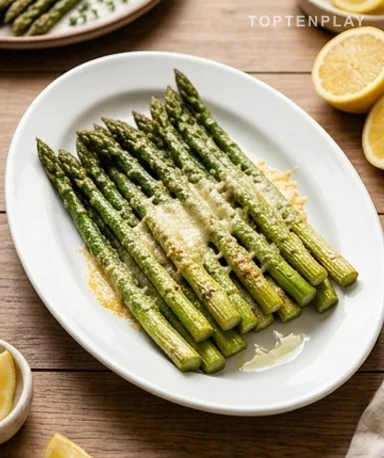
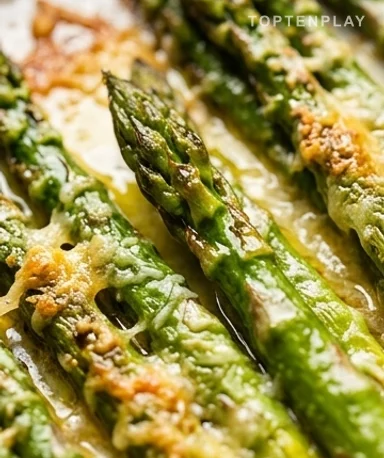
The asparagus are there, lined up on the dish, slightly wrinkled at the tips. That deep green that turns almost khaki on the roasted edges. The parmesan has melted into an irregular crust — some parts smooth and golden like light caramel, others darker, almost crackling under the fork. A squeeze of lemon on top, and it smells like instant spring. It’s the kind of dish that hits the table and creates a silence.
Why you’ll love this recipe
Ingredient Notes
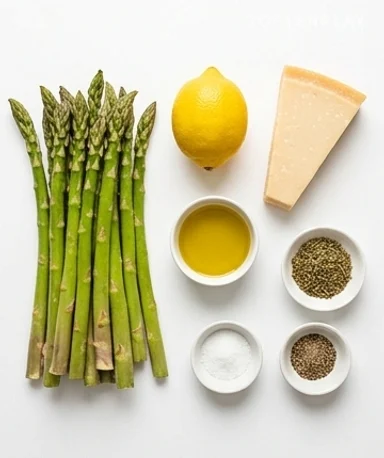
Everything you need for successful asparagus: a few ingredients, but good ones.
- Green asparagus : Choose a medium gauge — too thick requires longer blanching and very thin ones burn before cooking through. In season (April to June), they are found at the greengrocer at reasonable prices. Out of season, supermarket bags will do as long as they are still firm: they should resist slightly when you bend them, not curve limply.
- Parmesan (Parmigiano Reggiano) : The real deal, with the rind, not the bag of fine powder. Grate it yourself just before — the difference in melt and taste is real; industrial powder forms a dull film instead of a golden crust. A 50g piece costs two or three euros and completely changes the result.
- Lemon : The juice goes into the marinade; the zest can be added if you like a more pronounced and slightly bitter edge. Organic lemon if you use the zest, otherwise any will do. Avoid bottled juice — the acidity is flat, and you can tell in the final dish.
- Herbs de Provence : Fresh thyme if you have it on hand works even better. But the dried mix does the job very well here — the heat of the oven releases the essential oils and perfumes the asparagus from the inside.
Why I always snap the ends by hand
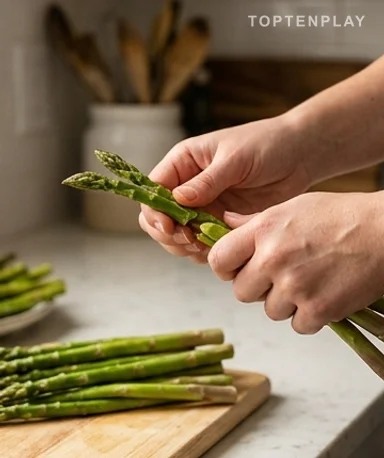
The first thing to do with fresh asparagus is to remove the fibrous bottom part. Forget the knife. Hold the asparagus with two hands — one near the tip, the other near the bottom — and bend gently. It snaps exactly where the flesh becomes tender. The sound is clean, frank, like a dry little crack. You never have to guess where to cut because the plant indicates the right limit itself. Fast, precise, and no risk of keeping stringy bits on the plate.
The part everyone fails: the drying
Three minutes in salted boiling water — no more, we’re just looking to slightly soften the flesh, not cook the asparagus through. Then an immediate plunge into very cold water to stop the cooking and set that bright green. Where most people fail: drying. Asparagus that are still wet when entering the oven will steam instead of roast. Spread them flat on a clean towel, pat them dry, leave for two minutes. This detail makes the difference between a soggy asparagus and one with a slight bite.
The marinade: quick and effective
Olive oil, lemon juice, herbs de Provence, salt, pepper. Mix in a bowl and taste before adding the asparagus — the oven concentrates flavors but doesn’t fix a lack of salt. Five tablespoons of oil for 800g of asparagus might seem generous, but it’s what allows surface caramelization. On the baking sheet, spread them out without overlapping too much: stacked asparagus steam each other and the tips never roast properly.
The exact sequence: oven first, then parmesan
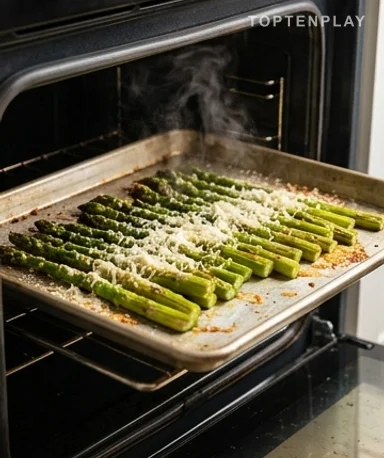
Five minutes at 200°C without parmesan. This first pass dries the surface and starts the roasting. Open the oven, sprinkle the grated parmesan — really generously, without sparing the edges of the sheet — and put back for three to five minutes. The parmesan melts, puffs up slightly, and begins to take on a hazelnut color on the tips. When the thinnest edges turn golden brown, it’s the right time. One minute too long and it becomes bitter. Remove the tray, let it rest for thirty seconds, and serve immediately.
Tips & Tricks
- If you want a more pronounced lemon scent, add the zest to the marinade at the same time as the juice — it perfumes the asparagus during cooking instead of just decorating the plate at the end.
- For a dinner party: blanch and marinate the asparagus in the morning, keep them in the fridge, and pop them in the oven just before sitting down. You can do the last ten minutes in front of your guests — the smell of browning parmesan is part of the show.
- Leftovers don’t reheat well in the microwave, they get soft. If you have any, put them back for three minutes on a hot oven tray — they’ll regain their structure.
Can I skip the blanching step?
Technically yes, but the result is different: asparagus put directly in the oven stay firmer at the core and the tips risk burning before the flesh is cooked. 3 minutes of blanching guarantees even cooking. If you’re in a hurry, just reduce blanching to 2 minutes rather than removing it completely.
How to store leftovers?
In the refrigerator in an airtight container for 2 days maximum. To reheat, forget the microwave which softens them — put them back for 3 minutes on a hot oven tray (200°C). They regain their texture without becoming rubbery.
Can I replace the parmesan?
Pecorino Romano works very well and gives a saltier and sharper result. Grana Padano is milder and cheaper. Avoid soft or melting cheeses like mozzarella — they don’t brown the same way and release water during cooking.
How to choose good green asparagus?
The stalks should be firm and resist when you bend them slightly. The tips should be compact, not open or soft. Avoid asparagus with yellow spots or a hollow stem at the cut — a sign that they are old. Outside the season (April-June), vacuum-packed asparagus are decent; bundled ones are often better.
Can I prepare this dish in advance?
Yes, it’s actually recommended for dinner parties. Blanch the asparagus and let them marinate in oil, lemon, and herbs for up to 8 hours in the fridge. All that’s left is to bake them for 10 minutes before serving. Wait to grate the parmesan until the last moment so it doesn’t dry out.
Can I use white or purple asparagus instead?
White asparagus require peeling and a longer blanching (5 to 7 minutes) because their skin is thicker and flesh more fibrous. They give a milder, less earthy result. Purple ones behave like green but lose their color when cooked — better to use them raw in salads if you want to keep the visual effect.
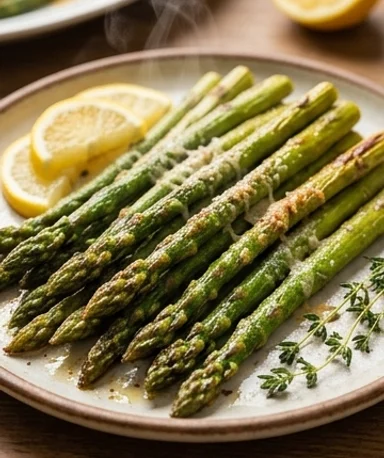
Roasted Green Asparagus with Lemon and Parmesan
Mediterranean
Side Dish
Blanched green asparagus then oven-roasted with a lemon-herb marinade and finished with a parmesan crust. Ready in 45 minutes, six ingredients.
Ingredients
- 800g green asparagus (medium size)
- 5 tbsp (75ml) olive oil
- 1 lemon (juice + optional zest)
- 1 tsp herbs de Provence (or fresh thyme)
- 50g parmesan Parmigiano Reggiano, freshly grated
- 1 tsp fine salt
- ½ tsp ground black pepper
Instructions
- 1Preheat the oven to 200°C (fan assisted). Snap the fibrous ends of the asparagus by hand — they break naturally at the right spot.
- 2Plunge the asparagus into a large pot of salted boiling water and blanch for exactly 3 minutes.
- 3Drain and cool immediately under very cold water to stop the cooking. Dry thoroughly on a towel for 2 minutes.
- 4Cut the asparagus into sections and place them in a bowl. Add the olive oil, lemon juice, and herbs de Provence. Season with salt and pepper and toss to coat well.
- 5Arrange the asparagus in a single layer on a tray lined with parchment paper — avoid overlapping them.
- 6Bake for 5 minutes at 200°C.
- 7Remove the tray, sprinkle generously with grated parmesan, and return to the oven for 3 to 5 minutes until the parmesan is melted and light golden-brown on the edges.
- 8Serve immediately, on their own or as a side dish.
Notes
• Prepare ahead: blanch and marinate asparagus up to 8h in the refrigerator. Bake 10 minutes before serving with freshly grated parmesan added at the last minute.
• Storage: best consumed on the same day. Leftovers can be reheated for 3 minutes in a hot oven (200°C) on a roasting tray — not in the microwave.
• Variation: add the zest of an organic lemon to the marinade for a more intense aroma. A few red chili flakes at serving time bring a light heat that pairs well with the lemon acidity.
Nutrition Facts (per serving, estimated)
| 276 kcalCalories | 8gProtein | 10gCarbs | 22gFat |