📌 Roasted cauliflower: 5 flavor variations to transform this vegetable into a vegetarian main course
Posted 7 February 2026 by: Admin
The Unexpected Rise Of Cauliflower In Modern Gastronomy
Few vegetables have experienced a metamorphosis as spectacular as cauliflower. Long relegated to the rank of bland and uninteresting garnish, this crucifer now stands as one of the most versatile stars of contemporary cuisine. From cauliflower rice to revolutionary pizza crusts, it has conquered health-conscious kitchens across the entire world.
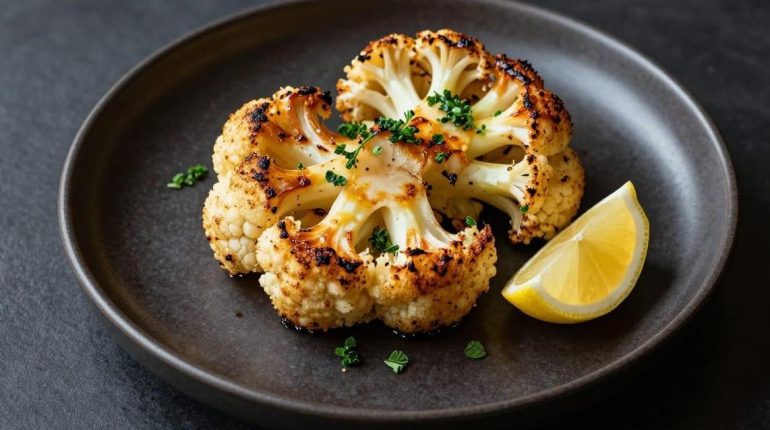
Yet, one of the most impressive preparations remains paradoxically the simplest: roasted cauliflower steaks. Cut into thick slices, generously brushed with oil and spices, then roasted until perfect caramelization, they display this incomparable texture: golden on the outside, tender on the inside, bursting with roasted flavors.
This spectacular preparation transcends traditional culinary boundaries. It serves equally well as a striking visual side dish or as a substantial main course for vegetarians and vegans. Its rich texture and remarkable adaptability have earned it a prime spot on weeknight family tables as well as on gourmet restaurant menus.
This silent revolution bears witness to a profound change in our relationship with vegetables. Cauliflower is no longer that sadly tolerated substitute, but a credible alternative that fully deserves the spotlight. Chefs around the world have understood this: with the right technique, this once-despised vegetable transforms into a memorable culinary creation.
The Recipe Decoded: Ingredients And Professional Technique
The magic of cauliflower steaks rests on a deceptive simplicity. The necessary ingredients fit into a short list: one large head of cauliflower, three tablespoons of olive oil, one teaspoon of garlic powder, the same amount of smoked paprika, half a teaspoon of cumin for depth, salt, and freshly ground pepper. Optional garnishes elevate the dish: grated parmesan, a drizzle of tahini, chimichurri sauce, or lemon wedges.
Preparation requires precision and method. Remove the outer leaves and trim the stem so the cauliflower sits flat. Never cut out the core: it is what maintains the structural integrity of the “steaks”. Using a sharp knife, slice the vegetable vertically into portions two to two and a half centimeters thick. You will get two to three full steaks depending on the size, plus some peripheral florets.
Generously brush each side with olive oil. Sprinkle the spices, ensuring they penetrate the smallest nooks of the florets. Arrange the slices on a lined baking sheet in a single layer without overlapping. Bake at 220°C for 20 to 25 minutes, turning halfway through.
The result should feature that characteristic golden crust and perfect tenderness at the core. Garnish immediately with fresh herbs and a squeeze of lemon. This mastered technique transforms an ordinary vegetable into a gastronomic creation worthy of the finest tables.
Secrets To Success And Errors To Avoid
This apparent simplicity hides subtleties that separate a mediocre dish from a brilliant success. First imperative: a perfectly sharpened chef’s knife. A dull blade crushes the florets and fragments the slices before they even reach the oven. The cut must be clean, decisive, and respectful of the vegetable’s internal architecture.
Spacing on the tray determines the final texture. Crowded steaks generate steam that softens instead of browning. Let each slice breathe: the dry heat of the oven must circulate freely to work its transformation. This air circulation allows the cauliflower’s natural sugars to caramelize evenly.
The temperature of 220°C is non-negotiable. It is at this precise threshold that the Maillard reaction begins, that chemical process which creates that amber crust and those complex aromas impossible to obtain at low temperatures. Too gentle, and the vegetable cooks without coloring. Too hot, and it burns on the surface before softening at the core.
Cauliflower absorbs flavors like a sponge. This initial neutrality is its greatest asset: it welcomes Mediterranean spices, Indian blends, or Middle Eastern touches with the same hospitality. Never underestimate generosity when seasoning. The porous florets demand boldness and conviction to reveal their full taste potential.
Universe Of Flavors: Five International Variations
This versatility finds its most spectacular expression in the geographical exploration of seasonings. The garlic-parmesan version embodies Italian elegance: fresh minced garlic is sprinkled over the steaks, while grated cheese joins the tray during the last five minutes of cooking, partially melting to create an irresistible salty crust.
The spicy approach radically disrupts the taste profile. Chili powder, cayenne, or harissa paste transform the cauliflower into a fiery experience, each bite releasing successive waves of controlled heat. This intensity is particularly suited to adventurous palates in search of bold sensations.
The Mediterranean invites itself with dried oregano, fresh thyme, and generous drizzles of extra virgin olive oil. A squeeze of lemon juice out of the oven brings that bright acidity characteristic of sunny shores. Simple, direct, effective.
India deploys its complex aromatic palette: curry, turmeric, and cumin wrap the slices in a brilliant golden robe. A plain yogurt sauce tempers the spices, creating that hot-cold contrast that defines the gastronomy of the subcontinent. The transformation is total, almost unrecognizable compared to the initial neutral base.
The Middle East closes this journey with za’atar, that hypnotic blend of thyme, sesame, and sumac. A drizzle of creamy tahini and the ruby sparkle of pomegranate seeds complete a presentation worthy of the best Levantine restaurants. Same technique, five distinct taste identities.