📌 Reblochon Tartiflette: the double-cooking technique that makes all the difference
Posted 30 January 2026 by: Admin
The Foundations: Preparation Of Basic Ingredients
The success of an authentic tartiflette is determined from the very first steps. Three fundamental stages distinguish a traditional Savoyard recipe from a simple approximation: the rigorous cutting of peeled potatoes into regular pieces, the precise slicing of onions into thin rings, and above all, the meticulous preparation of the Reblochon de Savoie.
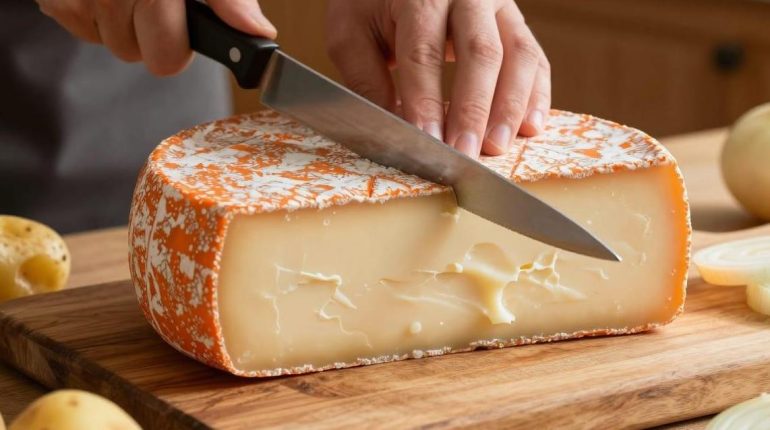
It is precisely with this emblematic cheese that the expertise of Savoyard cooks is revealed. The ancestral technique requires slicing the Reblochon lengthwise, scrupulously preserving its orange rind. This division creates two distinct halves with different destinies: one will be cut into small pieces to melt in the heart of the dish, the other will remain whole to gratinate on the surface.
This strategic distribution of the cheese is no accident. The integrated pieces will spread their creaminess between the potatoes and bacon bits, while the half-wheel positioned on top will form that characteristic golden crust. The Reblochon rind, often neglected by neophytes, must be oriented upwards during gratinating: it constitutes the visual signature of the authentic dish, the detail that immediately betrays a tartiflette made according to the rules of Savoyard art.
Mastered Cooking: Combining Bacon, Onions, and Potatoes
Once the ingredients are prepared according to the rules of the art, the crucial phase begins that will transform these distinct elements into a harmonious preparation. This stage requires a chronometric rigor that Savoyard cooks have respected for generations.
The first operation consists of browning the bacon bits and sliced onions in a hot pan for exactly 3 minutes. This short duration is enough to start the browning without drying out the smoked meat. Then comes the integration of the potatoes: over medium heat, they will cook for 20 minutes alongside the bacon and onions, gradually absorbing the smoky flavors and cooking juices.
The deglazing with white wine marks the decisive turning point of the recipe. This technical gesture, followed by 5 additional minutes of cooking, allows the aromas to concentrate and the potato starches to create a natural bond. In total, the pan cooking lasts for a precise 28 minutes, broken down into three distinct sequences.
The seasoning obeys a golden rule: only pepper and nutmeg come into play. No addition of salt should disturb the balance, as the bacon naturally provides all the necessary salinity. This economy of ingredients testifies to mountain culinary wisdom, where each component fulfills a precise function without superfluity. The preparation thus mastered now awaits its encounter with the Reblochon.
Strategic Assembly: Integration Of Reblochon
The potato-bacon-onion preparation cools slightly while the incorporation of the cheese begins, the moment when the Savoyard tartiflette reveals its true architecture. This stage requires a precise distribution of the Reblochon into two distinct destinations that guarantee the dish’s emblematic texture.
The small pieces cut previously are integrated directly into the still-warm mixture. Dispersed uniformly, they will melt in the heart of the preparation to create those characteristic creamy pockets. This first layer of cheese works discreetly, transforming the interior of the dish into an unctuous mass where each bite delivers its flow of melted Reblochon.
The oven, preheated to 200°C (Gas Mark 6-7), awaits the final arrangement in the dish. The preparation enriched with cheese pieces uniformly occupies the bottom. On this base comes the reserved half-rind, cut into two or four portions depending on the shape of the container. The orientation matters: the rind must imperatively face upwards.
This double function of the Reblochon distinguishes the authentic recipe from imitations. While the interior pieces guarantee the melt, the rind visible on the surface will create the golden gratin and constitute the visual signature of the tartiflette. Savoyards know it: seeing the browned cheese rind confirms respect for tradition. The dish now enters the oven for its final metamorphosis.
Final Cooking And Savoyard-Style Service
The dish disappears into the oven for 15 to 20 minutes, a period during which the decisive transformation takes place. The heat passes through the layered levels, melting the interior pieces while on the surface, the Reblochon begins its chromatic evolution. Observing the progress of the gratin is essential: the rind gradually changes from milky white to the characteristic golden color that signals success.
This visual monitoring allows for adjusting the timing according to the oven. Some reach the ideal browning in 15 minutes, others require the full 20 minutes. The Reblochon should present a uniformly golden surface, slightly blistered in places, without ever browning excessively. This precise moment determines the final texture: too early, the cheese lacks character; too late, it dries out.
Taking it out of the oven requires an immediate reaction. Tartiflette is enjoyed piping hot, when the Reblochon maintains its optimal fluidity and the potatoes keep their internal heat. Every minute of cooling alters the sought-after taste experience.
The accompaniment suffers no fantasy: a simple green salad, seasoned with a light vinaigrette. This vegetable association contrasts with the density of cheese-potatoes-bacon, brings the necessary freshness, and follows the Savoyard canon. Mountain dwellers understood long ago that this combination naturally balances the richness of the dish, transforming a digestive challenge into culinary harmony.