It’s a quiet Sunday morning, the kind where you really don’t want to step outside. There’s a yogurt left in the fridge, flour in the cupboard, and a craving for warm bread that requires no effort. This is exactly the situation for which this yogurt bread was invented.
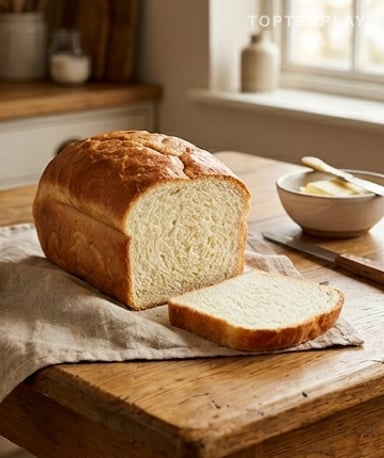
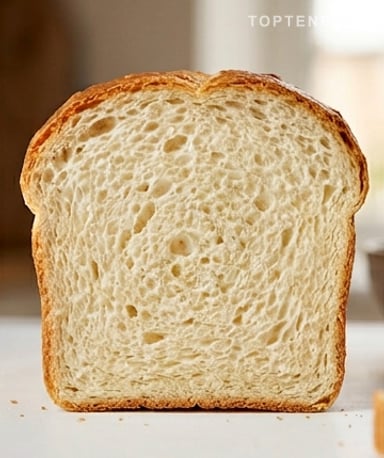
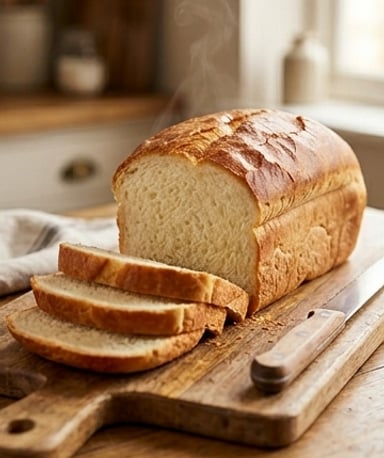
The crust is thin and golden like a barely-set light caramel, with a few natural cracks on top that hint at the white crumb beneath. When you cut the first slice, it resists for a fraction of a second, then gives way, soft. The aroma that escapes is a mix of warm bread and slight dairy, with that almost brioche-like undertone that the yogurt brings without being obvious. This is a modest bread. Unpretentious. And that’s exactly why it does the job.
Why you’ll love this recipe
Ingredient Notes

All the ingredients for yogurt bread: nothing exotic, everything you need for a successful homemade bread in under an hour.
- Plain yogurt (125 g) : Classic plain yogurt—not thick Greek yogurt, not vanilla-flavored. Its fluid texture blends well into the dough and adds moisture without weighing it down. Keep the empty pot: you’ll use it as your measure for the rest of the recipe.
- Baking powder : Not active dry yeast—that’s the classic mistake, and it would completely ruin the recipe. Baking powder reacts to oven heat, not time. That’s why there’s no resting time here.
- Flour : All-purpose or plain flour, whichever you have. No need for bread flour or special flour. Ordinary cupboard flour works perfectly for this recipe.
- Oil : Sunflower, canola, grapeseed—a neutral oil. Olive oil also works, but it leaves a flavor that might surprise in a bread. It’s up to you based on your preferences.
Yogurt first, everything else follows
Pour the yogurt into a large bowl. Add the oil, mix gently. The two come together in a few stirs into a pale, smooth cream—very satisfying to watch. Add the salt and sugar. Then gradually mix in the flour and baking powder, stirring to avoid lumps. Finally, pour in the half-pot of warm water or milk. The dough should be soft, slightly sticky to the touch. Not firm like classic bread dough. That’s intentional.

Resist the urge to add more flour
The dough is sticky. That’s normal. The softer it is, the tenderer the crumb—we’re aiming for that slight stretch when you touch it. If you add flour to make it less sticky, you’ll get a denser bread with a tight crumb that disappoints. Lightly wet your hands before placing the dough in the pan or on the baking sheet: that’s enough to smooth the surface without changing anything. A rustic, slightly flattened ball is perfect. No need for perfection.
Close the oven and forget it for 30 minutes
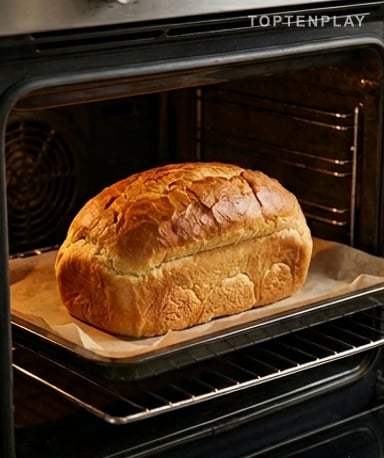
Preheat oven to 180°C, bread in, and don’t open the door. Opening too early drops the temperature and the bread may sink slightly in the center. After 30 minutes, take a peek: the crust should be golden with those characteristic small cracks on top. Insert a knife into the center—if it comes out clean, it’s done. You can also turn the bread over and tap the bottom: a hollow, short, clear sound is the signal. Let cool for 10 minutes before slicing. The crumb is still settling and will be much better when cut slightly warm than piping hot.
Tips & Tricks
- Moisten your hands before shaping the bread rather than flouring the work surface—this prevents sticking without altering the dough’s texture.
- Store the bread wrapped in a clean cloth, not a plastic bag—plastic softens the crust and makes it rubbery by the next day.
- If you want a darker, more pronounced crust, increase the oven to 190°C for the last five minutes of baking while watching closely—it makes a big difference to the final appearance.
Can I replace plain yogurt with Greek yogurt?
Greek yogurt works, but it’s thicker and will make the dough slightly denser. If you use it, thin it slightly with a spoonful or two of water before incorporating. The result is still good, just a little less airy.
How should I store this bread and how long does it keep?
Wrap it in a clean cloth at room temperature—it stays soft for up to 2 days. Avoid plastic bags which soften the crust quickly. To reheat, a few minutes in a 160°C oven restores its nice texture.
Why didn’t my bread rise well?
The most common cause is expired baking powder or incorrect flour measurement. Also check that the oven was fully preheated before baking—a temperature drop at the start hinders rising. Avoid overworking the dough, which would make it dense.
Can I add seeds or herbs?
Yes, and it’s a great idea. Sesame or sunflower seeds sprinkled on top before baking add crunch and color. Dried herbs (thyme, rosemary) or pitted olives chopped into pieces work very well in the dough.
Can I use whole wheat or spelt flour?
Yes, replacing up to half of the white flour with whole wheat or spelt flour. Beyond that, the crumb becomes significantly more compact and less soft. A 50/50 blend gives a good balance between lightness and flavor.
Can I prepare this bread the day before?
The dough does not handle waiting well—baking powder starts reacting as soon as it contacts moisture. It’s better to bake the bread the same day. However, it takes just 10 minutes to prepare, so there’s really no need to plan ahead.
Quick Yogurt Bread
French
Baking
A soft homemade bread with no kneading, ready in 45 minutes. Yogurt replaces the long fermentation and guarantees a tender crumb from the first attempt.
Ingredients
- 125g (1 pot) plain yogurt
- 375g (3 pots) all-purpose flour (T55 or T45)
- 60ml (½ pot) neutral oil (sunflower or canola)
- 60ml (½ pot) warm water or milk
- 11g (1 packet) baking powder
- 1 tsp sugar
- 1 pinch salt
Instructions
- 1Preheat the oven to 180°C.
- 2Pour the yogurt into a large bowl, add the oil, and mix until smooth and creamy.
- 3Stir in the salt and sugar, then gradually add the flour and baking powder while mixing with a spoon.
- 4Add the warm water or milk and stir until a soft, slightly sticky dough forms.
- 5Place the dough in a lightly oiled loaf pan or on a baking sheet lined with parchment paper. Smooth the surface with damp hands.
- 6Bake for 30 to 40 minutes until the crust is golden brown. Check by inserting a knife into the center—it should come out clean.
- 7Let cool on a wire rack for 10 minutes before slicing.
Notes
• The empty yogurt pot serves as a measure for the entire recipe—no need for a scale.
• Store wrapped in a clean cloth at room temperature for up to 2 days. Avoid plastic bags, which soften the crust.
• Variation: sprinkle sesame or sunflower seeds on top before baking for a crunchier, more colorful crust.
Nutrition Facts (per serving, estimated)
| 320 kcalCalories | 8gProtein | 48gCarbs | 10gFat |