📌 Public toilets: why the space under the doors is a matter of vital safety
Posted 6 February 2026 by: Admin
The Real Reason Behind a Distressing Detail
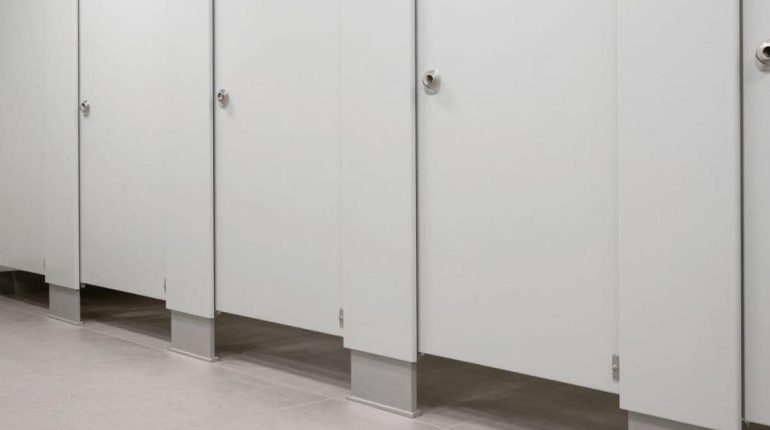
The gaping space under public toilet doors causes universal discomfort. This gap of at least fifteen centimeters seems to flout any notion of privacy, to the point that many see it as architectural negligence or an unworthy cost-cutting measure.
However, this interpretation is completely erroneous.
Architects and public space planners face a puzzle that is far more complex than it appears. Designing collective restrooms requires solving an equation with multiple unknowns: preserving a minimum of discretion while guaranteeing safety, hygiene, accessibility, and ease of maintenance. These are often contradictory imperatives that cannot coexist without compromise.
This famous space is not accidental. It responds to precise technical standards established after decades of experience in managing high-traffic public spaces. Building professionals know that a poorly designed restroom quickly generates considerable sanitary, security, and financial problems.
The reality goes far beyond the simple question of cost. This architectural detail, far from being a flaw, constitutes an optimized solution to constraints that the general public usually does not suspect. Behind this apparently absurd void lies a rigorous logic forged by experience.
Safety First: When Every Second Counts
This design primarily responds to a vital imperative: emergency intervention. In public places, heart attacks, falls, epileptic seizures, or loss of consciousness occur without warning. The space under the door allows staff to instantly spot a person collapsed on the floor.
Without forcing the lock or waiting for tools to arrive, rescuers visually assess the gravity of the situation. They can establish verbal contact, check the victim’s consciousness, or slide first-aid equipment under the door. These precious seconds gained sometimes make the difference between life and death.
This partial visibility also plays a crucial preventive role. It allows for the rapid detection of dangerous behaviors: a person remaining abnormally still, signs of distress, or situations requiring immediate assistance. Security personnel can intervene before a medical problem worsens.
Establishments open to the public are legally required to ensure the safety of users. Architecture must facilitate this mission without creating blind spots where a person in danger would remain invisible. The gap under the doors responds precisely to this obligation, transforming each stall into a monitorable space without totally compromising privacy.
This safety logic explains why this standard persists despite the discomfort it generates. But it is only one facet of a much broader architectural reflection.
Hygiene and Ventilation: The Invisible Essential
Beyond vital emergencies, this opening fulfills a critical sanitary function. Constant air circulation under the doors evacuates stagnant humidity and renews the confined atmosphere of the stalls. Without this flow, water vapors from flushes and sinks would create an environment conducive to mold and bacteria.
Odors do not accumulate. Stale air naturally escapes toward central ventilation systems, while fresh air enters from the bottom. This permanent mixing maintains acceptable air quality despite the intensive use of these spaces. Establishments thus avoid unbreathable atmospheres that would discourage users.
Cleaning also benefits from this configuration. Maintenance staff pass mops and water jets under the doors without systematically opening them. Soapy water flows freely from one stall to another toward central drains. This accessibility considerably speeds up daily disinfection operations.
The absence of a hermetic seal on the floor also prevents the formation of stagnant puddles where germs and fungi proliferate. Spilled liquids drain away quickly instead of stagnating for hours in closed spaces. This natural ventilation drastically reduces the risks of cross-contamination between successive users.
These invisible hygienic benefits alone justify this design. Yet, other equally determining constraints guided architects toward this universal standard.
A Compromise Between Multiple Constraints
These sanitary considerations converge with other equally determining imperatives. Universal accessibility notably imposes strict standards: the space under the doors allows wheelchairs to maneuver better and guidance canes to detect obstacles. People with reduced mobility thus benefit from better visibility on the ground to position themselves correctly.
Deterrence also plays a major role. The absence of total privacy discourages illicit or inappropriate activities in these public spaces. Visible feet under the doors immediately signal an abnormally long or suspicious occupation. This partial transparency protects both the establishments and their users without resorting to intrusive surveillance.
Operating costs weigh heavily in these architectural decisions. Full doors would require more expensive materials, reinforced hinges, and increased maintenance. The savings achieved on each stall multiply by hundreds in shopping malls, airports, or stations. Economies of scale amply justify this industrial standard.
This design ultimately reflects a pragmatic trade-off. Architects sacrifice a part of privacy to gain in safety, hygiene, and operational functionality. The balance found prioritizes the collective good over absolute individual comfort. A compromise that, despite the initial discomfort it causes, rationally responds to the complex constraints of modern public spaces.