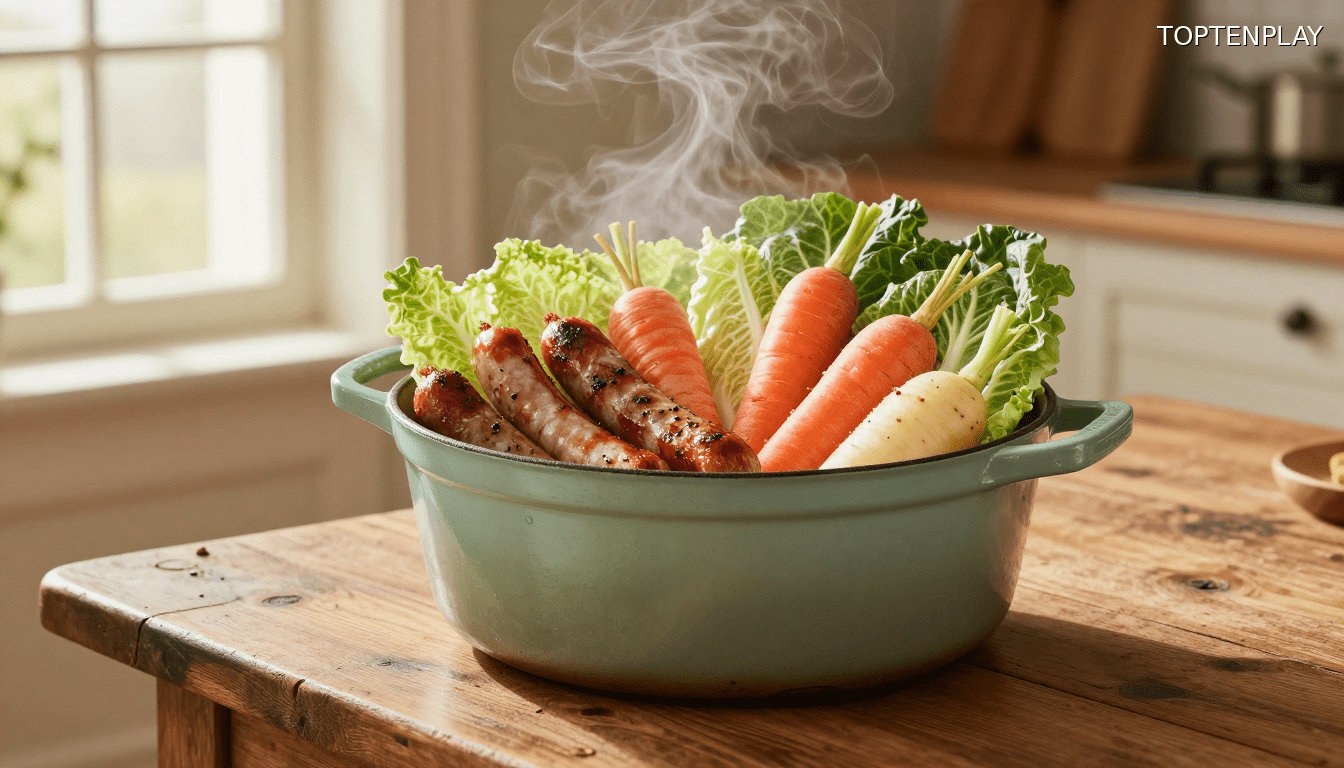
La Potée Au Chou: Emblem Of French Culinary Tradition
When temperatures drop and winter sets in, potée au chou stands out as the ultimate comfort. This rustic and generous dish has embodied the soul of French cuisine for centuries: simple, authentic, effective. No useless frills, just a pot capable of bringing together seasonal vegetables, salted meats, and smoked sausages into a complete meal that nourishes both body and soul.
The strength of this preparation lies in its founding principle: everything cooks together, flavors mingle and mutually enrich each other. The cabbage soaks up the smoked aromas, the potatoes absorb the fragrant broth, and the carrots and turnips bring their natural sweetness. This alchemy in a single pot transforms modest ingredients into a generous feast.
Beyond its taste qualities, the potée remains above all an invitation to sharing. It is rarely enjoyed alone. Around the family table, among friends gathered to brave the cold, it creates that moment of conviviality where conversations linger while steam still escapes from the plates. It is this collective dimension that explains its longevity: the potée has never ceased to bring generations together, transmitting with it the gestures and memories that make up the very essence of French culinary heritage.

The Perfect Alliance Of Local Products
This generosity of the potée rests first on a central ingredient: winter cabbage. A humble vegetable resistant to the cold, it reveals a melting texture under the effect of prolonged cooking that always surprises. Its leaves slowly soak up the broth, absorbing the smoky flavors of the meats, until they become almost creamy. This transformation of the cabbage, from crunchy firmness to silky sweetness, constitutes the beating heart of the recipe.
Around it gravitate the root vegetables that structure the dish: carrots bringing their natural sugar, turnips offering their slight bitterness, and potatoes ensuring consistency. Each retains its identity while participating in the overall harmony. But it is the salted pork belly and smoked sausages that give the potée its true character. The salt from the meat gradually diffuses into the broth, while the smoke permeates every bite with an irresistible depth of flavor.
This encounter between the delicacy of simmered vegetables and the aromatic power of charcuterie creates a perfect balance. No ingredient dominates; all contribute to this richness that ensures a simple plate of potée can satisfy the most demanding appetites while reminding us that the best dishes are often born from the intelligent association of simple and authentic products.

A Flexible Dish That Adapts To All Tastes
Beyond this classic alliance, the potée possesses a rare quality: its capacity for adaptation. It does not lock itself into any strict culinary dogma. Depending on the regions, the seasons, or simply what the pantry contains, it willingly accepts other vegetables. Leeks to reinforce sweetness, celeriac to add an aniseed note, or even some white beans to thicken the broth. Meats can also vary: smoked shoulder, shank, ribs—each piece brings its particular texture and aroma.
This flexibility is never a weakness. On the contrary, it testifies to the robustness of the recipe, capable of welcoming variations without losing its soul. What really matters is the respect for a fundamental principle: slow cooking. It is this that allows flavors to develop fully, to migrate from one ingredient to another, to create that rich and fragrant broth where each element has had the time to deliver its essence.
The potée is never rushed. It simmers gently, sometimes for several hours, letting time do its work. This patience always rewards: the meats become fork-tender, the vegetables melting, the broth concentrated and deep. It is precisely this refusal of haste that gives the potée its unique charm and explains why it remains timeless despite the evolution of culinary trends.