📌 Pistachio shells: how to transform them into enriching powder to improve your garden soil
Posted 5 January 2026 by: Admin
Pistachio Shells: A Gardener’s Little-Known Mineral Treasure
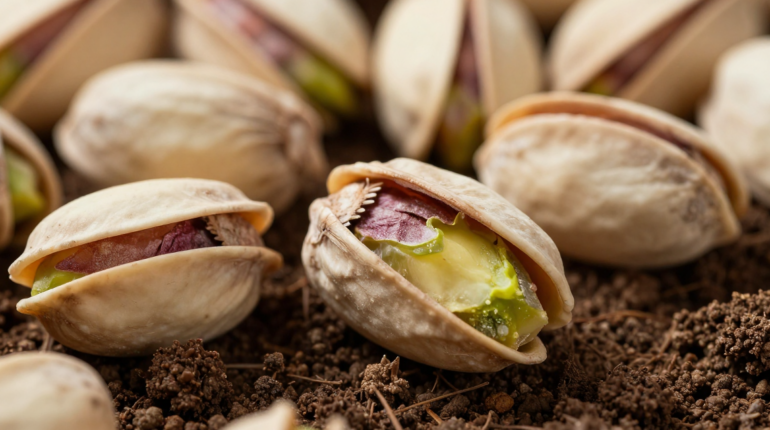
The pistachio shell is not inert waste. It is the fruit’s lignocellulosic armor, designed by millennia of evolution to be durable and concentrated in minerals. This biodegradable structure, composed mainly of lignin and cellulose, decomposes slowly in the soil, creating permanent aeration without causing the nitrogen depletion that characterizes fast-decomposing organic matter.
Mineral analysis reveals unsuspected richness. The shells sequester the calcium absorbed by the tree during growth, a fundamental element for root development and plant cell structure. Their potassium content stimulates flowering, strengthens disease resistance, and regulates water absorption. The phosphorus they contain fuels energy transfer and seed formation.
Their natural hardness transforms every crushed fragment into a creator of durable porous spaces. This abrasive texture also forms a defensive barrier against slugs and other crawling pests. As a “brown” carbonaceous material, the shells perfectly balance the “green” nitrogen inputs of compost, creating the conditions for optimal decomposition.
This reintegration into the natural cycle diverts a persistent material from landfill, where its anaerobic decomposition would generate methane. The gardener thus transforms a common domestic residue into a multifunctional amendment without spending a penny.
From Salty Waste To Healthy Amendment: The Mandatory Purification Protocol
This mineral wealth hides a deadly danger for your plants. Commercial pistachios are systematically roasted with salt, sometimes in massive quantities. Introducing these shells directly into the soil causes osmotic stress that dehydrates roots through a reverse pressure phenomenon: the water contained in plant cells migrates toward the salty external environment to restore balance, literally drying the plant from the inside.
The purification protocol is not optional. Start by rinsing the shells thoroughly under running hot water to remove surface salt. Then transfer them to a large container of hot water for a detoxifying soak of 30 to 60 minutes. This immersion hydrates the woody structure and dissolves salt crystals embedded in the crevices of the shell. For heavily salted pistachios, repeat the operation with clean water.
The final rinse must be vigorous. But the critical step remains complete drying: spread the shells in a single layer on trays or racks in a ventilated area for 24 to 48 hours. Residual moisture compromises grinding and promotes the development of molds toxic to the soil. An oven set below 93°C (200°F), with the door ajar, speeds up the process in 1 to 2 hours.
This methodical preparation transforms a potential poison into a healthy resource, ready to release its minerals into your garden ecosystem.
Circular Gardening: Closing The Consumption Loop
This preparation reveals a deeper transformation. Every pistachio shell diverted from the trash escapes the landfill, where it would join millions of tons of organic matter decomposing in anaerobic conditions. In the darkness of landfills, deprived of oxygen, these residues produce methane – a greenhouse gas 28 times more powerful than CO₂ over twenty years. This process transforms a biodegradable material into an active contributor to climate change.
Reintegration into the garden reverses this equation. The nutrients captured by the tree over years – calcium, potassium, phosphorus – return directly to the earth system that produced them. The woody structure, instead of rotting uselessly, creates permanent porous spaces in the soil, improves water infiltration, and protects roots against thermal variations. A once-persistent residue becomes a multifunctional tool: mineral amendment, slug barrier, draining mulch.
This is not simply recycling; it is a form of domestic alchemy. You transform zero-cost waste into a high-performance horticultural resource without transport, without industrial processing, and without packaging. The circular economy materializes in your compost, your flowerbeds, and your pots. This closed loop simultaneously reduces your household waste and your purchases of commercial amendments.
All that remains is to master the grinding technique to fully release this mineral and structural potential.
Grinding Techniques Adapted To Every Gardener
Mastering this circular loop relies on a decisive technical step: grinding. Dried shells, hard as petrified wood, only release their benefits once reduced to fragments or fine powder. This transformation determines their future effectiveness – coarse shards for drainage, an ultrafine powder to quickly nourish the soil.
The universal accessibility of this practice lies in the diversity of methods. For modest volumes, a simple mortar and pestle are enough: 10 minutes of manual effort produces a coarse powder perfect for compost. Cooks with a powerful immersion blender (minimum 600W) can grind in 30-second pulses, cooling the device between cycles. Regular gardeners invest in a dedicated electric coffee grinder, which pulverizes 50g of shells in 2 minutes flat.
For large quantities – several kilos accumulated over the winter – a garden shredder becomes essential. Set to a fine position, it instantly transforms the shells into uniform granules, ready for spreading. Some zero-waste enthusiasts even use their rolling pin: shells placed in a heavy-duty freezer bag, crushed methodically until the desired grain size is obtained.
The absolute rule remains prior complete drying. Any residual moisture clogs blades, overheats motors, and promotes mold during storage. A properly prepared shell snaps cleanly under pressure, releasing an ochre powder, lightly scented, ready to revolutionize your cultivation practices.