📌 Pineapple and coconut tiramisu: the no-bake tropical version that replaces coffee
Posted 25 March 2026 by: Admin
The Unexpected Alliance Of Tiramisu And Tropical Flavors
Italian tiramisu has crossed Mediterranean borders to treat itself to a tropical makeover. In this bold version, bitter coffee gives way to pineapple juice, radically transforming the identity of the peninsula’s iconic dessert.
This substitution is not insignificant. Where espresso brought depth and bitterness, pineapple deploys a tangy freshness that considerably lightens the whole. Grated coconut completes this exotic metamorphosis by adding a grainy texture and a sweetness characteristic of tropical desserts.
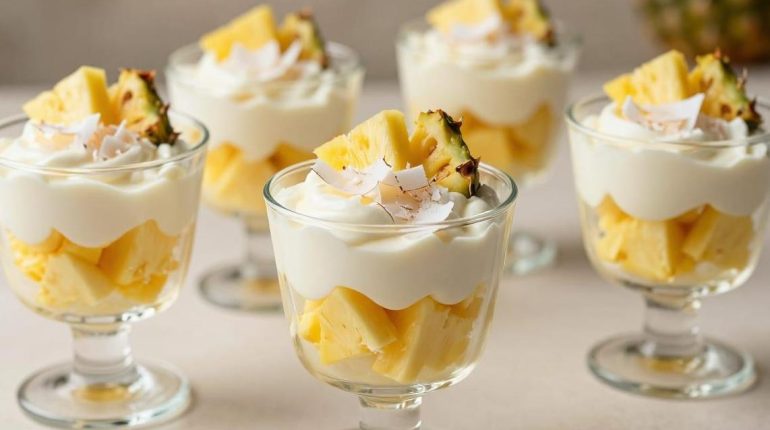
The individual verrine format meets a double requirement: visual elegance and portion control. Each layer becomes visible through the transparent glass, revealing the dessert’s architecture. Ladyfingers soaked in pineapple juice, airy mascarpone cream, juicy fruit pieces, and coconut are layered in a perfectly calibrated balance.
This reinterpretation follows the line of tropical desserts, naturally lighter than their European counterparts. It is particularly suitable for palates seeking finesse rather than intensity, without giving up the signature creamy texture of tiramisu. A successful compromise between transalpine tradition and tropical escape.
Recipe Breakdown: Ingredients And Strategic Roles
This tropical version relies on a concise but perfectly orchestrated list of ingredients. The 10 ladyfingers constitute the backbone of the dessert: their porous texture absorbs the pineapple juice without falling apart, guaranteeing the structural integrity of the verrines.
Mascarpone, at 175g, remains the central element inherited from the original Italian recipe. This creamy fresh cheese must be perfectly fresh to deliver its characteristic smoothness. Its natural richness requires a tangy counterpoint, provided by the 12 pineapple slices and their 150ml of juice. This duality creates the fundamental taste balance of the dessert.
Grated coconut, used at 4 tablespoons, does more than just accentuate the exotic dimension. It introduces a slightly grainy texture that contrasts with the softness of the cream and the flexibility of the soaked biscuits.
Eggs play a decisive technical role. The yolks, beaten with sugar, enrich the preparation. The whipped egg whites transform the texture: folded in gently, they create that airy lightness that distinguishes a successful tiramisu from a simple mascarpone cream. This aeration avoids heaviness while preserving the intensity of the flavors. Each component thus occupies a precise function in the final architecture of the dessert.
The 9 Steps For Perfect Assembly
The success of this dessert relies on a precise methodology, orchestrated in nine distinct steps. Preparation begins by separating the eggs into two hermetically clean containers: any trace of yolk in the whites would compromise their whipping.
In a bowl, vigorously whisk the yolks with the sugar and vanilla sugar until completely whitened. This frothy emulsion guarantees the homogeneity of the cream. Then incorporate the mascarpone, mixing gently to obtain a smooth texture without lumps.
In parallel, whip the whites with a pinch of salt until firm peaks form. Incorporating them into the cream is the critical moment: use a spatula with upward movements to lift the preparation, never mix brutally. This technique preserves the air bubbles essential for the final lightness.
Cut the pineapple slices into small cubes. Mix the pineapple juice with the optional rum to create the soaking liquid. Quickly dip each biscuit – one second is enough, excess would turn the dessert into mush.
Assembly in verrines is done in layers: soaked biscuits, cream layer, pineapple pieces, sprinkling of coconut. Repeat the operation until the container is full. Always finish with a layer of cream, decorated with coconut and pineapple.
Resting in the refrigerator for at least 4 hours is not a simple recommendation: this time allows the fusion of textures and the intensification of aromas. A full night optimizes the result, as the flavors then reach their peak. This patience distinguishes amateurs from true connoisseurs.
Customization And Secrets To Success
This tropical base lends itself to four strategic variations. The alcohol-free version substitutes rum with extra pineapple juice, preserving the dessert’s accessibility. The ultra-exotic adaptation incorporates diced mango or passion fruit between the layers, multiplying the fruity nuances.
For palates concerned with nutritional balance, replacing half of the mascarpone with Greek yogurt lightens the recipe without sacrificing creaminess. The crunchy variant integrates toasted coconut flakes or crumbled biscuits into the layers, creating a striking textural contrast.
Professional tips transform the dessert. Grating lime zest directly into the cream brings a citrusy freshness that enhances the pineapple. Toasting the coconut dry for a few minutes intensifies its aromatic character. Choosing perfectly transparent verrines reveals the architectural beauty of the superimposed layers.
Storage has its limits: 24 to 48 hours maximum in the refrigerator, never in the freezer which would destroy the creamy structure. Always serve well chilled to preserve the balance of textures. Each portion contains about 320 calories, a reasonable balance for a dessert of this sophistication.
This recipe illustrates a fundamental truth of modern pastry: technical simplicity is not opposed to excellence. Without baking, with accessible ingredients, it demonstrates that rigorous execution and a few targeted tips are enough to produce a result worthy of gastronomic tables. The adaptability to individual preferences completes its status as a universal dessert, as visually seductive as it is tastefully accomplished.