📌 Perfectly cooked eggs
Posted 30 March 2026 by: Admin
It’s Sunday morning. No alarm clock, no meetings, just the sound of water starting to simmer in the pot. Boiled eggs — soft, runny, or hard — is the recipe you thought you’d mastered forever, yet there’s always that little fail that keeps coming back.
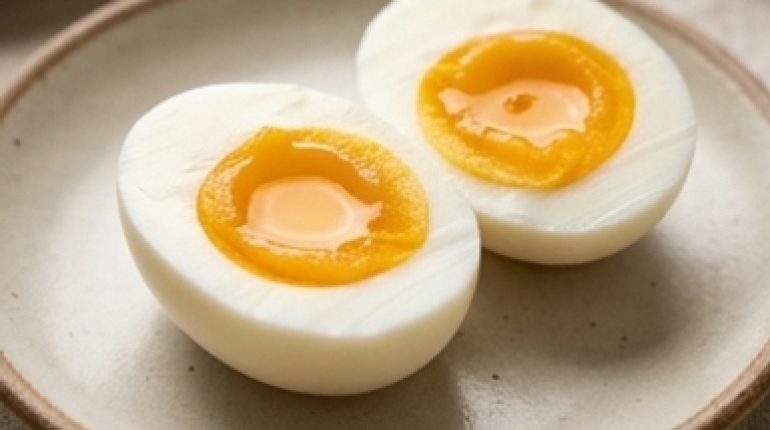
Look at this clean cut through the egg. The white is firm but not rubbery, slightly glossy, with a texture that yields without resistance under the fork. The yolk varies according to what you want: runny like warm honey for soft-boiled, still creamy and orange for a medium-set egg, or entirely matte and a sandy pale yellow for hard-boiled. It smells like almost nothing — and that’s precisely where people underestimate the egg.
Why you’ll love this recipe
Ingredient Notes
All you need: fresh eggs, a pot, and a bowl of ice water to stop the cooking.
- The eggs : Get them fresh, but not too fresh. A paradox? A little. Very fresh eggs stick to the shell during cooking, and you end up with a moon-like surface when trying to peel them. Eggs that are 5 to 7 days old peel much better. Size matters too: these timings assume a standard M or L size. An XL takes 30 to 45 seconds longer.
- The water : Not cold at the start — that’s the classic mistake. We start with already boiling water to have precise control over the cooking time. With cold water, the time it takes to reach a boil varies depending on the pot, the stove, and the altitude: as a result, you never really know how long the egg has been in the heat.
- The ice water bowl : Not optional. The egg continues to cook off the heat because of the heat stored in the shell. Without a cold bath, a perfect 6-minute soft-boiled egg becomes a disappointing medium-hard egg 3 minutes later. Use ice cubes if you have them, very cold water otherwise.
Why starting with cold water is the enemy
Most people put their eggs in cold water, bring everything to a boil, and start counting from there. The problem? The time between cold water and a true boil depends on dozens of variables — pot size, water quantity, stove power. Two people making the same recipe: two different results. The solution is simple. Boil the water first, in your kettle or directly in the pot, then lower the eggs in with a tablespoon so they don’t break against the bottom. From that point on, your timer has real value.
The part everyone rushes: the right timing
Six minutes for a runny soft-boiled egg — the yolk still liquid, warm, spreading over toast like melted butter. Eight minutes for an intermediate stage where the yolk is set on the surface but still creamy in the center, a deep orange. Ten minutes for a classic hard-boiled, pale yellow and sandy. Eleven minutes is the maximum. Beyond that, a green-grey ring appearing around the yolk — sulfur, visually ugly and slightly bitter in taste. Don’t exceed this limit and everything will be fine.
The cold bath: two minutes that make all the difference
As soon as the eggs have reached the right cooking time, transfer them directly into the bowl of ice water. You will sometimes hear a slight crackling of the shell from the thermal shock. This isn’t a chef’s gadget: without this bath, the stored heat continues to cook the inside for an extra 2 to 3 minutes. Let them soak for at least 2 minutes — 5 if you want to peel them immediately after.
How to peel without massacring
Tap the egg gently on the countertop — not a hammer blow, just enough to crack the shell all over. Then peel it under a trickle of cold water: the flow seeps between the membrane and the white, and the shell comes off in large clean pieces. If you prepare your eggs in advance, you can keep them unpeeled in cold water in the fridge for two days without any problem.
Tips & Tricks
- Take the eggs out of the fridge 10 minutes before cooking — plunging a 4°C egg into 100°C water creates a thermal shock that can crack the shell and let the white leak into the water
- For soft-boiled eggs served warm, wait until the last minute to peel them — once the shell is removed they cool quickly and hold their shape less well
- A pinch of baking soda in the cooking water makes peeling easier: the shell detaches more easily, even on very fresh eggs
How long can cooked eggs be stored?
Unpeeled hard-boiled eggs keep for up to 7 days in the refrigerator, ideally in a bowl of cold water that is changed every two days. Once peeled, they last a maximum of 2 days and should be kept in an airtight container — they absorb fridge odors very quickly.
Why does my hard-boiled egg yolk have a grey-green ring?
It’s a chemical reaction between the sulfur in the white and the iron in the yolk, which happens when the egg cooks too long or stays too hot after cooking. It’s not dangerous, but it’s visually unappealing and gives a slight sulfurous taste. To avoid it: do not exceed 11 minutes of cooking and plunge immediately into ice water.
My eggs are impossible to peel cleanly, what should I do?
Two main causes: the eggs are too fresh (less than 5 days), or you didn’t do the cold bath. To make peeling easier, use eggs that are 5 to 7 days old, let them cool well in ice water, then peel them under a trickle of cold water starting from the wider side. Adding a pinch of baking soda to the cooking water also helps.
Can you recook a soft-boiled egg that isn’t cooked enough?
Technically yes, but the result is rarely satisfying — the texture of the white becomes rubbery. It’s better to take note of the exact timing for next time. If you really must recook it, plunge it back into boiling water for 1 to 2 minutes maximum.
Should I take eggs out of the fridge before cooking?
Yes, 10 minutes is enough. An egg taken directly from the refrigerator at 4°C risk cracking when it hits boiling water due to thermal shock. It’s not an absolute must, but it reduces the risk of cracking and makes cooking slightly more even.
How to adjust cooking for larger or smaller eggs?
For S-sized eggs, subtract 30 seconds from the indicated timings. For XL eggs, add 30 to 45 seconds. The rule remains the same: boiling water first, timer started as soon as eggs are submerged, immediate cold bath at the end.
Perfectly cooked eggs
International
Appetizer
The simple and precise method to get soft-boiled, medium, or hard-boiled eggs exactly how you want them, without guesswork.
Ingredients
- 4 eggs (M or L size, ideally 5-7 days old)
- 1 litre water
- 1 large bowl very cold water + ice cubes
- 1 pinch baking soda (optional, makes peeling easier)
- to taste fleur de sel for serving
Instructions
- 1Bring a large pot of water to a full boil over high heat. Optionally add a pinch of baking soda.
- 2Take eggs out of the refrigerator 10 minutes beforehand. Gently lower them into the boiling water using a spoon so as not to crack the shell.
- 3Start the timer immediately: 6 minutes for a runny soft-boiled egg, 8 minutes for a still creamy yolk, 10-11 minutes for a hard-boiled egg.
- 4Transfer the eggs immediately into the bowl of ice water. Let rest for 3 to 5 minutes.
- 5Gently tap the shell on the countertop, then peel under a trickle of cold water starting from the base. Serve with fleur de sel.
Notes
• Storage: unpeeled hard-boiled eggs keep for 7 days in the refrigerator in a bowl of cold water. Once peeled, 2 days maximum in an airtight container.
• For eggs served warm in salads or on toast soldiers, prepare the rest of the dish before cooking the eggs — they cool quickly once peeled.
• The grey-green ring around the yolk is a sign of overcooking: stay under 11 minutes and the cold bath is non-negotiable.
Nutrition Facts (per serving, estimated)
| 155 kcalCalories | 12gProtein | 1gCarbs | 11gFat |