📌 Perfect Grilled Cheese
Posted 30 March 2026 by: Admin
Why do we complicate our lives by cooking elaborate dishes when what truly impresses people is often a simple thing done well? The perfect grilled cheese is proof of that. Two slices of bread, cheese, butter — and a technique that changes absolutely everything.
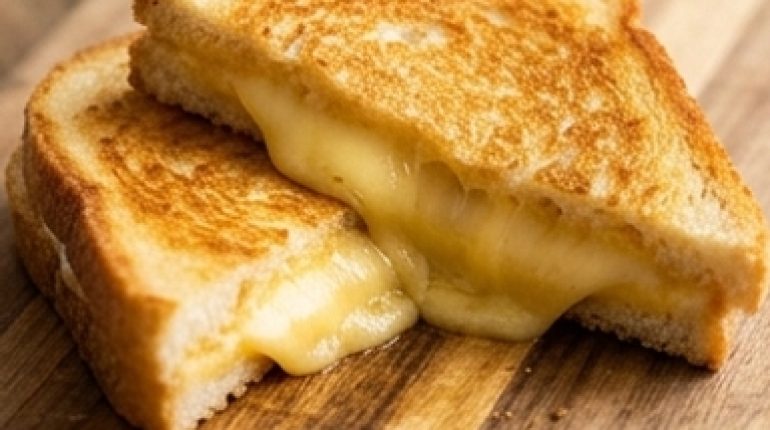
The crust cracks under your teeth with that dry, satisfying, frank, and immediate sound. Inside, the cheese has that slightly golden ivory tint at the edges, stretching between the two slices like warm velvet. The smell of caramelized brown butter — just on the edge of burnt — still floats in the kitchen. It’s a sandwich. And yet, you want to take a photo before biting in.
Why you’ll love this recipe
Ingredient Notes
Two slices of sourdough, a cheddar-gruyère mix, and good butter: everything you need for a legendary sandwich.
- The bread — sourdough as a priority : Sourdough is my default choice. Robust enough to hold up without getting soft, and its slight acidity against the melted cheese creates a real balance. Avoid standard sandwich bread: too thin, it browns in 40 seconds before the cheese even starts to melt. Aim for a thickness of about 1.5 cm — the format that gives the cheese time to catch up with the bread.
- The cheese — the cheddar + gruyère duo : On its own, cheddar is too compact to stretch properly. On its own, gruyère can become a bit bland when hot. Together, you get the sharp taste of the first and the silky texture of the second. Grate them yourself — pre-shredded supermarket cheese contains an anti-caking agent that prevents even melting. This step makes a real difference, not an imaginary one.
- The butter — soft, not melted : The distinction is vital here. Melted, the butter goes directly into the pan and burns too quickly, leaving irregular dark spots. Soft, you spread it directly on the bread — it creates a uniform layer that browns homogeneously, like light caramel over the entire surface. Unsalted butter is preferred to keep control over the salt.
- Sea salt flakes — optional in theory only : Three small pinches on top of the buttered bread before cooking. The salt enhances the cheese in a way that cannot be reproduced otherwise. It’s the kind of detail that makes guests say they don’t know what’s different, but it’s better. Do not replace with fine salt — sea salt crystals behave differently during cooking.
Why I never rush the buttering anymore
The butter must be at room temperature — out of the fridge for at least 30 minutes. If it’s still cold, it tears the bread instead of spreading, leaving uncovered areas that will remain pale and soft while the rest browns. Edge to edge, no exceptions. Press the spatula lightly on the crumb so the butter grips, not just slides. Then, the pinch of sea salt on each side. It seems trivial. It isn’t.
The low heat rule that everyone ignores
The temptation to turn up the heat to go faster is universal. Resist. On low-medium heat, the bread takes between 3 and 4 minutes per side to reach that light caramel shade. During this time, the gentle heat travels through the entire sandwich and begins to soften the cheese from the outside toward the center. The right cooking sound is like a constant whisper — a steady, muted sizzle. If you hear an aggressive, spitting fry, you’re too high. Lower it immediately.
The lid trick I wish I’d known sooner
Place a lid on the pan during the first two minutes of cooking the first side. The trapped steam rises toward the cheese and melts it gently from the inside, without waiting for the heat to pass through the entire thickness of the bread. When you lift the lid, the cheese has already started to shine and soften at the edges. Flip, remove the lid, and let the second side brown uncovered — so it stays crunchy, not soggy. This detail changes everything.
The 90-second rest that you don’t skip
We’ve all made the mistake of cutting immediately. Melted cheese at full temperature runs onto the board rather than staying in the sandwich. Place it on a wire rack or a wooden board — not a cold plate that condenses steam under the crust and softens it — for 90 seconds. The cheese stabilizes, stays warm, and holds its position when you slice diagonally. And frankly, this short wait is part of the ritual.
Tips & Tricks
- Never wrap in aluminum foil to keep warm — trapped moisture softens the crust in exactly 3 minutes. If you must wait, place it on a rack in an oven at 80°C with the door slightly ajar.
- For a more personal cheese pairing, try 70% mature cheddar + 30% aged Mimolette. Mimolette brings a slightly sweet and nutty note that completely changes the flavor profile without betraying the classic.
- If you add fillings (tomato slice, crispy turkey bacon), dry them thoroughly before incorporating. Moisture is the direct enemy of the crust — it softens it from the inside during cooking.
- Prefer a cast iron or heavy stainless steel pan. A thin non-stick pan distributes heat too irregularly for this type of cooking where homogeneous browning is exactly what we’re looking for.
Why does my bread burn before the cheese is melted?
It is almost always a problem of heat being too high. On low-medium heat, the bread takes 3 to 4 minutes per side — this time allows heat to travel through to the cheese. The lid trick for the first 2 minutes speeds up the cheese melting without needing to turn up the heat.
Can I replace butter with something else?
Mayonnaise is the most effective substitution: it spreads easily even when cold and gives a very uniform crust with a slightly richer taste. Olive oil also works, but it doesn’t brown as evenly. Clarified butter (ghee) is an excellent option for those who want to avoid milk proteins.
What cheeses can I use if I don’t have gruyère?
Aged Comté is the best alternative to gruyère — same nutty profile, same melting properties. Fontina is also excellent if you want something milder and creamier. Avoid mozzarella alone: it melts well but brings very little flavor and makes the sandwich watery.
How to store a grilled cheese and reheat it without it getting soft?
Grilled cheese really doesn’t store well — it’s a dish to be eaten within 5 minutes. If you absolutely must reheat it, put it in a dry pan over medium heat for 3 minutes, without a lid. The microwave is to be avoided at all costs: it soggy the crust irreversibly.
Can I add fillings without ruining everything?
Yes, but the golden rule is to dry them thoroughly before integration. A non-dried tomato slice will soften the crust from the inside. Turkey bacon must be crispy before going into the sandwich. Cold elements like avocado or herbs are added after cooking, never during.
Should I cover the pan during the entire cooking process?
No, only during the first 2 minutes of the first side. The lid traps the steam that melts the cheese from the inside. After flipping, remove the lid so the second side stays crunchy and doesn’t soften under the accumulated moisture.
Perfect Grilled Cheese
American
Main course
The classic grilled cheese sandwich, with the technique that guarantees a golden caramel crust and cheese melted to the center — every single time.
Ingredients
- 2 slices (120g) sourdough bread, about 1.5 cm thick
- 40g mature cheddar, grated
- 30g gruyère, grated
- 20g (1.5 tbsp) unsalted butter, at room temperature
- 1 pinch sea salt flakes
Instructions
- 1Take the butter out of the refrigerator 30 minutes in advance so it is soft.
- 2Mix the grated cheddar and gruyère in a bowl.
- 3Spread the soft butter on one side of each bread slice, edge to edge, leaving no uncovered areas. Sprinkle a pinch of sea salt flakes on each buttered side.
- 4Heat a cast iron or stainless steel pan over low-medium heat. Place one slice of bread, buttered side down.
- 5Evenly distribute the grated cheese mixture over the bread. Place the second slice, buttered side up.
- 6Cover with a lid and cook for 2 minutes. Remove the lid and continue cooking for 1 to 2 minutes until the bottom side is golden like light caramel.
- 7Delicately flip the sandwich. Cook uncovered for 3 to 4 minutes until the second side is uniformly golden and the cheese is completely melted.
- 8Transfer to a wire rack or wooden board. Let rest for 90 seconds, then cut diagonally and serve immediately.
Notes
• Store-bought pre-shredded cheese contains an anti-caking agent that prevents even melting — grating it yourself makes a real difference to the final texture.
• For a more generous version, add a slice of tomato (seeded and dried with paper towels) or crispy turkey bacon during assembly in step 5.
• This sandwich is best eaten within 5 minutes of cooking. To reheat if necessary, use a dry pan over medium heat for 3 minutes — never use the microwave.
Nutrition Facts (per serving, estimated)
| 670 kcalCalories | 26gProtein | 51gCarbs | 38gFat |