📌 Perfect Classic Cheesecake
Posted 2 April 2026 by: Admin
There is that precise moment when the cheesecake comes out of the oven — the center still jiggles slightly, like a panna cotta that hasn’t quite set. You don’t touch a thing. You observe. And you immediately understand that this dessert does not tolerate people in a hurry. It’s the Saturday night recipe for Sunday afternoon.
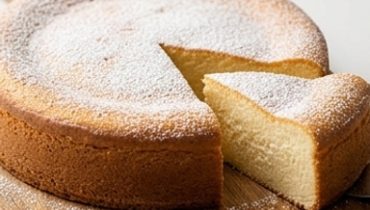
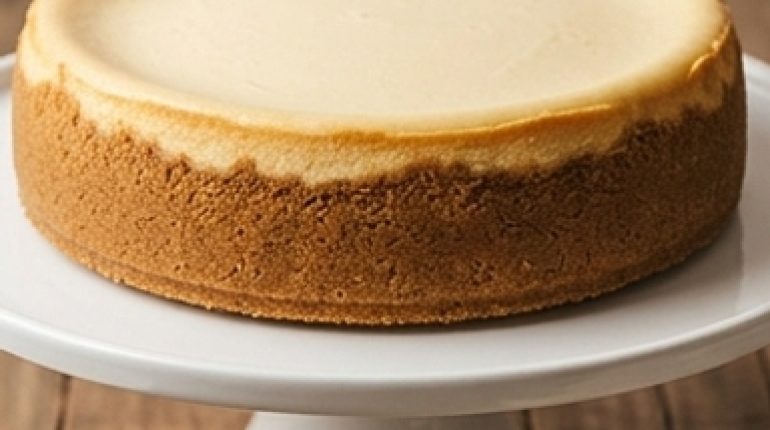
The surface is an ivory white, slightly golden at the edges, with that light concavity in the center that will disappear when sliced. Placing the knife blade on it, you feel a slight creamy resistance before the slice slides through cleanly, revealing a generous thickness and its light caramel-colored biscuit base. The smell is subtle: cream cheese, vanilla, a tangy hint that tickles the nose without taking over the room. Right there, discreet, promising.
Why you’ll love this recipe
Ingredient Notes
Four blocks of cream cheese, heavy sour cream, eggs, and crushed biscuits: the only ingredients you need for an exceptional result.
- Cream cheese (the bricks, not the tub) : Four 250g bricks — Philadelphia does the job very well. Bricks contain less water than spreadable cream cheese in a tub, which results in a dense and stable final texture. The low-fat version makes the cheesecake watery and characterless. Avoid it at all costs.
- Full-fat sour cream (crème fraîche) : 250g. This is what brings the slight acidity and that richness in the mouth that distinguishes a good cheesecake from a forgettable one. If you only have heavy liquid cream, it can work in a pinch, but the result will be a bit softer and less bold.
- Granulated sugar : Only 200g for 12 servings is intentionally low. The idea is for the cheesecake to remain slightly tangy, with that tangy/sweet interplay that defines the classic style. A cheesecake that is too sweet loses all its personality.
- Fresh lemon juice : Just 2 teaspoons, but they make a real difference. The lemon isn’t overtly detectable — it brightens the whole thing, like a pinch of salt in a chocolate cake. Fresh only, not the bottled juice that tastes like plastic.
- Eggs : Three eggs at room temperature, incorporated one by one at the very end. This is the most critical detail of the recipe: integrate them at minimum speed and stop as soon as they disappear into the batter. Whipping air into the batter at this stage leads directly to a surface that cracks during baking.
Take everything out of the refrigerator at least 1 hour before
The temperature of the ingredients isn’t a detail — it’s the basic condition for a smooth batter. Cold cheese beaten with sugar results in a lumpy texture, even if you mix for a long time. Cold eggs don’t disperse well and create pockets in the mixture. One hour at room temperature is enough to bring everything to the same level. In winter, if your kitchen is cool, allow 1h30 instead. The cheese should squash easily under your finger before you start.
Pack the crust like it’s concrete
Pulse the graham crackers into a fine powder — you want something that looks like wet sand once the melted butter is added, not coarse crumbs. Pour into the springform pan and pack it down with the bottom of a glass or a measuring cup. Press hard, going slightly up the sides. The sound changes when the crust is well-compacted: you no longer hear the grains moving, and the surface becomes firm under pressure. Bake for 8 minutes at 175°C — just until the edges slightly brown and the smell of warm biscuit fills the kitchen. Let it cool before pouring in the filling.
Mix gently — and stop at the right time
Beat the cream cheese alone first, at medium speed, until it is completely smooth. Add the sugar, sour cream, vanilla, and lemon juice. At this stage, the mixture should be thick, smooth, and lump-free. Then the eggs — one by one, at minimum speed. Incorporate just enough, not a second longer. The final batter should be shiny, slightly pourable, and a uniform creamy white. If you dip a spatula in and pull it out, the mass should fall in a thick ribbon. That’s the sign.
The water bath: 10 minutes of prep for 1 hour of serenity
Wrap the outside of the pan in two layers of aluminum foil — bottom and sides, very tight. Place it in a large roasting pan and pour boiling water halfway up the side of the pan. The cheesecake goes into an oven preheated to 160°C and doesn’t come out for 60 to 65 minutes. Do not open it, do not check it every ten minutes. The cheesecake is ready when the edges are firm and the center, an area of about 8 cm, still jiggles slightly when you gently shake the pan. If everything is set, it’s overcooked. Turn off the oven, prop the door open about an inch with a wooden spoon, and let it cool inside for a full hour.
One night in the refrigerator — non-negotiable
After cooling to room temperature, the cheesecake needs at least 6 hours in the refrigerator, ideally an entire night. The texture firms up, the flavors round out, and the acidity integrates better with the fat of the cheese. Take it out 20 minutes before serving so it loses that refrigerator chill which dulls the aromas. At that point, run the blade of a thin knife between the crust and the edge of the pan before releasing the ring. The surface should be perfectly smooth and a slightly matte ivory.
Tips & Tricks
- Really wrap the springform pan well in foil before the water bath — at least two layers, coming high up the sides. A leaking pan, even a little, means a soggy crust and a ruined cake. Take the 3 minutes needed to do this right.
- For clean slices without tearing the filling, dip the knife blade in a glass of hot water, wipe it, and slice. Repeat for every slice. A cold knife tears; a warm knife glides. The difference is striking.
- If you see a small crack appear despite everything, don’t panic. A spoonful of lightly whipped sour cream placed on top when serving hides it perfectly — and no one will ever know.
How do I know if the cheesecake is cooked perfectly?
Gently shake the pan: the edges should be firm and still, but a center area of about 8 cm should still jiggle slightly like jelly. If everything is set, it is overcooked. If more than half wobbles, it needs another 10 minutes.
Can I make this cheesecake without a water bath?
Technically yes, but the risk of cracks skyrockets. Without the moisture of the water bath, the surface dries and shrinks during baking. If you don’t have a large roasting pan, at least place a small container of hot water on the bottom rack — it’s an imperfect alternative but it helps.
My cheesecake cracked anyway — what happened?
Three main culprits: the batter was overmixed after adding the eggs (incorporating air), the oven was too hot, or the cheesecake cooled too quickly. Next time, check your oven temperature with a thermometer and let it cool with the door ajar. For the one you have, a spoonful of lightly whipped sour cream covers everything.
Can you freeze the cheesecake?
Yes, it handles freezing very well. Wrap slices individually in plastic wrap, then in aluminum foil. They keep for 2 months in the freezer. Defrost overnight in the refrigerator — never at room temperature, as that softens the crust.
Can I replace the heavy sour cream (crème épaisse)?
Heavy sour cream can be replaced by full-fat Greek yogurt or full-fat quark (same quantity). The texture will be slightly less rich, but the result is still very good. Avoid liquid cream alone: it lacks the slight acidity that balances the cream cheese.
How long does it keep in the refrigerator?
5 days in the refrigerator, well covered with plastic wrap or in an airtight container. The texture remains stable and the flavors continue to develop until the third day. Beyond that, the crust starts to soften from moisture contact.
Perfect Classic Cheesecake
American
Dessert
A wonderfully creamy and dense cheesecake on a buttery biscuit crust, baked in a water bath for a smooth surface without cracks. The foolproof base recipe.
Ingredients
- 200g (about 14 biscuits) Graham crackers or Digestive biscuits
- 80g unsalted butter, melted
- 25g (2 tbsp) granulated sugar (for the crust)
- 1 kg (4 bricks of 250g) full-fat cream cheese (Philadelphia brick type)
- 200g (1 cup) granulated sugar
- 250g (1 cup) heavy full-fat sour cream (crème épaisse)
- 1 tsp pure vanilla extract
- 2 tsp fresh lemon juice
- 3 whole eggs, at room temperature
Instructions
- 1Take the cream cheese, sour cream, and eggs out of the refrigerator at least 1 hour before starting.
- 2Preheat the oven to 175°C. Pulse the biscuits into a fine powder, mix them with the melted butter and the 25g of sugar until you get a wet sand texture.
- 3Pour the buttery crumbs into a 23 cm springform pan, pack firmly with the bottom of a glass, going slightly up the sides.
- 4Bake the crust for 8 minutes until lightly golden. Remove and let cool. Reduce the oven temperature to 160°C.
- 5Using a mixer at medium speed, work the cream cheese alone until perfectly smooth, about 2 minutes.
- 6Add the sugar, sour cream, vanilla, and lemon juice. Mix at medium speed until homogeneous.
- 7Incorporate the eggs one by one at minimum speed, mixing just enough after each addition. Stop as soon as the last egg has disappeared into the mixture.
- 8Wrap the outside of the pan in two layers of aluminum foil (bottom and sides). Pour the filling over the cooled crust.
- 9Place the pan in a large roasting dish, pour boiling water halfway up the side of the pan. Bake at 160°C for 60 to 65 minutes.
- 10The cheesecake is done when the edges are firm and the center (about 8 cm) still jiggles slightly. Turn off the oven, prop the door open an inch, and let cool for 1 hour inside.
- 11Remove from the oven, let reach room temperature, then refrigerate for at least 6 hours (ideally a full night) before unmolding and serving.
Notes
• Make ahead: this cheesecake is best prepared the day before. The texture and flavors are better after a night in the fridge. It keeps for up to 5 days chilled and well covered.
• Freezing: cut into slices, wrap each individually in plastic wrap + foil. Freeze for up to 2 months. Defrost in the refrigerator overnight.
• Variation: add the grated zest of a lemon to the filling for a more fragrant version, or top with berry coulis when serving.
Nutrition Facts (per serving, estimated)
| 540 kcalCalories | 8gProtein | 28gCarbs | 44gFat |