📌 Pepper-Parmesan Prime Rib
Posted 30 March 2026 by: Admin
This is the dish you bring out when you want to make an impression without spending two days in the kitchen. A Sunday in December, a holiday meal, or just a desire to do something serious on a weekend. Prime rib with a pepper-parmesan crust sounds intimidating on paper — but it’s actually one of the most straightforward recipes for a breathtaking result.
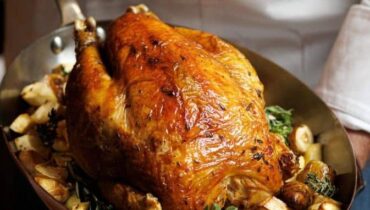
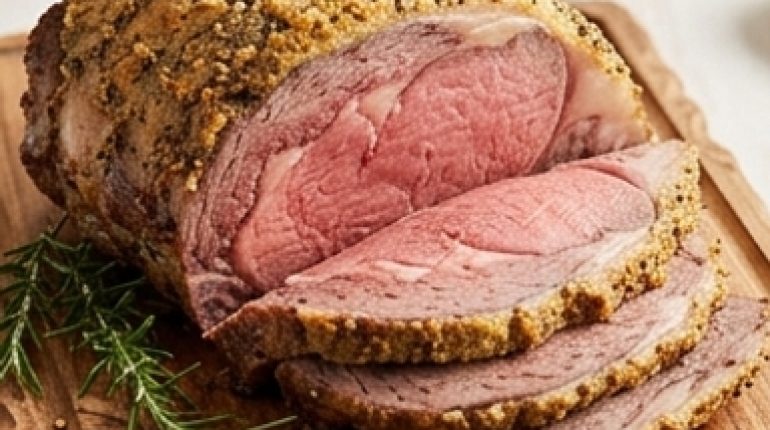
The piece coming out of the oven has a deep brown crust, almost dark chocolate on the edges, with copper highlights where the parmesan has slowly caramelized. The knife first goes through this crispy crust — a sharp little crack — then dives into a pink flesh that’s still steaming. The smell is roasted garlic mixed with toasted pepper, with that beef fat undertone that tells you this is the real deal. No need for frills on the plate.
Why you’ll love this recipe
Ingredient Notes
Everything you need for an exceptional roast: parmesan, black pepper, fresh garlic, and a beautiful piece of beef.
- Bone-in Prime Rib : Get it with the bone if you can. It protects the meat during cooking and gives it more flavor. For 6 people, 4 to 5 pounds is the right size. No need for the most overpriced cut, but make sure there’s visible marbling — small white flecks in the meat. Without that, you lose half the character of the dish.
- Cracked black pepper : Cracked, not finely ground. A coarse grain that slightly crunches under the teeth on the finished crust is what creates the texture. Use a mortar, or place the grains on a board and crush with the bottom of a saucepan — 30 seconds of work.
- Grated parmesan : Finely grated, not the powdered parmesan in the plastic jar. That one burns at the slightest high heat. Home-grated parmesan or a fresh bag from the refrigerated section works perfectly.
- Fresh garlic : Four finely minced cloves, or run through a fine grater if you want a more discreet texture. Garlic powder works in a pinch, but fresh garlic gives a sharper and more precise kick to the mix.
- Olive oil : It acts as the glue to make the crust stick. Basic oil, no need to bring out the expensive bottle. Two tablespoons are enough to cover a 4-5 pound piece.
Before even turning on the oven
The prime rib comes out of the fridge one hour before. This is non-negotiable. A piece that is cold in the center takes twice as long to reach the right temperature — you end up with grey edges and a still-cold middle. Meanwhile, prepare the mix: cracked pepper, parmesan, minced garlic, salt, and olive oil. It creates a grainy, wet paste, almost sandy between the fingers. Preheat the oven to 450°F (230°C). Two things to do at once, and the essentials are done.
The crust is three simple steps
Olive oil all over the surface — top, bottom, sides, everywhere. Then massage the pepper-parmesan paste with your hands directly onto the meat. Cover generously, focusing on the top and sides. The piece takes on a dark color, almost black in places because of the pepper. Place it bone-side down in your roasting pan. The bones form a natural rack — the meat doesn’t touch the bottom of the dish, it cooks through air circulation. No need for an extra rack.
In the oven, while you do something else
15 minutes at 450°F to sear and set the crust. After that, lower to 325°F (165°C) and let it go until 130°F on the internal thermometer — count about 15 minutes per pound. The smell that will gradually fill the room is garlic gently roasting mixed with intensifying pepper and that animal base of rendered beef fat. Monitor with the thermometer, not the timer. Every oven is different, every piece is different. The thermometer doesn’t lie.
Twenty minutes and you’ve won
The rib comes out at 130°F, you place it on a board and form a loose tent with aluminum foil. Loose — not airtight, not tight. Residual heat will continue to raise the temperature by 5 to 8°F during resting. Wait 20 minutes. Then slice perpendicular to the bone with a large knife. The cut is clean, the meat is uniformly pink from edge to center, and the board stays dry. That is the sign you did things right.
Tips & Tricks
- Add the parmesan after the initial sear if you want to avoid any risk of burning — sear the meat alone in a pan for 2 minutes per side, then apply the crust before baking. The cheese browns gradually in the oven instead of burning on direct contact with a hot surface.
- Use a probe thermometer that stays in the meat throughout cooking and alerts you at the target. You won’t open the oven anymore, and you won’t pierce the meat to check. The heat stays constant and the crust forms without interruption.
- If you want to serve with a sauce, collect the drippings in the roasting pan after cooking — degrease slightly and add a bit of hot beef broth. One minute over high heat, and you have a pan sauce that needs nothing else.
What internal temperature for a perfect medium-rare?
Aim for 130°F (54°C) for medium-rare, the standard for this type of roast. If you prefer it more cooked, stop at 140°F (60°C) for medium. Beyond that, you lose the characteristic tenderness of the prime rib.
Can I prepare the roast in advance?
You can apply the pepper-parmesan crust the day before and leave the piece in the fridge uncovered — this slightly dries the surface and promotes even better crust formation. Take it out 1 hour before baking so it returns to room temperature.
How to store leftovers?
Wrap the slices in aluminum foil and keep them in the fridge for up to 3 days. To reheat without drying out, place the slices in a dish with a splash of beef broth, cover with foil, and heat at 150°C for 10-12 minutes.
Can I use another cut if I can’t find prime rib?
Chuck roast or whole rump roast can work, but the result will be less tender — these are more active muscles. The pepper-parmesan crust works very well on a classic roast beef if prime rib is unavailable or too expensive.
Why isn’t the crust sticking to the meat?
The most common mistake is applying the mixture to wet or too cold meat. Dry the surface well with paper towels before brushing with oil, and apply the crust with firm hand pressure. It adheres much better to a dry and slightly oiled surface.
Can I cook without a meat thermometer?
Technically yes, but it’s risky. The 15 minutes per pound rule is indicative — every oven heats differently, and every piece has a different shape. If you don’t have a thermometer, invest in one: it’s 10 dollars and radically changes the reliability of your cooking.
Pepper-Parmesan Prime Rib
American
Main Course
A whole roasted prime rib with a crispy crust of cracked pepper, parmesan, and garlic. A showstopper with minimal technique.
Ingredients
- 1 piece (~2 kg) bone-in prime rib
- 30 ml (2 tbsp) olive oil
- 25 g (3 tbsp) coarsely cracked black pepper
- 20 g (2 tbsp) finely grated parmesan
- 4 cloves fresh garlic, finely minced
- 15 g (1 tbsp) coarse salt
- a few sprigs fresh rosemary or thyme (optional, for garnish)
Instructions
- 1Take the prime rib out of the fridge 1 hour before cooking. Preheat oven to 230°C (450°F).
- 2In a bowl, mix the cracked pepper, grated parmesan, minced garlic, and salt until you get a grainy paste.
- 3Dry the meat surface with paper towels. Brush with olive oil on all sides.
- 4Apply the pepper-parmesan mixture generously over the entire surface of the piece, pressing firmly with your hands.
- 5Place the prime rib bone-side down in a roasting pan. Bake for 15 minutes at 230°C.
- 6Lower the temperature to 165°C (325°F). Continue cooking until 54°C (130°F) on a meat thermometer, approximately 15 minutes per pound.
- 7Remove from the oven. Cover with a loose aluminum foil tent and let rest for 20 minutes undisturbed.
- 8Slice perpendicular to the bone with a large knife and serve immediately.
Notes
• For a quick pan sauce: degrease the cooking juices in the pan, add 150 ml of hot beef broth, and let reduce for 1 minute over high heat.
• Leftovers keep for 3 days in the fridge wrapped in foil. Reheat at 150°C in a covered dish with a splash of broth to prevent the meat from drying out.
• To prepare ahead: apply the crust the day before, let rest in the fridge uncovered overnight. The surface dries slightly and the crust grips even better during cooking.
Nutrition Facts (per serving, estimated)
| 520 kcalCalories | 43 gProtein | 2 gCarbs | 36 gFat |